




Analyst guide
What independent analysts looks for in LCA software
A guide to how analysts shortlist LCA tools that stand up to regulation, scale, and internal scrutiny.
Why independent research matters now
Life cycle assessment (LCA) software used to be bought to tick compliance boxes. Now it helps decide which products ship, which suppliers stay, and whether your business survives the next audit. Regulations like the EU Ecodesign for Sustainable Products Regulation, Packaging and Packaging Waste Regulation, and Deforestation-Free Products Regulation mean you need primary supplier evidence, transparent methods and continuously updated product-level footprints, not just yearly report.
That’s where independent analyst research comes in. It cuts through the vendor noise and shows which solutions are built for this new reality. In practice it gives you:
- A reality check on vendors such as who is proven, who is emerging, and who is still catching up.
- One shared checklist internally so sustainability, engineering, procurement, and IT are judging tools on the came criteria, not random feature lists.
- Confidence a tool will scale by showing how it handles data collection, impact modelling, and reporting when you roll it out across the business.
What analysts focus on in LCA solutions
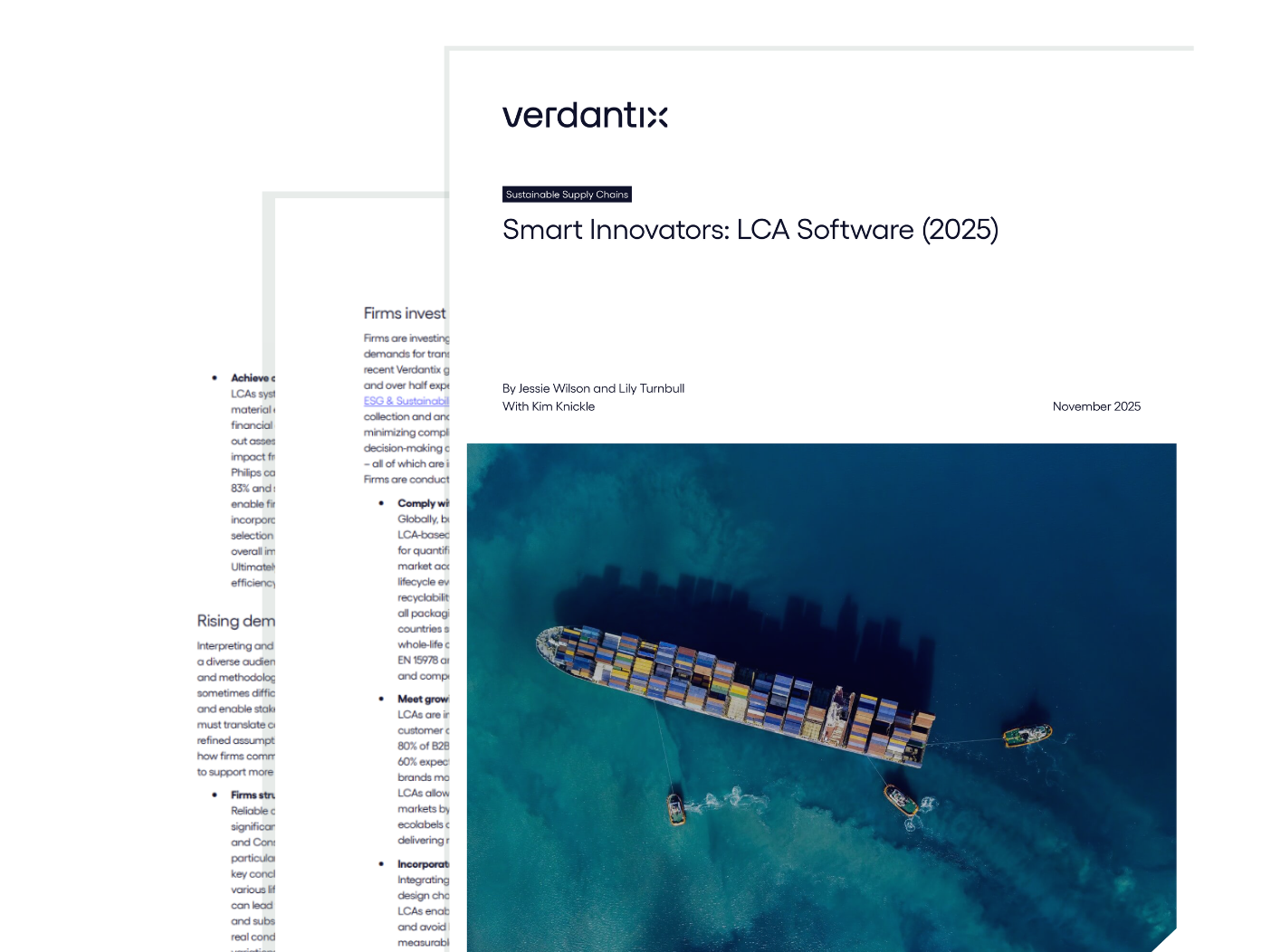
In its Smart Innovators: LCA Software 2025 report, independent research firm Verdantix evaluated 13 LCA solutions across three main areas:
- Data collection and management: how well tools bring together primary supplier data, recognised databases, and enterprise systems.
- Environmental impact assessment, calculation, and modelling: show reliably they calculate impacts and model products, systems, and supply chains at scale.
- Performance analysis and reporting: how clearly they surface hotspots and support internal and external reporting needs.
“For buyers, the value isn’t the score on its own, it’s understanding where a tool is strongest.”
For example, downstream reporting only, or embedded earlier in design and sourcing, so you can pick the right fit for how your team works.
How Makersite maps to the capabilities analysts care about
The same capability areas show up in most LCA buying conversations. Verdantix recognises Makersite for its strength across all three, especially in digital twins, primary supplier data, and scenario modelling.
- Data collection and management: Makersite connects primary supplier data, ERP/PLM systems, and recognised databases into product level digital twins.
- Environmental impact assessment, calculation, and modelling: Makersite applies established LCA methods to those digital twins, so you can calculate footprints at product and system level, test design and supplier changes, and reuse the same model for new questions instead of rebuilding studies.
- Performance analysis and reporting: Makersite turns those models into portfolio views, hotspot analysis, and exportable reports for regulations, customer requests, and internal decision-making. Sustainability, engineering, procurement and finance can all work from the same evidence, not conflicting numbers.
Using analyst criteria in your own selection
Consider the Verdantix framework as a checklist, not a league table.
The scores will tell you where a tool is strong, but you still need to decide whether that matches how you work. When shortlisting LCA solutions, you can use the same lens:
- Align on priorities: Are you mainly trying to pass audits, support design decisions, manage supplier risk, or all three?
- Stress test vendors in each area: Ask specific questions on data sources, primary supplier evidence, modelling at product-structure level, and how insights are reported to different teams.
- Use independent research as the cross check: Once you have a shortlist, use the analyst report to validate strengths and gaps, not the only deciding factor.
The Verdantix Smart Innovators: LCA Software 2025 report provides detailed scoring, vendor commentary, and methodology behind these criteria. Use it alongside this guide to pressure test your shortlist and make sure the tools you’re considering can stand up to regulatory, scale, and internal demands.
You can explore that more in the full report below.
Verdantix is an independent research and advisory firm based in London, specialising in sustainability, risk management, and technology insights for various industries.
Download the Verdantix Smart Innovators: LCA Software report
This report benchmarks 13 LCA software providers across data, modelling, and reporting capabilities. Download it now to:
- Understand how independent analysts assess LCA software.
- Learn what differentiates high-performing LCA platforms across modelling accuracy, supplier data coverage and more.
- Use the analyst framework to shortlist LCA software with confidence, whether you’re replacing spreadsheets, consolidating tools or preparing for reporting requirements.
Download the report
Still Have Questions? Let’s Dig Deeper
What do independent analysts look for in LCA software?
Independent analysts look for LCA software that is methodologically robust, transparent, and grounded in credible data. They expect clear documentation of assumptions, alignment with recognised standards, and results that can stand up to external review.
Why is data quality a key concern for analysts assessing LCA software?
High-quality data underpins credible LCA results. Analysts look for clear data sourcing, consistent system boundaries, and well-maintained datasets to ensure results reflect real-world materials, processes, and geographies.
How do analysts assess the credibility of LCA results?
Analysts assess credibility by examining standards alignment, data quality, transparency, and the ability to trace results back to underlying models and inputs. These factors help determine whether results are suitable for comparison and external scrutiny.