SiGREEN Becomes Mattermaps

Read more
Close

Advantages and disadvantages of plastic products

The Global plastics production forecast 2025-2050 (Statista) says that by 2030 the world will produce 483 million tons of thermoplastics (the biggest group of plastic materials), and by 2040 it will be even more, with 564 million tons of plastic. While plastic has technical properties that cannot be reached with other materials such as textiles, paper, or metals, plastic is made from non-renewable resources, and its manufacturing, as well as its disposal, can cause serious harm to the environment. In this article, we give an overview of the plastics industry, how plastic harms the environment, and how the plastics industry could reduce carbon emissions from plastic production and disposal.


What are the advantages of plastic

Plastic is lightweight and has – depending on the granulate – high flexibility and durability, which makes it a very efficient material to use in many everyday appliances.

Plastic is important for several reasons. First, it is a durable and versatile material that can be molded into various shapes and sizes, making it suitable for various applications. Its flexibility allows for innovative designs and functionalities in industries such as packaging, construction, automotive, electronics, healthcare, and more.

Second, plastic is cost-effective to produce. Its manufacturing process is generally efficient and less expensive than other materials like metal or glass. This cost advantage makes plastic accessible to many consumers and businesses, contributing to economic growth and development.

Third, plastic packaging plays a crucial role in preserving and protecting products. Plastic packaging helps extend the shelf life of food, beverages, and other perishable goods by providing a barrier against moisture, air, and contaminants. This is especially important for the pharmaceutical industry.  It also reduces transportation costs due to its lightweight nature, resulting in fuel efficiency and lower carbon emissions.


What are the disadvantages of plastic

How plastic is made

With so many advantages, even environmentally, why is plastic bad for the environment? Nearly every piece of plastic begins as a fossil fuel. Plastic is made through a process called polymerization, where monomers (building blocks) are chemically bonded together to form long chains called polymers. Monomers are typically derived from petrochemicals like crude oil or natural gas. The plastic manufacturing process releases greenhouse gases directly into the atmosphere.

The plastic industry is a huge, fast-growing industry. New plants for making granulates are built in several countries in the world. The US uses gas derived from fracking, which comes with even higher environmental costs than standard gas exploitation methods.

The Center for International Environmental Law about CO2 emissions from plastic production and use:

“If plastic production and use grow as currently planned, by 2030, these emissions could reach 1.34 gigatons per year—equivalent to the emissions released by more than 295 new 500-megawatt coal-fired power plants. By 2050, the cumulation of these greenhouse gas emissions from plastic could reach over 56 gigatons—10–13 percent of the entire remaining carbon budget.”


Plastic recycling and disposal

If plastic waste is discarded non-properly, plastic waste is a huge environmental problem This is not just a problem for the biodiversity of systems due to animals confusing plastics with food; there are also concerns about microplastics being potentially toxic to the environment. Meanwhile, microplastics can be found anywhere in our environment, also in the human body.

The International Union for Preservation of Nature states:

“The most visible impacts of plastic debris are the ingestion, suffocation and entanglement of hundreds of marine species. Marine wildlife such as seabirds, whales, fish and turtles mistake plastic waste for prey; most then die of starvation as their stomachs become filled with plastic. They also suffer from lacerations, infections, reduced ability to swim, and internal injuries. Floating plastics also help transport invasive marine species, thereby threatening marine biodiversity and the food web.”

Once plastic products are discarded non-properly, they contribute to carbon emissions through the process of decomposition, which releases CO2 and other harmful chemicals into soil, water, and the atmosphere. A lot of times, plastic is burned in a non-controlled environment, which causes more harm to the environment than controlled incineration plants

Plastics vary in their life span – if used in packaging, it can be a few weeks and up to several years; if used in cars or machines. This means that carbon captured in the plastic will be released after a short period of time.


What are plastic alternatives?

One alternative the chemical industry is going for is using renewable raw materials as alternatives to their non-renewable counterparts. Another trend is to replace harmful chemicals so that the end product cannot release harmful chemicals. Still – considering that this is a growing market – using renewable alternatives is not an overall solution to the problem. Given that precursors – to make them renewable – have to be extracted from renewable materials – even if it is biological waste – they will be missed somewhere else as a base for food, topsoil, or pasture. Also, the plastic industry will compete with other industries for renewable raw materials, which will make it much more expensive for the industry to keep prices low.


What measures is the industry applying to reduce the impact of plastic on the environment?

There is a growing number of legal requirements for plastic products (especially packaging) for products going into the market. Many companies try to meet these requirements by taking a circular economy approach by enhancing the reusability or recyclability of their products. This can be done by reusable plastic products, enhancing mechanical recyclability, or investing in chemical recycling technologies. While this can extend its lifespan and time of use, it is not long enough to actually help keep the carbon dioxide in the plastic stored for longer than some years. It only shifts the point of time in which the emissions will be released into our environment.

Thus, the plastic industry has a significant responsibility to care for and take action to reduce waste and environmental impact. Although plastic plays an important, sometimes even a key role in our society, on the other hand, it is also misused or used too much. A real reduction will only come by transforming businesses and slowing down plastic usage. One start could be identifying which areas of the business are key to society and which products can be outdated to slow down plastic use. It is clear that expected growth numbers will eat up any enhancements in the products itself, so a real transformation is necessary to meet the set environmental goals.

Interview with Prof. Dr. Edinger-Schons, Professor of Sustainable Business

[…] one of the biggest challenges we face in the sustainability space is bridging the gap between impact calculation, technology, and scientific expertise, and finding ways to connect academia with practical solutions.

What does sustainability mean for you?

Prof. Dr. Laura Marie Edinger-Schons: Currently, our way of living is not sustainable, and it is imperative that we take action to protect our ecological and social resources for future generations. But sustainability is not just about the intergenerational aspect. It also involves the intragenerational aspect, as the way we use resources is not fairly distributed around the globe.

Therefore, I think it is essential to consider both dimensions of sustainability – intergenerational and intragenerational – in any sustainable development initiatives. By doing so, we can ensure that we are protecting our resources for future generations, as well as promoting a fair and equitable distribution of resources among all people, regardless of where they live or what their socioeconomic status is.


What motivates you to work in sustainability?

LES: During my twenties, I had the opportunity to travel to South-East Asia. Witnessing the conditions and problems that many people face in that part of the world made me realize that I wanted to contribute to finding solutions to these issues.

As I already studied business management and economics, my experiences during my travels inspired me to take a scientific approach to these problems. That’s why I decided to pursue a PhD and later became a lecturer at the University of Hamburg, where I teach on the topic of how we can make impacts and our use of resources measurable.

Through my research and teaching, I am hoping to make a positive difference in the world by finding ways to promote sustainable development and equitable resource use. I believe that measuring impacts and resource use is a critical step in achieving these goals, as it allows us to better understand the challenges we face and develop effective solutions to address them.

What do you think companies lack to become better at sustainability?

LES: Transparency is crucial for stakeholders to make better decisions – not only for investors but also for employees, suppliers, etc. For non-financial performance measurement, there are no uniform reporting criteria, ratings are based on mostly publicly available data, which is often not granular, and the landscape of rating formats is extensive and, therefore, confusing.

At the moment, the development in ESG is very divergent, which poses a problem. One example is the monetarization of impacts, meaning that a good social impact, e.g. providing jobs, could balance out ecological impacts in this model.

What are the biggest challenges in the sustainability space?

LES: In my opinion, one of the biggest challenges we face in the sustainability space is bridging the gap between impact calculation, technology, and scientific expertise, and finding ways to connect academia with practical solutions.

To address this challenge, we need to combine our knowledge of scientific methods with the new data availability provided by digital technology. Historically, academia and practice have not been connected enough, which has hindered our ability to develop effective solutions to sustainability issues. I believe it would be helpful to have support schemes from governments that promote collaboration between academia and practice.

How do you feel about legislation?

LES: I believe that legislation is needed in the sustainability space because we have seen that companies do not take sufficient voluntary action. One example of this is the Lieferkettensorgfaltspflichtengesetz in Germany. Initially, companies were given the choice to take action on their own, but they did not, which prompted the German government to put the law into place.

When Europe first introduced reporting duties for companies, there was a big discussion on whether we need reporting or not. However, now we see that the GRI standards have evolved to become an internationally accepted standard. What I appreciate about the GRI is that it was developed in a multi-stakeholder process, allowing many different stakeholders to contribute to setting up the reporting. This is very different from when politicians put something into place without consulting opinions from the space.

What concerns me is that currently sustainability could become a power game for companies, which is evident from the lobbying happening. Ten years ago, sustainability was not taken seriously. However, now big businesses realize that it is relevant to their core businesses, and many of them are taking ownership of the process. This can be dangerous to our overarching goal. We need to find a way to orchestrate sustainability processes so that not only the most powerful voices are heard.

While the legislation we have right now needs to evolve, we need to also ensure that the process of iterative improvement is democratic and participative.

In your opinion, what should companies nowadays do to become more sustainable?

LES: This relates to company size. Small startups have it easier to set up sustainable processes than big corporations, which already have a running system and established structures. A crucial thing for this is to have a sustainability culture in a company. One sustainability manager trying to steer a whole company in one direction is mostly not enough. Everyone in the company needs to be enabled to be their own sustainability manager. Only very few companies have succeeded in doing that. You need a strong purpose, like with Patagonia for example, paired with a bottom-up empowerment of everyone and the right incentive systems enabling also middle management to integrate sustainability into all activities.

A couple of big companies are now trying to put this into place by applying social intrapreneurship programs, creating platforms in the company for employees to drive sustainability innovation. I think that is a very good development. On the other hand, I get the feeling that the same companies tend to be a bit scared of their own programs. They are afraid of touching the core business. And you must be brave to do that, especially in times of crisis. But in the end, companies must find a way to do this, because the old business models are simply not going to be able to survive in the future. And that ranges from fossil fuel cars to IT manufacturers based on unsustainable production methods. In a lot of industries, fundamental change needs to happen to make them fit for the future, and that requires turning the company upside down. For that you have to be willing to take bold steps.

The equilibrium of sustainable development 

By Sophie Kieselbach


Sustainability has the goal of allowing humanity to exist on Earth for a long time. Thus sustainable development is a concept that aims to balance economic growth with environmental protection and social well-being. It was officially formalized in the 1980s by the Brundtland report, and since then, the definition of sustainable development has evolved to encompass a broader range of issues and concerns. This article will explore the meaning of sustainable development – economic, social, and environmental sustainability – and how it has changed over time. 


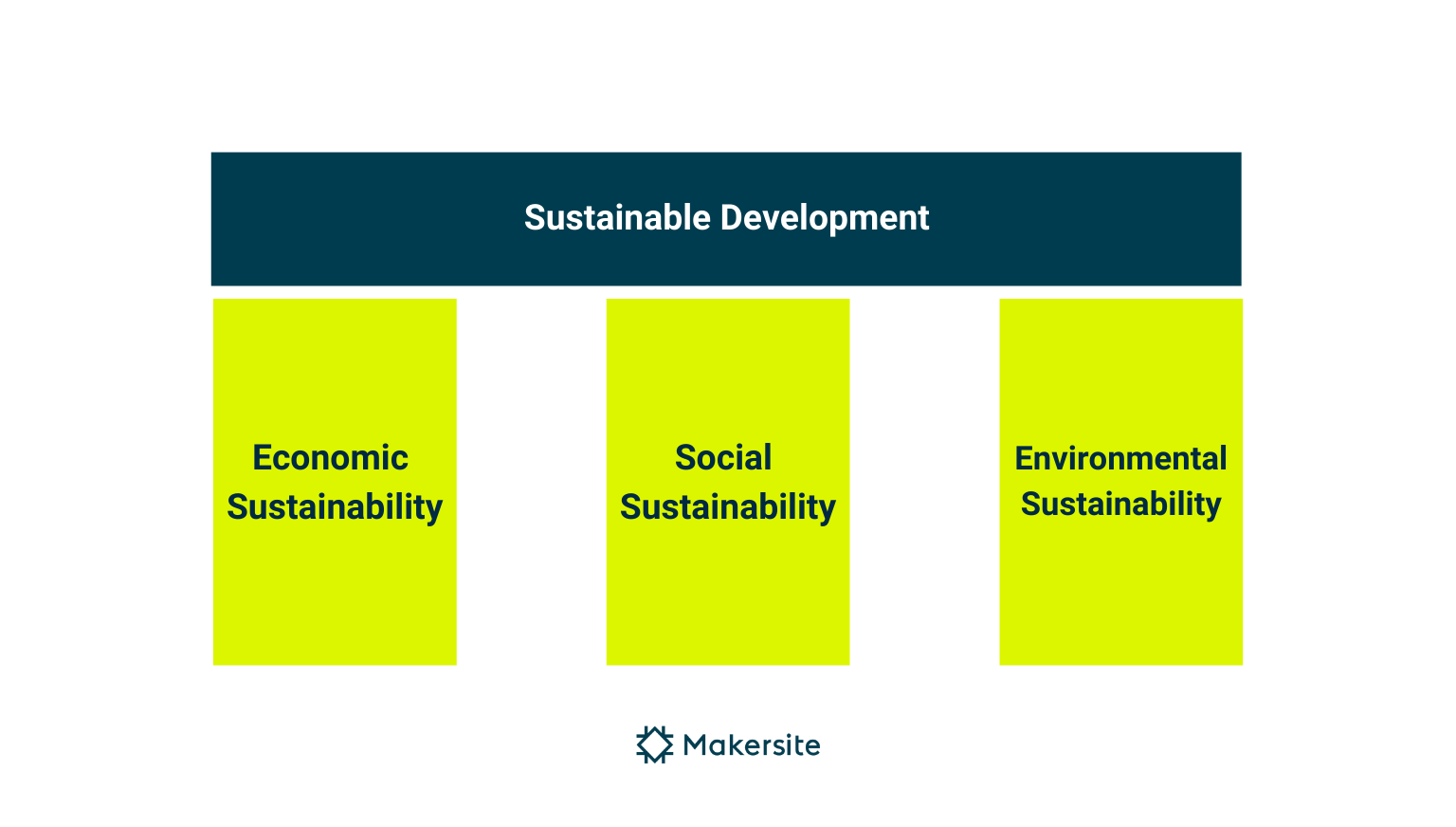
The three pillars model

Economic sustainability 

Economic sustainability is about creating and maintaining a strong economy that can provide jobs and income for people while also being sustainable in the long term. In the past, economic sustainability was primarily focused on traditional economic indicators such as GDP. However, over time, the definition of economic sustainability has expanded to include more than just financial growth. 

Today, economic sustainability includes factors such as resource efficiency, circular economy models, and the promotion of sustainable business practices. Resource efficiency refers to the efficient use of natural resources, while circular economy models aim to reduce waste and create a closed-loop system where resources are reused and recycled. Sustainable business practices include reducing energy consumption, using renewable energy, and reducing waste. 


Social sustainability 

Social sustainability focuses on creating a society that is fair, just, and inclusive for everyone. This includes ensuring that people have access to basic needs such as food, shelter, healthcare, education, and social services. In the past, social sustainability was primarily focused on meeting basic needs. However, over time, the definition of social sustainability has expanded to include more complex issues. 

Today, social sustainability includes issues such as human rights, child labor, gender equality, diversity, and inclusion. Gender equality refers to equal rights and opportunities for women and men. Diversity and inclusion refer to creating a workplace or society where everyone feels valued and included, regardless of their race, gender, or background. Human rights refer to the fundamental rights and freedoms that every person is entitled to, such as the right to life, liberty, and security. 


Environmental sustainability 

Environmental sustainability is about protecting our planet’s natural resources and ecosystems. This includes minimizing pollution, conserving biodiversity, and reducing carbon emissions. In the past, environmental sustainability was primarily focused on reducing pollution and protecting wildlife. 

However, over time, the definition of environmental sustainability has expanded to include the need to address climate change and other important issues, such as biodiversity loss. Today, it is widely recognized that economic and social sustainability cannot be achieved without also protecting the natural systems upon which we all depend. 


Evolution of the sustainable development-model 

The connection between the three pillars of sustainable development – economic, social, and environmental sustainability – has evolved over time as our understanding of sustainable development has grown. 

Initially, sustainable development was seen as a trade-off between economic growth and environmental protection. This meant that policies focused on protecting the environment often came at the expense of economic growth, and vice versa. However, over time, it became clear that social sustainability was also a critical component of sustainable development. 

As a result, the connection between the three pillars of sustainable development shifted from a trade-off between economic growth and environmental protection to a more integrated approach that recognizes the interconnectedness of economic, social, and environmental sustainability. This approach recognizes that economic growth and environmental protection are not mutually exclusive, and that social sustainability is also essential for achieving sustainable development. 

In 2012 an Oxfam report published the concept of the doughnut economy which consists of two concentric rings: the social foundation, which should guarantee that basic human rights and needs are covered and an ecological ceiling, which states that planetary boundaries exist. Between these two rings humanity can thrive economically on a long term basis. (About Doughnut Economics | DEAL 

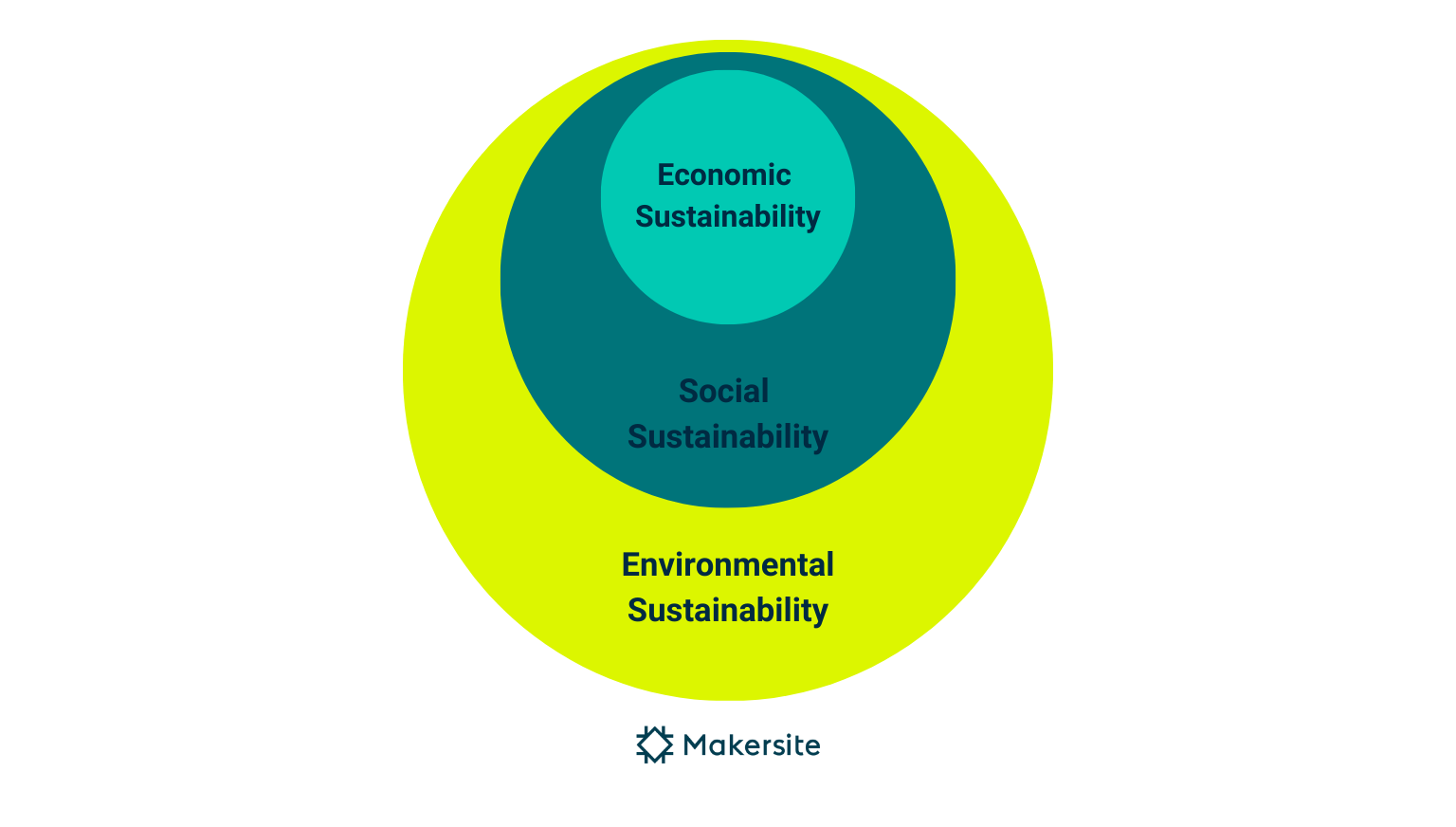
This way of thinking is also reflected in todays concept of sustainability. The environment is the foundation of sustainable development. It is the basis of all life, and without a healthy environment, economic and social sustainability cannot be achieved. Therefore, the environment determines the limit in which our society can grow socially and economically, as it provides the natural resources and ecological services that support all economic and social activity. 


What does this mean for businesses? 

Since the concept of sustainable development emerged in the 1980s as a response to growing concerns about the negative impacts of economic growth and development on the environment and society, the understanding of sustainable development has expanded to include not only environmental and economic concerns but also social and cultural dimensions. Today’s view is based on the knowledge that a healthy ecosystem is crucial for society and the economy to thrive. Achieving sustainable development requires balancing all three dimensions, as they are all interconnected. 

To achieve sustainable development, it is necessary to address the root causes of environmental degradation, social inequality, and economic instability. This requires a holistic and long-term approach that considers the interactions and trade-offs between different aspects of sustainability, and involves collaboration between governments, businesses, civil society, and individuals. It requires innovation and creativity to develop new technologies and practices that can promote sustainable growth and development.  

Integrating this mindset into the business and basing all decision making on hard facts will enable businesses to contribute to a sustainable society.  

Top 5 sustainability topics to be aware of in 2023

Pursuing sustainable practices is no longer a luxury; it’s a necessity.

As seen in Supply and Demand Chain Executive

Carbon dioxide levels, e.g., in one year, from 2020-2021, grew more than the average annual growth rate over the last decade. You will find plenty of other examples on topics such as land use, biodiversity loss, etc.   

Therefore, decreasing carbon emissions and improving the sustainability of global supply chains is imperative if we hope to slow further growth in carbon emissions. 

Sophie Kieselbach, Senior Implementation Engineer for Sustainability at Makersite, provided her insights into the top 5 trending sustainability topics for 2023 that should be considered in every company’s sustainability journey.  


EU Taxonomy

The purpose of implementing the taxonomy system throughout the European Union is to steer economic development in a sustainable direction. This system relies on regulations, classifications, and a list of environmentally sustainable economic activities that companies must abide by as they continue to scale their businesses.  

What we are seeing now is many companies that have not traditionally considered the environmental ramifications of their manufacturing processes are attempting to change quickly to classify themselves within the new taxonomy system due to increased financial pressure. It is, therefore, of uttermost importance to speed up and follow the guidelines if a company wants to avoid cuts in investments.  


Net Zero

In order to achieve Net Zero emissions, companies need to gain a quick and clear understanding of how they can cut down on carbon emissions. 

Most companies already have identified their main contributors. Still, the struggle for the upcoming year(s) will be identifying where exactly in the supply chain the carbon emissions come from and, even more, stepping in and implementing strategies for reducing the carbon emissions of the processes within these areas.  

Getting companies to recognize net zero emissions as an important part of their business can be difficult due to the cost and coordination required to achieve it. However, the basis of any sustainable transformation, whether achieving Net Zero emissions or decreasing emissions in general, is remaining educated on the importance of sustainable business practices.               


Scope 3 reporting

Although Scope 3 reporting is clearly connected to Net Zero, it is an incredibly significant development because it forces companies to report on their carbon emissions, exposing them to the public, which can trickle down to affect the opinions of consumers toward those companies and eventually impact the profitability of their products. 

Some companies have utilized the practice of “greenwashing” to counteract the negative publicity that can accompany damning Scope 3 reports. When a company “greenwashes,” they use deceptive marketing and advertising strategies to persuade consumers that they are practicing sustainable business development in their products, policies, and goals. 

But even though Scope 3 reporting can be tricky, it will also be an important piece of work to gain a basic understanding of your products and the up-and-downstream processes.  


This will be advantageous when the planned ecodesign directive is realized in some years. The proposal for the update of the European Union’s Ecodesign Directive (Directive 2009/125/EC), published on 30 March 2022, is the cornerstone of the Commission’s approach to more environmentally sustainable and circular products and will also pressure companies to work on the sustainability of their product portfolio.  

Technologies such as data analysis, artificial intelligence, and advanced modeling methods are just some of the tools green businesses use to help companies achieve their sustainability goals. 


Carbon crediting credibility

The carbon credit system is a point of division for many ecologists who view it as a way for companies to avoid decarbonization. Companies can use this system to exchange a carbon credit, a certificate that allows a business to produce a fixed amount of emissions, for monetary gain.  

Naturally, companies have tried to take advantage of this system. This would not be surprising, but with the news on South Pole, one of the largest companies specializing in carbon credits, the discussion is lit up again.  

Through South Pole reporting, it was discovered that their carbon trade programs increased emissions rather than decreased them. The South Pole controversy has led to a new discussion on how and if Carbon credits should be allowed as a way for companies to decarbonize.  

Therefore – as a company – to avoid a discussion about greenwashing – carbon crediting should be applied with care and preferably only be used as an instrument in a transition phase.  


Biodiversity

Climate change and biodiversity are two topics that go hand in hand. Increasing carbon emissions have resulted in a steady increase in the global temperature over the past 100 years. Through this gradual warming and other substantial influence of human activities, such as land use, ecosystems around the world have begun to experience a decrease in overall biodiversity. 

Many aspects of a company’s supply chain can increase climate change and decrease biodiversity. The consequences of shifts in this delicate balance can be felt around the world.  

For example, large-scale deforestation, like in the Amazon rainforest, will influence climate patterns as the world loses its cooling effect.  

„As Nobre explains, the rainforest is not only home to an incredible diversity of species, it also has a critical cooling effect on the planet because its trees channel heat high into the atmosphere. In addition, forests absorb and store carbon dioxide (CO2) from the atmosphere—CO2 that is released back into the atmosphere when trees are cut and burned.

Nobre warns that if deforestation continues at current levels, we are headed for disaster. The Amazon region could become drier and drier, unable to support healthy habitats or croplands.“ (Amazon Deforestation and Climate Change (nationalgeographic.org)) 

Stable ecosystems are important for our ability to adapt to climate change; if this is not given, there will be a feedback effect on climate change. Companies should already focus on understanding their effect on biodiversity and mirror it in their sustainability strategy.  

Interview with Stefanie Buchacher, Head of Corporate Sustainability at Sport Conrad

“We know that our greatest impact is not in our original business activities but in the upstream and downstream stages of the value chain […]”

What does sustainability mean to you?

Stefanie Buchacher: Specialist literature puts it well: sustainability is the balance between ecology, social issues, and economy, or ‘not satisfying today’s needs at the expense of future generations.’ We, as industrialized nations (Global North), currently live and work not only at the expense of future generations but also at the expense of current nations, the Global South – and we produce incredible amounts of emissions and waste. To me, sustainability means prosperity that is globally balanced. It also means that we manage existing resources and keep them in cycles – neither at the expense of the planet nor at the cost of the people of various nations – For a livable present and a livable future. The good thing is that we can shape this future!

What motivates you to work in sustainability?

SB: Impact starts with I. To put it simply, I want to make a difference, shape things and be part of the solution, not part of the problem. We must understand that we are all part of nature and that we are destroying our livelihood with our behavior. I love the mountains and I am fascinated of our nature with its harsh conditions, wilderness, and power. I am shocked by the climatic changes and the dramatic consequences of climate change. At the same time, I am convinced that we have the greatest opportunity for a more sustainable way of doing business, which is why I work in the outdoor industry – to contribute my passion and willingness for change.

What would you rate as your most successful measure for more sustainability in the last years, and why?

SB: Within my company, I would say to have planted a seed of rethinking growth. I believe that it is incredibly important to take all (or at least a large part of) the employees of a company with you to inspire and empower them to act and take responsibility. Sustainability cannot be implemented alone; every smallest effort makes a difference in the aggregate. As an owner-managed family business, we always have the next generation or generations in mind. But let’s be honest: we, as an outdoor/sports retailer, sell products that mostly can’t be recycled. We consume energy; we create waste and emissions – that’s not sustainable. So, what are the options? Stop doing business or change something? We chose the second. To be focused and effective, we have developed an ambitious sustainability roadmap with emission reduction targets. Our aspiration is to avoid and reduce emissions – and to compensate for unavoidable emissions. We calculate our carbon footprint annually – and we know that our greatest impact is not in our original business activities but in the upstream and downstream stages of the value chain and primarily indirectly through our product range. That’s why we are switching our product range to a more innovative and sustainable selection, and, above all, to durable, long-life products (made from recycled materials, renewable raw materials, etc.). Also, we have introduced a second-hand model and have already tested the rental of outdoor clothing. And together with various manufacturers, we are testing the possibility of taking back products and putting them into the recycling loop.

The key is collaboration within the industry because there is no competition when it comes to sustainability. The more we create as an industry (and as a society), the better it is for all of us! We need to work collaboratively and depend on each other. That’s what I see as success: collaboration in the industry. Change towards a sustainable future is the common ground here – exchange with other retailers without competition and with manufacturers to drive improvements throughout the value chain. And on the other side are the customers: here, it is part of our responsibility as retailers to educate, inform, raise awareness, and motivate us to consume consciously. To drive this change boldly and effectively, we need to broaden our perspective and mindset. The change we seek requires collaboration.

How did you become a sustainability manager?

SB: I originally studied journalism and media communications and worked in the fashion industry in editorial and PR offices for various brands and retailers. My responsibilities always included promoting seasonally changing trends. At some point, I questioned the meaningfulness of that and I additionally experienced it as challenging to not be empowered to work or create independently in these positions. My two children also changed my perspective on my own behaviors as well as on our way of doing business. During my second parental leave, I started another course of study on sustainability management part-time alongside raising the kids and later on my job. I wanted to apply my knowledge professionally, so I first switched to a sustainability consultancy and, finally, to the outdoor industry.

What are you doing to make your own life more sustainable?

SB: I believe there is no such thing as more sustainable – you can only make the decision to live more responsibly and, above all, more consciously. And that includes weighing the pros and cons carefully: what do I really need? What can I do without, and how can this renunciation give me a better life and greater freedom? In daily life, this can be seen in small things: less packaging and garbage or organic products. The last time I went on vacation by plane was in 2010. If possible, I refrain from driving and use the bicycle — but to managecompletely without a car is difficult to manage for a family living in a very rural area. When I’m in the mountains or out walking, I collect trash. And since 2020, I have had a climate subscription from ForTomorrow. The start-up uses subscription fees or donations to buy CO2 trading certificates from the market and decommission them: this way, sooner or later, emission- intensive companies are forced to transform. And on the other hand, trees are planted in Germany, thus actively binding CO2 from the air.

What’s something new you learned in the past year?

SB: I am learning something new almost every day because my job involves breaking new ground and moving out of my comfort zone. I’ve learned to be brave and stand up for my ideals. Because if you want to question and change the status quo, you have to be courageous enough to ask uncomfortable questions and you have to tolerate not always meeting advocates and supporters but also encountering obstacles and resistant people.

What do you think companies lack to become better at sustainability?

SB: In business, the key targets are growth and profit. Yes, companies must operate profitably – but it must not be at the expense of people and the planet. That’s not how a circular system works. It has a completely different approach than the linear way of thinking. The circular economy can help to solve our problems today. Another very important aspect of collaboration and cooperation is sharing knowledge. I think that’s how nature works, too: with feedback loops and the distribution of knowledge. In addition, fortunately, there is an increasing shift in thinking and with that purpose-oriented movements and economic forms – for example, B-Corps or companies that work for the common good. A great role model is Yvon Chouinard, the founder of Patagonia, who transferred his company to a charitable foundation last year, and made his assets available for environmental protection.

What do you think the world needs most to combat global warming and pollution?

SB: At a recent conference, I heard the following saying: you can’t make the devil greener. We need to stop glossing over outdated business models and start a transformation: we need to change how we extract our energy, stop subsidizing climate-damaging business models and we need to adapt our mobility and consumption habits. Sustainability and profit are not contradictory. We must always ask ourselves: what impact do my actions have on the planet and our ecosystem? We need to understand that we are acting as part of a living system – and this learning needs to happen quickly now.


What’s the biggest thing hindering you from implementing changes for more sustainability?

SB: There is not one big obstacle. For one thing, we need to change our politics and our economy – and we also need social change. For real change, we need a critical mass. The paradox: change scares and fear blocks. A big hurdle is the attitude-behavior gap – the wide gap between “saying” and “doing.” And also, we need a new understanding as a society, moving away from egocentrism to public spirit – and in doing so, we need to broaden our view: We often think too much in terms of specialties without a view of the broad systemic impacts that our actions might have on our ecosystems or our society. We need a better systemic understanding of the interconnections in nature.

If you had one wish from a legislative point of view to make your job easier – what would you wish for?

SB: When you think about heat waves, climate change, and species extinction, it’s obvious that we need to respond now. Many carry on as usual and governments are slow to change regulations. But we don’t have time. We need a post-competitive environment where innovation and a new narrative of a livable and circular future can emerge. We need forward-looking legislation that drives innovation and rewards actions beneficial to the climate. And we need more transparency and credibility, especially regarding the sustainability of products – here, I see the EU’s Green Claims Initiative as an important step to promote truly more sustainable products and with that conscious consumption and to penalize greenwashing. I also see the CSRD, the corporate social reporting directive, as an important step that obliges companies to report transparently on their own sustainability management and to shed light on both the risk and opportunity perspectives.


If you had one wish from your supervisor or colleagues to make your work easier – what would you wish for?

SB: Sustainability management is a cross-functional discipline and impacts the entire company regardless of departments and hierarchies. My wish is to break down thinking in silos and promote interdisciplinary exchanges and changes of perspective. And my wish would be to talk about fears – because from the moment we talk about our fears, we can start developing solutions. Change is fun, especially when everyone participates. We can shape our future.

Interview with Emilia Moreno Ruiz, Chief Technical Officer of ecoinvent

“The strength of the ecoinvent database lies in the fact that it is modular and built into individual processes. [..] The ecoinvent database adheres to the FAIR principle: findable, adaptable, interoperable, and reusable.”

Makersite’s data foundation compiles information from more than 140 sources. Our comprehensive databases cover a vast range of materials and substances, allowing clients to model products across various industries. With data on over 36,000 industrial processes, 600,000 environmental impacts, and 100,000 materials and properties in a single system, customers can quickly locate the information they need for procurement and sourcing decisions. ecoinvent, one of the key LCA databases in Makersite, is known for its high-quality environmental data. We recently spoke with Emilia Moreno Ruiz, the Chief Technical Officer at ecoinvent, about their data collection methods, quality control measures, and why ecoinvent stands out as a top-notch database for environmental data.


How and where does ecoinvent collect data?

Emilia Moreno Ruiz: There are three pillars to our data collection process. The first consists of our collaborations with organizations that collect data themselves, such as industry actors or industry associations and consultants working on behalf of industry or governmental initiatives. This pillar also includes our collaborations with several national databases that have entrusted us with hosting and publishing their data.

Secondly, we collaborate with researchers and consultants to publish or develop ad-hoc models that can be fed with data from other databases or from research. These models produce data that we incorporate into our database.

Lastly, our team is constantly working to harmonize and maintain the data. The database functions as a consistent system, so the ecoinvent team facilitates the interactions between sectors by adding activities that connect data points within sectors as needed (for example, creating treatments for generated waste streams).

We supply data providers with a methodological framework, a review scheme, and submission support for the data generated, and of course, we support them throughout the whole process of data creation.


How does ecoinvent do quality assurance?

EMR: In the project-based context, we work with external experts that guarantee the plausibility of results and ensure that the data and technologies are state-of-the-art. External reviewers play an important role in increasing the quality and trustworthiness of our data. Additionally, we work internally to ensure the data complies with our published methodology and requirements at a database and sector level. At a database level, we look at the database as a whole and audit its results, variations, and interactions to orchestrate any necessary corrections. We work in cooperation with external reviewers at that level as well.


How does ecoinvent keep its data updated?

EMR: New versions of the ecoinvent database are released annually to include new and updated data and technical improvements. These yearly releases expand the sectorial, technological, and geographical coverage of the database. The data updates correspond to ecoinvent’s central maintenance strategy while also adapting organically todevelopments and additions from data providers.

Other improvements relate to documentation, calculation features, or alignment in nomenclature. We also work on innovating and adding new system models or new impact assessment methods (methods that will calculate impacts on the environment by using our data), which oftentimes require data updates as well.


What makes ecoinvent one of the best databases of environmental data?

EMR: The strength of the ecoinvent database lies in the fact that it is modular and built into individual processes. This makes it transparent and easily adaptable— It can be integrated into or connected with other systems or databases. Thus,the ecoinvent database adheres to the FAIR principle: findable, adaptable, interoperable, and reusable.

Additionally, data traceability is becoming increasingly critical— and is often required by government authorities— so it is essential that data is traceable to empower people to make good decisions. We can provide a level of transparency in our database that allows our users to trust that our data has been thoroughly verified and audited.

ecoinvent has nurtured an impressive database ecosystem that allows many interesting businesses to flourish. The content of the database is uniquely broad, as are our partnerships, so we are proud to represent high-quality data for the good of the world.


If you want to learn more about how the ecoinvent data is used in Makersite and by our customers, head over to ecoinvent to read their interview with Fabian Hassel, Makersite’s VP of Services.

How to set up a sustainability strategy for manufacturers

Setting up a sustainability strategy can be a daunting task, but it’s essential for companies that want to thrive in the long term

Sustainability has become a critical issue for manufacturers in recent years. Setting up a sustainability strategy can be a daunting task, but it’s essential for companies that want to thrive in the long term. In this article, we’ll delve into the process of developing a sustainability strategy, starting with getting to know the company’s structure and stakeholders, and then gathering data to identify gaps and refine the strategy.


You are currently viewing a placeholder content from Articulate 360. To access the actual content, click the button below. Please note that doing so will share data with third-party providers.

More Information


The Five Key Learnings

Takeaway 1. Importance of Collaboration and Comprehensive Understanding

Developing a sustainability strategy involves understanding the company’s structure, products, suppliers, and departments involved in production. It is a team effort, and it’s important to get in touch with people who are interested in the topic and can work with you.

Takeaway 2. Maximizing Data Sources: Utilizing Internal and External Data

Companies can obtain data for sustainability reporting by looking for data they already have, such as procurement data, legal data, compliance data, and primary data on production. They can also use external databases and reach out to suppliers for more information.

Takeaway 3. Streamlining Data Gathering: The Importance of Structured Data and Automated Tools

Data gathering is a critical task that involves evaluating the data and working to get the data in the right structure. The best-case scenario is having a personalized tool with an automated data upload system, while the worst-case scenario is manually sorting through Excel files from various systems.

Takeaway 4. Integrating Legal, Environmental, Social, and Cost Requirements: Using a Matrix

A matrix that lists different requirements like legal, environmental, social, and cost requirements can enable a company to define a strategy that takes into account all the different requirements. Compliance with legislations is important, and there is a growing trend towards mandatory sustainability reports.

Takeaway 5. Challenges and Rewards of Implementing a Sustainability Strategy

Implementing a sustainability strategy takes time, investment, hard work, and can cause frustration, but it also offers benefits such as more opportunities for the company, and pride and motivation for employees.

How to think about Net Zero as a business case

Net Zero is an ambitious target that requires significant investment and effort from governments, businesses, and individuals. The associated costs, together with the skepticism over the efficacy of efforts, are key reasons for the resistance we see in this much-needed transformation process. We believe that when we look at Net Zero as both the goal and the means to get there, it becomes a natural part of business, lends more optimism to the process, and will drive even faster adoption.  


The path to Net Zero is through innovation 

There is growing consensus that we cannot continue to grow our economies at current levels of pollution and resource consumption. A fewer number believe that we need to change by reducing our consumption per capita if we want to contend with a growing population that is becoming wealthier. However, the opposite is true: a change to Net Zero cannot happen by doing less of anything. Consider the scenario of owning a 20-year-old car that pollutes. You could use it less, but it will still pollute. If the only options on the market are other “new” 20-year-old cars that pollute, there would be no reason to buy something new and we would never get to Net Zero. The existing stock of products will only change once we give customers something better to buy.  

In other words, we can either produce and consume less or produce more efficient and sustainable things and consume those instead. In the first case the only way to achieve Net Zero would be by reaching a state of consuming nothing, which is impossible. The other approach is to produce better products as fast as we can – that everyone will buy – creating a new Net Zero system. It seems clear that we need to innovate our way out of this problem. 


Net Zero as an investment thesis 

While Net Zero sounds like a goal, it can also be seen as a design paradigm for growing businesses and bringing new products to market. When reframed in this way, it drives innovation for which access to money has never been easier. ESG-related funds amounted to around 40 Trillion[1] in 2022 and continue to grow rapidly. It now simply makes business sense for many companies to align themselves with more sustainable practices than they did just ten years ago. 


Cost savings 

Implementing Net Zero strategies can help businesses reduce costs over the long term. By improving energy efficiency, adopting renewable energy sources, and reducing waste, businesses can lower their energy bills, avoid the costs of pollution and waste disposal, and minimize the risks of price volatility associated with fossil fuels. In addition, businesses may also qualify for tax credits, grants, and other incentives that can help offset some of the upfront costs. With Carbon prices at an all-time high now, for many energy-intensive producers or trans-jurisdictional operators, the business case for investment in efficiency has become even simpler. 


Competitive advantage 

Companies that embrace the Net Zero transition can gain a competitive advantage by differentiating themselves from their peers. Consumers and investors are increasingly interested in sustainable products (see below) and services and are more likely to do business with companies that prioritize sustainability. In addition, these companies may have an easier time attracting and retaining top talent, as younger generations are more likely to seek out companies that align with their values. 


Risk management 

The Net Zero transition is an opportunity for businesses to manage the risks associated with climate change. Extreme weather events, water scarcity, and supply chain disruptions are just a few of the potential risks that can impact businesses. By adopting Net Zero strategies, businesses can reduce their exposure to these risks and create a more resilient business model. In addition, companies that act on climate change may be better positioned to comply with evolving regulations and avoid potential legal and reputational risks. 

None of these propositions are new and sustainability specialists and evangelists have been touting these benefits for several years. What we find equally if not more compelling is to look at the flipside – the cost of inaction, which has become more apparent in recent years. 


The business cost of inaction 

The cost of the cleanup from environmental disasters and social inequality is already painful and obvious, and projections are that things are going to become a lot worse for a lot of us. The role companies play in this future will define their relationships with their customers, competitors, employees, regulators, investors, and ultimately, their chances of success.  


Losing markets to regulations 

With 100+ product regulations becoming active globally each day, some of them related to climate change, there is a growing risk that businesses will lose positioning if not lose access entirely to certain markets. This is particularly true for businesses that operate in industries with high Scope 3 greenhouse gas emissions, such as energy-consuming consumer goods, as well as Scope 1 and 2 emissions like manufacturing, energy, and transportation. In some cases, sustainability regulations could make it more difficult or expensive for these businesses to operate, making them less competitive in the global marketplace. In other cases, companies can be cut off entirely, like in public procurement in the building and construction industry. However, this risk can be mitigated by adopting a proactive approach to sustainability, such as investing in renewable energy and sustainable practices and engaging with stakeholders to promote sustainable business practices and creating transparency around these activities.  


Losing market share to competitors 

A recent study[2] showed that over a third of global consumers are willing to pay up to 25% more for more sustainable products. As younger generations more conscious of the environment enter the economy, sustainability will become a dominant factor in consumer and business decision-making. Businesses will lose market share to competitors who are seen as more sustainable and produce more sustainable products. More importantly, they will lose market share in the high-end segments where profit margins are much higher. On the other hand, sustainable practices can also lead to cost savings and increased efficiency, giving sustainable businesses a competitive advantage in the long term. Adopting sustainable practices and communicating these efforts to consumers and stakeholders mitigates this risk. Being radical about producing new, more sustainable products will determine if that translates into revenue.  


Losing revenue to supply chain disruptions 

Any company can survive when markets and supply chains function perfectly. Great companies know how to deliver in rough times. Climate change poses a significant risk to global supply chains in the mid to long term, which would result in businesses losing revenue as they cannot deliver products, as has become abundantly clear in the recent past. Extreme weather events, such as hurricanes, floods, and droughts, can disrupt supply chains, causing an economic loss of assets, delays, and shortages of critical inputs. Rising temperatures and changing weather patterns can also impact the productivity and availability of crops and other natural resources, further exacerbating supply chain disruptions. In addition, sea-level rise and coastal erosion can threaten ports and other critical infrastructure, creating even more damage to how companies do business. While these may seem far off into the future, changes to supply chains for mass-produced products take several years. For other products, growing geopolitical threats, rebalancing of the east, and the resulting “glocalization” of supply chains are more near-term causes of disruption. Businesses will have to adapt quickly or fail. They can mitigate these risks by investing in transparency, diversifying their supply chains, investing in climate resilience, and adopting sustainable practices that reduce their exposure.  


Is it worth it? 

The future belongs to the young it is said, and as younger generations enter the economy, they will require a new breed of products that align better with their values. Sustainability is high on their agenda, and companies are racing to capture this growing segment. As we see in this article, Net Zero can create a virtuous cycle of investment, innovation, and cost savings, further driving economic growth. That makes a compelling case for investment.  

By looking at Net Zero in the frame of an investment thesis, leading companies are escaping the cost-of-sustainability trap and innovating their way to success. It is time for the rest to follow. 

How procurement can spearhead the transition to Net Zero

Procurement is one of the essential puzzle pieces for the transition to Net Zero.

Most procurement teams are in the process of setting up their sustainability strategy. But a lack of experts, the non-availability of data, the business context, and the difficulties of working with suppliers to measure and reduce emissions make it a challenge. 

Makersite’s VP of Sales and Marketing, Julian Weitz, talked about challenges and their possible solutions at the Synergy Showcase Event and interviewed Geert Behets, Sustainable Procurement and Risk Lead for UCB, Dario Kulic, Global Director Procurement for Elanco, and Magdalena Shakallis, Head of Procurement for British American Tobacco, on their experiences in the field. 


You are currently viewing a placeholder content from Articulate 360. To access the actual content, click the button below. Please note that doing so will share data with third-party providers.

More Information


Top three takeaways

Takeaway 1: One of the biggest challenges in procurement right now is the knowledge gap in supplier collaboration

Big corporations have by now invested in sustainability enough to have stakeholder buy-in and resources. What poses the challenge for procurement now is the knowledge gap around tools, challenges, and how to collaborate with suppliers and with other functions internally. Education within procurement is needed for the next steps. 

Takeaway 2: Procurement has to work together with product design on sustainability

Only if procurement understands why they’re buying what they’re buying can they make reasonable change requests. If supply chain managers understand what parts they buy for a product, they can think of sustainable adaptations. Paired with good supplier knowledge, they approach product engineers with ideas on how to save emissions by changing out materials, etc. 

Takeaway 3: Change management is crucial

As an expert on sustainability, you easily think everyone understands sustainability and its urgency. But it is essential to remind yourself that people often don’t. Explaining what sustainability is about, why it’s needed, what data is needed, and what to do with it takes time. Still, without incorporating this step into the beginning of the sustainability process, there will be repercussions. 

Interview with Karsten Schischke, Group Manager Policy, Ecodesign, and Circular Materials

“Many target a design for better disassembly, but in reality, something like “design for shreddability” is needed because this is how end-of-life for, e.g., electronics waste looks like: Shredding! […] It is extremely complex to understand all facets of technology, the environment, markets, and the user alike and to take these into account when designing a product. This is definitely a team sport.”

What are your initiatives to make design more sustainable?   

Karsten Schischke: Technological progress provides ample opportunities to develop more sustainable products – or the opposite: To come up with product ideas and concepts which do more harm to the environment. To judge the potential of technology regarding potential positive or negative effects is, in many cases, not a straightforward exercise. A thorough view of the whole product life cycle is needed, which typically involves quite some assumptions. This is, in particular, true for products and technologies in a development stage, where the later user perception and behavior are not yet known. We at the Fraunhofer Institute for Reliability and Microintegration do research in this instance on electronics products. An example is the modularity of mobile products. This is typically seen as a pre-condition for repairability and, thus, lifetime extension. So far, so good. Our research, however, has shown that more modularity initially also means more environmental impacts, as the components enabling modularity – connectors are the most obvious example – have to be produced with additional environmental impacts. If the user, later on, does not repair a defect despite the simplicity of the repair process, then this product is even worse than a conventional one. Similar trade-offs can relate to reliability and repairability or recyclability and robustness. Finding here the optimal engineering solutions is key. That’s why we are also undertaking a lot of research based on Life Cycle Assessments: Quantifying, e.g., the carbon footprint of a product, process, or supply chain is a great starting point to discuss targeted measures to reduce greenhouse gas emissions. Currently, I’m coordinating one such project where we do pilots on greenhouse gas accounting in electronics enterprises to get the basic figures right to decide on a climate policy and targets next. Measures are then either design-related or further supply chain interaction or changing internal processes. Just to take an example, for an electronics manufacturing service, it is an eye-opener that the energy consumption of the in-house assembly and soldering processes is relevant but dwarfed by the upstream impacts of producing the printed circuit board and the electronic components. Without influencing the supply chain, such companies will hardly reduce overall greenhouse gas emissions related to their products significantly. 


What role do you think design plays in sustainability? 

KS: Design is crucial to reduce the environmental impacts across the product life cycle. Bad design choices can hardly be corrected later in the product life cycle. If the product is difficult to repair, this is a huge economic barrier for an extended lifetime once the device breaks. If I don’t know which parts are most likely to fail and my strategy for a repair-friendly design does not target the most critical components or just tries to maximize reparability, this will not be the optimal solution. Same for reliability: I need to know the weak spots in my design to reduce the likeliness of failures. 


What are the challenges you face when working on ecodesign? 

KS: Ecodesign has to be understood as a process, including trial and error: Improvements are made over time with repeated design iterations and process adaptations. To take an example, it is easy to talk about using more recycled plastics. Still, it is a complex undertaking to implement it: For high-tech products, frequently, there are no recyclates, which can be used as drop-in solutions where you just exchange virgin polymers with a recycled polymer. You need to test the variability of material characteristics, including the processability of the material. You might need to adapt product and tool design to allow for recycled plastics. You also should make sure you secure a sufficient supply of this material over time if you want to use it for consumer products in large amounts. The same is true for design for recyclability: You need to understand how a recycler works and if he really appreciates the nice little features you implement in your design, which you think will ease recycling. Many target a design for better disassembly, but in reality, something like “design for shreddability” is needed because this is how end-of-life for, e.g., electronics waste looks like: Shredding! These are only some of the examples you need to consider for ecodesign; it is extremely complex to understand all facets of technology, the environment, markets, and the user alike and to take these into account when designing a product. This is definitely a team sport. 


What would you rate as your most successful measure for more sustainability in the last years, and why? 

KS: Success comes in many flavors, so I will tell you about three very different measures: The lessons we learn from research projects directly feed into the process of assisting policymakers and stakeholders, in general, to put in place sound legislation to advance the sustainability of information and communication technology: Most recently we supported the European Commission to develop eco-design legislation and an Energy Label for mobile phones and tablets. It took almost three years to go through the analytical and political process, but now we are almost there. The legislation will be adopted in the next few weeks and will be a step forward in terms of reparability and reliability of, e.g., smartphones in the years to come. 

In general, we are working with many companies in the information and communication technology sector, from start-ups to large multinationals. They are all in the race toward climate neutrality currently. I don’t want to discuss here if “climate neutrality” is actually the right term and achievable at all. Still, the main point is that the companies have a more or less visionary goal and work honestly on achieving this goal. With our research and analytical insights, we are supporting these companies on their journey. This really changed a few years ago: The industry is now much more serious about environmental targets. And it is great that they are listening and eager to learn from us.  

Sometimes we accept the challenge of explaining our findings to laypersons: At the IFA in Berlin last year, we confronted kids with a backpack filled with the weight of carbon emissions of manufacturing a smartphone. A 150 or 200-g smartphone means 35 kg of released CO2 before you even switch on the device for the first time. Just to see how the kids tried to lift this 35 kg backpack – and most of them failed – was fun for us and an eye-opener for them about what they really carry around in their pockets. We are also going to Repair Cafés to provide extra motivation, explaining that repair is good for the climate if you keep this 35 kg backpack “alive” instead of upgrading to a new one, releasing 35 kg of carbon emissions again. This work “on the ground” might not be a huge lever, but it is important nevertheless. 


What do you think companies lack to become better at sustainability?  

KS: Sustainability is such a complex topic that it is difficult to identify a starting point and not to get lost in details, which do not matter much in the end. Getting started and setting at least some of the priorities right from the beginning is important. Success stories from thought leaders can help. In 2021, we organized a series of online seminars to let leading companies share their story on how they approach circular design with iNEMI, the International Electronics Manufacturing Initiative. The approaches and solutions were so manifold that this series of events really serves as a pool of ideas on how to go green. It was also evident that many of these companies went through some Life Cycle Assessments of their products to gather evidence for further action. Getting started with Life Cycle Assessments, however, first and foremost, involves a lot of data crunching, which can be time-consuming. But at the end of the day, it is a great tool to get the baseline right for action. 


What do you do to make your own life more sustainable? 

KS: In a large city like Berlin, where I live, you can easily rely on public transportation and the bike, so I don’t have a car. During the pandemic, people flew much less, so the question is whether flying less frequently is feasible now. It is. Despite being involved in quite a bit of international projects, my last flight so far was on November 13, 2019. Since then, I have relied on ground transportation and online conferences. It works, and research is at least as efficient as before! Guess I need to take off again one day, but I see it as my private challenge to push this day as far as possible. Eating delicious vegetarian food, streaming on handheld devices instead of switching on the TV set, and turning down the heating until the lower limit of my thermal comfort zone is reached, which is surprisingly low. Laziness to transfer all my data and settings from an old device to a new one and consequently being more tolerant with the glitches of my five years old smartphone. Buying regional beer, having in mind the large number of beer trucks just bringing each and every sort of beer from numerous breweries into each and every other village in Germany. Drink locally. Going more frequently to restaurants, because I’m sure this is more energy efficient, than everybody cooking on his own at home. Many things can be done, and surprisingly once habits are changed, it doesn’t feel like a loss of comfort. And still, I went skiing recently, so there are definitely some aspects where I can still reduce my environmental footprint further. 


What do you think the world needs most to fight global warming and pollution?  

KS: We have talked about designing better products, but actually, what is needed is designing fewer products. Technology solutions are important, but without de-growth, this will not work out. Our lifestyle is just too energy and resource intensive. There is still a lot of growth potential in the repair, reuse, and refurbishment sector, this is sustainable growth with little energy input required, but the production of new products needs to go down significantly as long as the world is not running fully on renewables.