SiGREEN Becomes Mattermaps

Read more
Close

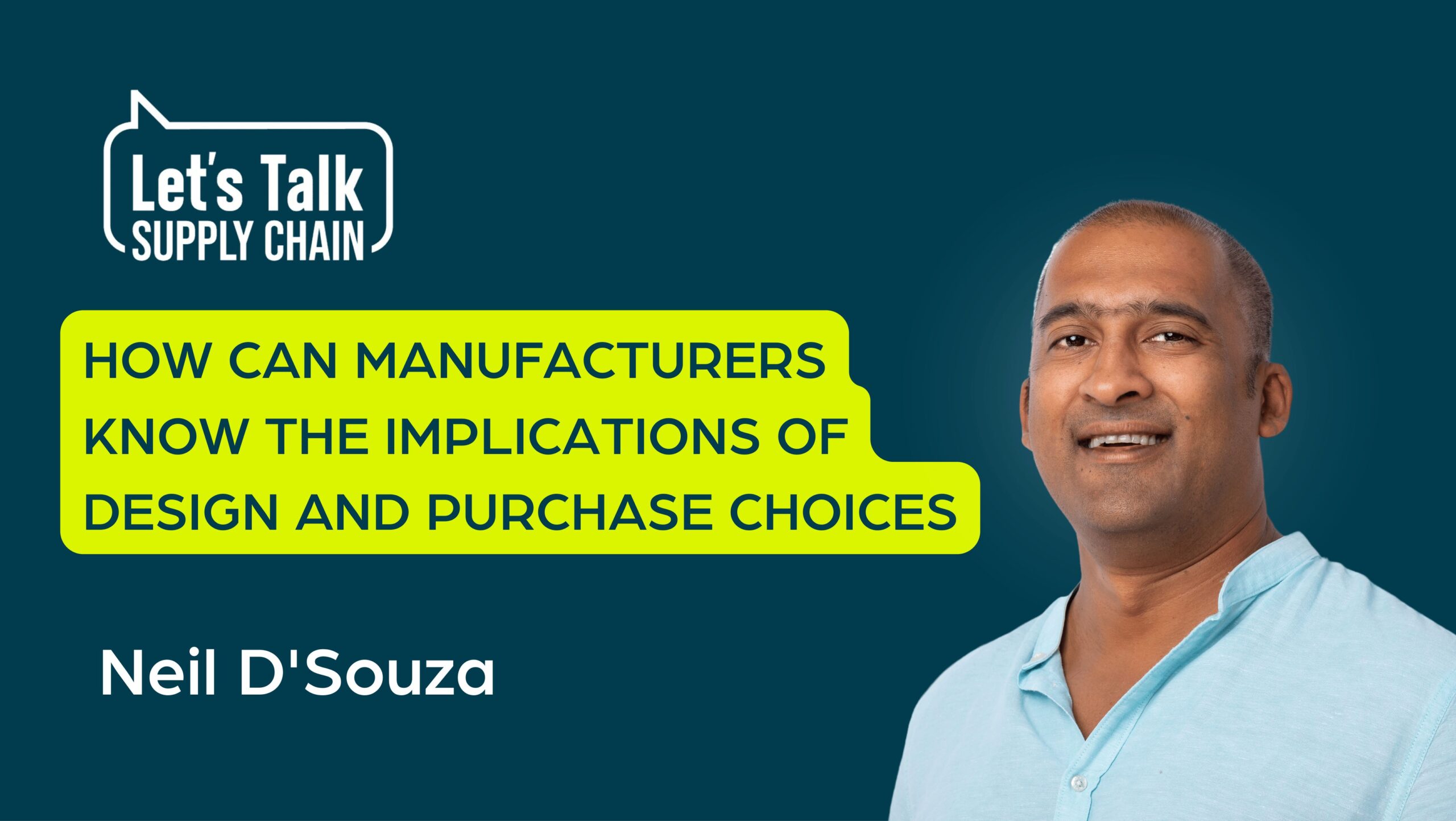
How can manufacturers know the implications of design and purchase choices

Knowing the impact of your cost and environmental choices is hard to evidence.

To understand the trade-offs you need to make on cost, sustainability, compliance is made even more difficult when shortening product innovation cycles. Supply chain visibility and resilience to risk remains a challenge for many in a post-COVID world.

How do you overcome these challenges?

Our Founder and CEO, Neil D’Souza discussed these topics and more on Let’s Talk Supply Chain show hosted by Sarah Barnes-Humphrey.

You are currently viewing a placeholder content from Articulate 360. To access the actual content, click the button below. Please note that doing so will share data with third-party providers.

More Information

Top three takeaways:

Takeaway 1: Get a deeper understanding of your supply chain so you can assess the cost and environmental impact of different materials and processes

One of the challenges manufacturers face when trying to make better products is the sheer complexity of their supply chains. In many cases, a single product can involve dozens or even hundreds of different suppliers and materials, each with its own set of environmental and social impacts. This complexity can make it difficult for manufacturers to get a clear picture of the environmental impact of their products, let alone make informed decisions about how to improve them. Makersite can help address this challenge by providing a centralized platform for visualizing and analyzing the supply chain.

Takeaway 2: Collaboration between teams is key – but it requires a harmonized data set

One of the challenges manufacturers face in collaborating effectively is the siloed nature of many organizations. Different teams within a company may have different priorities and goals, and may be working with different sets of data. This can make it difficult to get everyone on the same page and make informed decisions about the supply chain. Makersite can help break down these silos by providing a shared platform that allows all stakeholders to access the same data and collaborate more effectively.

Takeaway 3: Transform visibility into action – have a plan to measure, report and improve

To be successful in implementing sustainable practices in the supply chain, it is important to have a comprehensive understanding of the environmental impact of each material and process. Makersite’s data analysis capabilities can help businesses identify areas where they can make the biggest impact on sustainability, such as reducing carbon emissions or minimizing waste. One of the challenges manufacturers face when trying to implement sustainable practices is the lack of visibility into the environmental impact of their products. In many cases, manufacturers may not have access to detailed information about the materials and processes they use, or may not have the tools to analyze this information effectively. Makersite can help address this challenge by providing a way to analyze and visualize data about the supply chain, and identify opportunities for improvement.

Three opportunities for sustainable procurement 

Companies that have set decarbonization goals have increasingly started to look at procurement to drive reduction targets. Most procurement teams that we’ve spoken to are not equipped for this. Working with suppliers to measure and reduce emissions is easier said than done, and while, for many organizations, there is no alternative, for others, there are a few low-hanging fruits that you could capitalize on. 


Sourcing locations 

Geography has been shown to be one of the greatest sources of variability in carbon emissions for energy-intensive products. The opportunity can be as large as 80% for certain materials like aluminum and its derived products. The reason is that electricity grid mixes are different around the world – from some being solely reliant on fossil fuels to others that have a more diverse fuel mix. These mixes are also changing at varying rates determined by national energy strategies and climate change commitments. Consequently, the products manufactured using electricity from these grids have vastly different climate change impacts. The more energy intensive or complex the supply chain is, the more influence the grid has on the product’s carbon footprint.  

Knowing the impact of your current sourcing location and the opportunity to relocate supply is not trivial. It has traditionally required intensive supplier engagement and experts spending months, if not years, to determine these scenarios for a specific product. This targeted, expert-led approach is not scalable, and when everyone is scrambling to find such experts, it is not even tenable.  

It is, however, crucial to get it right when trying to make the business case for changing the sourcing location, which could inevitably mean – changing your supplier and everything that has to do with it.  

With Makersite, this is simple and was used by Schäffler to do just that for their battery raw material supply. On average, we have seen projects that identify 40% or more in savings being implemented successfully.  


Recycled materials 

Using recycled materials is a popular approach to reducing the environmental impact of your products. Its benefits go beyond just carbon and help alleviate neighboring problems of resource extraction and waste. Unfortunately, most of the products we make today were never designed with recycling in mind. Collecting, disassembling, separating, and recycling require attention to product design and supporting the waste collection and management systems. Consequently, most of the materials used in products today cannot be reclaimed with high enough purity and volume at a reasonable cost.  

There are, however, success stories in the aluminum, steel, paper, and glass industries, and there are enormous savings to be made. In aluminum-based products, this can be up to 90%. Regulations and technical requirements may preclude using recycled materials in your products, but these applications are well known. In all other cases, it’s prudent to understand where recycled materials can be used instead of primary materials and where to source them. 

Makersite will be releasing a new feature in Spring 2023 that will allow customers to understand the potential for increasing the recycled content in the products they buy and make more easily.  


Collaboration with Product Development 

Procurement professionals often have little insight into why they’re buying what they’re buying. They typically get specifications, go into the market and try to get the best price and quality with the shortest delivery time.  

Without background information on the specifications, there is little to no room to find alternatives that may also be fit for the purpose. One of our customers once joked: “A customer says: I want a car. The engineer designed a tank. Procurement bought bicycle parts.” Parallels can be drawn to the unnecessary environmental impacts that result from this inability to collaborate effectively.  

None of today’s systems enable the trade-off decisions that need to happen between product development and procurement. These trade-offs involve understanding how technical specifications affect the cost, environmental performance, regulatory compliance, and other aspects of the final product. It is crucial to do so in real time and without the need for experts to drive these conversations forward.  

This is why we built the MCDA or Multi-criterial Decision Analysis application with our customers. It solves this problem by enabling expert-supported (rather than expert-driven) trade-off conversations between product development and procurement teams. 

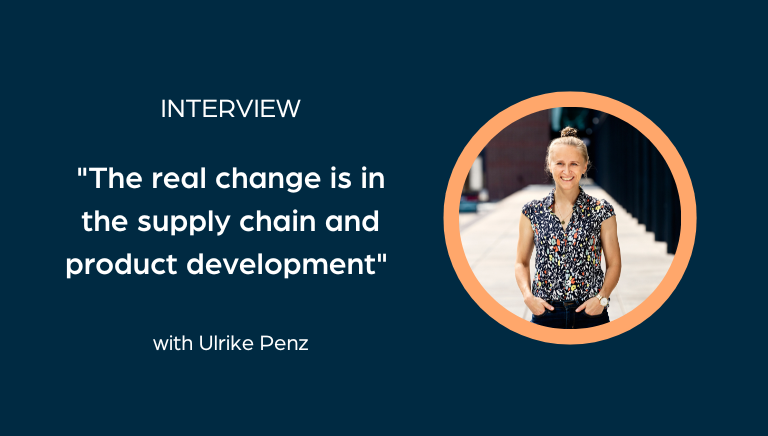
Interview with Ulrike Penz, Chief Sustainability Manager at Gruner + Jahr

“The real change is in the supply chain and product development”

What does sustainability mean for you?

Ulrike Penz: When it comes to the more theoretical part, it’s environmental, economic, and social dimensions. But that is clear. For me, sustainability means long-term thinking and questioning ideas, processes, projects, and actions. Awareness of what any action could mean to the dimensions of sustainability is the key to improvement.

What motivates you to work in sustainability?

UP: There lies a big beauty in using less and getting more out of it. For me, one fundamental principle of sustainability is the efficiency of resources. It’s essential to think about how we can build structures, processes, and products in a way that we need less and get more.


What would you rate your most successful measure for sustainability in the last years and why?

UP: I started working at Gruner + Jahr as a sustainability manager four years ago. One of my first but ongoing projects is our theme weeks. We do sustainability weeks every year, combining our journalistic and business approaches. During these weeks, we inform our readers, listeners, users, and viewers about sustainability topics via our media, TV, magazines, podcasts, audio, radio, etc. As a publishing house, it is our responsibility to inform people and build awareness of sustainability.

The theme weeks became one of our best business cases in the sustainability context. They are now so well established with both colleagues and business partners that we no longer have to solicit participation but are asked months in advance when it will start and how to join in.

On a corporate level, sustainability has become a strategic topic for G+J. There is no area in the company that has not yet dealt with sustainability – on its own initiative, in internal discussions with each other, or in meetings with business partners from all sectors. By now, we can see some change both internally and with partners. One example is the regular dialogues between our paper purchase department, production department, and editorial teams. Sustainability factors like energy, waste, or carbon emissions are now critical when deciding where a magazine should be printed and which paper should be used.

Since 2022, we have been able to count the product carbon footprint of our magazines, and we do it with our own methodology, which is externally verified. We have already reduced our carbon emissions by 30% for the magazine GEO while setting up the process. By now, GEO is produced climate-neutral. I want to emphasize that the reduction part to us is more important than the offsetting part. You can compensate from now to the next second, but the real change lies in the supply chain and product development.


How did you become a sustainability manager?

UP: It started when I was working on business models for GEO as a sustainability project manager. But with every idea I came up with, I asked myself: Can we do this if we don’t know exactly where we stand and what we, as a company, need to do? It became clear to me quite fast that the answer was no. So I came up with a pitch and presented the idea to our executive board that we should set sustainability as a corporate strategy topic on the highest level, including a person officially responsible for it. And I added: I have time, and I’d love to do it.


With what measures do you make your own life more sustainable?

UP: There are common things like I’ve been vegetarian for over 20 years, and I try adding more vegan alternatives. I prefer going by bike. One thing which has developed more within the last years is that I try to buy second-hand or high-quality long-life clothing.
There are also some energy-saving measures regarding working in the office or home office, like switching off the screen. It’s not that I haven’t done that before, but since I advised my colleagues to do it, I remember it even more myself.


What’s something new you learned in the past year?

UP: Currently, I’m working on benchmarks regarding gender diversity and gender equality. I realized that benchmarks are a good way to determine where you stand. But in the end, you have to define by yourself what company you want to be. You should ask yourself: What resources, purpose, and values do we have? What does that mean for our targets and our measures? Your inner values should tell you where you want to go instead of only looking at what others are doing.


What do you think companies lack to become better at sustainability?

UP: One of the questions that need to be asked is: Should economic growth be the only goal we all aim for? If you ask me, I would say no. There won’t be any growth if you don’t have your resources, the basis on which you build your business. And sustainability means holding and keeping this basis.

What is the biggest thing hindering you from implementing changes for more sustainability?
UP: Many people making decisions on sustainability are still questioning if those measures are necessary. That’s a problem. And even though sustainability is in the mind of people and clients and customers, it is still not as important as economic growth, and that’s hindering lots of things. Because in the end, when you have good ideas or measures to implement, the question is always: What does it cost?
People need to start seeing sustainability measures as an investment, making the future easier and better.


If you had one wish from a legislative point of view to make your job easier – what would you wish for?

UP: Regulations should focus on forward management more than on backward reporting. I

understand why they are about reporting what companies have or haven’t done in the past. But nowadays, they should be more about the future, like the EU taxonomy which regulates the investment part of sustainability.


If you had one wish from your manager and your colleagues – what would you wish for?

UP: I’m going to say something that sounds like a PR claim: I wish all stakeholder groups to have sustainability in mind to make our company fit for the future. Everyone in the company should feel responsible for sustainability. Yes, my colleagues and I are the sustainability department, but that does not mean everybody else doesn’t have to care about it. It’s the opposite.

One positive example is a meeting with our event management team I had last year. They have been thinking about sustainability and collected some measures. In our meeting, we gathered our knowledge and rated the possible measures on how big the impact would be, how much it would cost and how many resources it would take up. We agreed on prioritization, and the team decided to integrate the list of measures into their fixed organizational processes so that sustainability will always be considered in the future. Those kinds of changes make a big difference.

When my colleagues say: let’s try to jump a little higher than we were planning to, let’s develop, improve, and get better – those are the moments I love my job the most.

Thank you for the interview.

New climate and resilience law in France

Sustainability is becoming more and more important to customers and is influencing buying decisions. On average, more than one-third (34 percent) of the population is willing to pay more for sustainable products or services, and those willing to pay more would accept a 25 percent premium on average. (The Global Sustainability Study 2021, Simon-Kucher & Partners) Next to being a motive for companies to invest in sustainability, it also, unfortunately, promotes greenwashing. In states like the U.S., Great Britain, Norway, and the Netherlands, regulators have already sued companies making false environmental claims for millions of dollars. Now France is next in putting a law that prevents greenwashing: The French climate and resilience law, going into effect in 2023.  


What does the French climate and resilience law contain? 

The French climate and resilience law does, of course, not only contain greenwashing but covers all areas of (French) life. It contains laws that aim to encourage insulated housing, less polluted cities, increased train usage instead of flying, vegetarian menus, less packaging, less concrete, support of renewable energy, jurisdictional support for the environment, supervised advertisement, and better-informed citizens. Because the laws about supervised advertisements and informed citizens are the ones that influence manufacturing companies the most, we will cover them in more detail below.  


Net Zero claims need to contain evidence 

One of the most used claims by companies is the one of carbon neutrality or “Net Zero.” After the French law, this now has to be proven for companies to be able to advertise with it. To prove carbon neutrality, companies need to provide a GHG emissions report integrating the direct and indirect emissions of their products or services, meaning they will need to include Scope 3 emissions. Furthermore, they must provide the process by which the GHG emissions of their products or services are either avoided, reduced, or offset and a plan for GHG emissions reduction; the methods for offsetting residual GHG emissions need to comply with minimum standards. The emission data must be provided annually and cover the product’s entire life cycle, from production to disposal or recycling. 

This means that companies will only be able to claim a product is sustainable if they disclose the impact of the entire life of the product, from raw material to end of life. Evidence will need to be collected from suppliers at every stage of a product’s life, including from the companies that provide recycling and remanufacturing services at the end of it. 


Environmental labels for products 

But even for companies that don’t want to make use of sustainability claims in their advertisements or on their packaging, the new law means a lot more emission reporting. The new French climate and resilience law also makes environmental labeling mandatory for several categories of products. The label needs to contain information on the environmental impact of the product and the compliance with social criteria across the product’s entire lifecycle.  

While at this stage, clothing and footwear are obliged to follow the law, the current phase is considered a test phase to be rolled out for all product categories.  


Environmental impacts in advertisement 

As companies will have to label the environmental impact for customers, they will also need to include this information in advertisements. With the French climate and resilience law, it will be mandatory to indicate the climate impact of products in advertisements. Same as above, this law doesn’t come into place for all companies at once. The automotive and household appliances sectors are the ones that need to comply from 2023 with other product categories following.  


What does the French climate and resilience law mean for my company? 

The French climate and resilience law is only one example of environmental regulations and laws coming into action all over the world. Europe’s Product Environmental Footprint (PEF), the ISSB recommendations, Germany’s new supply chain law, and the SEC regulation are only some examples of climate laws worldwide. There’s one thing they all have in common: They oblige companies to look at their product’s whole lifecycle. Reporting and improving Scope 1 and Scope 2 emissions that happen inside of your own company is not enough anymore. Scope 3 emissions in manufacturing companies make up to 80% of overall emissions. It’s about time that reporting on these emissions becomes mandatory. In the case of the French climate and resilience law, non-compliance comes at a great cost and even prison sentences. 

If you want to find out how Makersite can help you provide the information requested by the climate and resilience law, automate full Scope 3 reporting and run LCA of your products at scale in order to properly report on their carbon footprint, book a demo with us.

Product Environmental Footprint vs. Life Cycle Assessment

If you’re working with LCAs, you have probably heard of the PEF, the Product Environmental Footprint. The PEF is a new methodology for environmental measurements. It was brought into place to generate a new, leveled standard. But how do PEF and LCA differentiate, and what do you need to apply when? The Makersite experts have collected all information you need.  


What is a Product Environmental Footprint (PEF)? 

The PEF was invented because the EU wanted to develop a common way to create product footprints. The footprint is generated by measuring the environmental performance of a product throughout its entire lifecycle – the so-called “from cradle to grave.” When calculating a PEF, products are put into different categories, which ensures that the environmental aspects that matter most for this specific product group don’t get overlooked. The PEF method also provides a database that was specifically developed to support it and functions as a new standard environmental database for EU industries.‍ 


What is a Life Cycle Analysis (LCA)? 

The definition of LCA software is quite similar to the one of PEFs. LCA is a method to identify the environmental impact of a product or organization throughout its lifecycle. Similar to the PEF, an LCA includes all essential information about the product or organization, from raw material extraction to disposal. LCAs are a widely used tool to identify environmental hotspots in the life of products or organizations and are already driving sustainable improvements for many companies.  


Differences and Similarities 

LCAs and PEFs are part of the lifecycle approach, which takes the entire lifecycle of a product into account and gives a holistic view. Like LCA, PEF takes a life cycle perspective but follows further product-specific requirements and standardized specifications that create greater comparability of results. While LCAs quantify all kinds of environmental impacts like greenhouse gas emissions, energy use, and water consumption, PEFs are a methodological framework with specific guidelines on how to perform an LCA. A PEF study, therefore, is a somehow standardized LCA study. 


Do you have to do PEFs? 

The PEF methodology is not yet put into action. The active pilot phase is planned to be completed by the end of 2024. Using the PEF methodology for your business is, therefore, not mandatory yet. 

On implementation, the PEF will likely have a significant impact on companies, creating standard environmental measurement rules for everyone. While it is yet unclear where the PEF will be mandatory, it is likely that some LCA reporting methods will become obligatory for most companies in the coming years. France, for example, already has a mandatory LCA in place.  

So why is it important to start preparing for mandatory climate reporting now? PEF, and other reporting methods, like the one discussed by the ISSB right now, will need companies to report on Scope 3 emissions. To be able to do this, you will need to look at the whole lifecycle of products. But most companies lack insights into the deep tiers of their supply chains. Organizations, therefore, need to focus on technology that measures the environmental impact of its entire supply chain instead of restricting it to its own four walls. The more downstream and complex your products, the more of your impact will sit in the supply chain. 

If you’re planning to invest in software to help you report on environmental data and give you actionable insights, choose one that can produce automated LCAs and extend your LCAs to different formats, like the PEF one. If you want to read more about how Makersite makes sustainability reporting easy, click here.

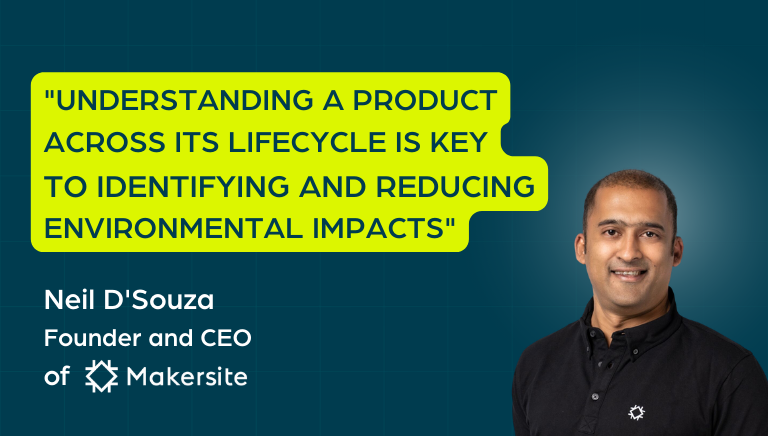
Interview: Understanding a product across its lifecycle

How can manufacturing companies truly enable change? If you ask Makersite founder Neil D’Souza his answer will be: “Only by looking at products from their cradle to their grave!” In this interview, we asked him everything about Scope 3, the lifecycle of a product, the challenges that lie in finding, evaluating, and making decisions based on data, and more.
Why is it important to look at the whole lifecycle of a product? 

Because up to 80% of emissions of a company come from its supply chain, organizations need to focus on technology that measures the environmental impact of its entire supply chain instead of restricting it to its own four walls. The more downstream and complex your products, the more of your impact will sit in the supply chain. But it is not just about the supply chain – for energy-consuming products like automotives, electronics, and others, the major impact most often comes from their use. Therefore, understanding a product across its lifecycle is key to identifying and reducing environmental impacts. 


What is the main challenge of gaining insight and acting on Scope 3 data? 

Understanding that this is a business opportunity rather than another report is one way to mobilize the resources that are needed. The framework provides an opportunity to understand your value chain, find cost reductions and hidden risks and build resilience in your supply chains. With almost $44 trillion deployed in ESG-related funds, this is becoming an increasingly important factor in access to capital. As deadlines for national climate targets approach, regulations are already catching up. All-in-all, besides being crucial to mitigate the extent of damage from climate change, it just makes good business sense.  

Measurement is hard, but action is harder. A company is its product, and a product is its supply chain. To reduce the Scope 3 impact of a company, you must address its products and supply chains. This responsibility sits squarely in product development and procurement – not sustainability. These teams need access to carbon information within the tooling environments that they use daily. High-level dashboards or expert tools are unhelpful in regard as they do not integrate into standard workflows. 


How granular does the insight need to be? 

Granularity matters, and not just because of accuracy. Change can only happen when you have actionable information in the hands of decision-makers. In manufacturing industries, this is the product development and procurement teams. For product teams, granularity means having information at the part or material level to give them the ability to compare alternative designs. For procurement teams, you need to increase that granularity to become supplier specific to give them the ability to compare materials from different suppliers. Granularity means vast amounts of information need to be managed, and this is not possible without modern technologies.  


Why should you never look at one isolated criterion? 

A multi-criteria approach is one more requirement to enable change. Decisions are never based on a single criterion, let alone having that criterion being an environmental impact. Information about criteria such as cost, risk, and regulatory compliance is crucial to enable the jump from having an insight to affecting change. Multi-criteria simulations are computationally intensive and rely on complex models with the need for vast amounts of background information, which means heavy reliance on modern technology architectures and data ecosystems. 


How can AI help with looking at the lifecycle of a product? 

The biggest barriers to scale eco-design are the speed of the process and expertise in sustainability. One cannot compromise accuracy for speed. Otherwise, it defeats the purpose of doing the exercise in the first place, which is to provide actionable data to enable change.  

One of the most time-consuming tasks for experts is collecting data from different sources – internal PLM, ERP, procurement systems, external data from suppliers, and third-party data that enable the calculation of the impacts themselves – and then connecting them to create models of the products or processes they are evaluating. Certain kinds of AI are relatively good at automating these tasks, and this can tremendously reduce the amount of time for calculating impacts, but also, more importantly, reduce the dependence on experts for this unenjoyable step. 

Data is also never complete and consistent – supporting decisions from the early stages of developing an idea, where you have very little detail on the product or process, is crucial in guiding the development in the right direction. Filling gaps and identifying outliers quickly are also other areas where we have found a good use for AI. 

Another area where AI is immensely useful is finding patterns in data to identify improvement potentials. Developing insights is one of the most valuable tasks of experts, and AI can amplify their impact by, for example, identifying similar cases where their insight could have value.  


How can one make sure that the data quality is appropriate? 

Firstly, work with emissions data from leading providers and ensure that information is updated automatically and regularly. Data that is regularly updated will allow you to not just take advantage of information about newer technologies and improved electrical grid mixes etc. Still, more importantly, it enables you to design products that are optimized for the current understanding of the environmental impacts associated with products and processes. Transparency in your data model is crucial to validating accuracy and completeness. Being able to see what assumptions were made by the AI enables a certain level of automation in the quality control process. Spot-checks based on known information are another common approach to test if the AI model is trained sufficiently.

Interview: Scope 3 as a disclosure standard by ISSB

In 2021 the International Financial Reporting Standards Foundation (IFRS) announced the creation of the International Sustainability Standards Board (ISSB). The ISSB was then tasked with developing mandatory corporate ESG disclosures. The goal is to find a global baseline of sustainability disclosure standards by the end of 2022. The intention behind it is to standardize sustainability disclosures for investors. 

In October 2022, the IFRS Foundation stated that it had made significant progress on its draft requirements. The ISSB agreed that companies should disclose Scope 1, 2, and 3 emissions but will potentially have more time to report on Scope 3 disclosures and be supplied with “relief provisions” to help work out these disclosures. 

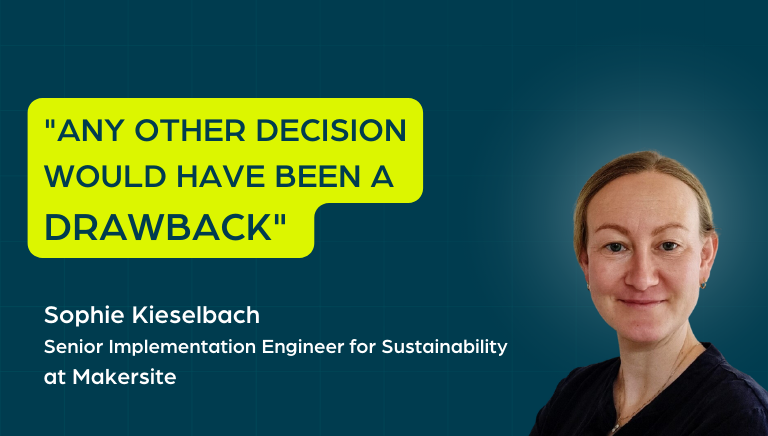
A mandatory Scope 3 disclosure is challenging for many companies. While Scope 1 and 2 emissions are company-owned and relatively easy to report, Scope 3 emissions occur upstream and downstream and are challenging to report on and even harder to improve. We talked to Sophie Kieselbach, Senior Implementation Engineer for Sustainability at Makersite, about the implications of the new requirements.  

How do you feel about the ISSB including Scope 3 into a global baseline for disclosure standards? 

I am happy that the ISSB includes Scope 3 reporting into their baseline for disclosure. Up to 90% of emissions are Scope 3 emissions. Any other decision would have been a drawback to GHG reporting and would not have given enough insights to investors to base investments. 


What companies will have to comply? 

The IFRS Foundation Trustees are committed to the International Sustainability Standards Board (ISSB) building on the work of existing investor-focused reporting initiatives—and ultimately becoming the global standard-setter for capital market sustainability disclosures. This effort includes further developing the Integrated Reporting Framework, which the International Accounting Standards Board (IASB) and the ISSB assumed responsibility for when the Value Reporting Foundation merged with the IFRS Foundation in August 2022. An integrated report is concise communication about an organization’s strategy, governance, performance, and prospects. Right now, the IRFS refers to the GHG reporting standard, so this is the first source to understand what to comply with (Standards | Greenhouse Gas Protocol (ghgprotocol.org))


In your opinion, how will the trend toward Scope 3 reporting continue? 

I find the word “trend” a bit unlucky as it implies that tracking and reporting on your Carbon footprint are only necessary now but might get less critical in the future. Companies must understand that it is not just an annoying task to tick off your checklist but a tool to optimize your products along the supply chain, which always comes with other, also financial benefits.  

I hope that with IFRS including it in the financial reporting standards, it gets once more the recognition it should get: Scope 3 reporting is a necessary tool to see if your company is future-proof and worth investing in.  


Are there companies that are already one step ahead? 

Yes. Several companies worldwide have employed sustainability teams for years and had the time to crunch their data and work on their goals. It isn’t easy to catch up with them, as they have already implemented knowledge and internal structures to comply with their plans. Companies still tend to underestimate the efforts behind a solid sustainability/GHG strategy. Nevertheless, it is never too late to join the party. 


And is it too late to be one of these companies? 

No, of course not. The good news is that the market to support you is growing, and getting the right help is easier and easier.  

Still, I cannot suggest pushing that task further down the timeline. It will be a standard task in your reporting, similar to reporting profit- and loss statements.  


How do you start reporting on Scope 3 emissions? 

  1. As already stated, the  GHG protocol is referred to by the IFRS, so this is the best start to understanding what should be reported.  
  2. I would always recommend asking for help to speed up the process: there are many consultants in the market with experience you can learn from 
  3. Crunching these numbers within Excel files is very old-school (and also slow, error-prone and horrible to update). To support reporting, I would always recommend using software applications to help make this task easier. 


What does this mean for suppliers? 

Questions about carbon footprint or, more generally, social, economic, and environmental impacts of products will increase.  

One can only advise that – if not already done – companies start now to get to know their product portfolio and to be able to provide these figures and set up their roadmap. It is a fact that if these figures cannot be provided and it cannot be credibly presented how they will be improved over time, companies will be at a competitive disadvantage.  


What are the seen and unseen benefits of reporting Scope 3 

There is a clear competitive advantage if one knows the numbers. 

Also, as soon as one starts digging deeper into the supply chain, it enables optimizations and is financially beneficial. Another benefit – most companies haven’t looked at their data in the way it is necessary for Greenhouse Gas reporting, so a company will likely gain new insights into their mechanisms.  


Any thoughts on the relief provisions? 

I hope these relief provisions will not lead to another delay in reporting Scope 3. Even though I understand the struggles with GHG reporting, the advantages outweigh the disadvantages. And as I said – one might be surprised by what insights can be gained. Wouldn’t you be curious about your impacts and the subsequent potential to perform better? 

New supply chain law in Germany

Das Lieferkettensorgfaltspflichtengesetz

Around 80 % of world trade is based on global value chains. (Source: https://unctad.org/press-material/80-trade-takes-place-value-chains-linked-transnational-corporations-unctad-report) Still, companies mostly fail to meet their obligations with regard to supply chains. Because enterprises have massive supply chains for their products, it’s easy to lose track and insights into human rights and environmental risks in the supply chain. While this is hardly compatible with modern companies’ self-image and ESG criteria, they are often unaware of how much of an influence they have on changing these conditions. In Germany, legislation has now reacted to this: In 2023, the Supply Chain Sourcing Obligations Act (Lieferkettensorgfaltspflichtengesetzor short LkSG) will come into force in Germany.  

What is the new LkSG (German supply chain law)? 

The LkSG aims to improve the protection of human rights and the environment in the supply chain. The law states that companies must identify risks of human rights violations and environmental damage in their direct suppliers and partly even with deep-tier suppliers. If they discover irregularities, they must take countermeasures and document them to the German Federal Office of Economics and Export Control (BAFA). The law outlines reporting, prevention, and countermeasures.  


What companies have to comply with LkSG? 

The LkSG affects all companies based in Germany with more than 3,000 employees. The law comes into place in January 2023. From January 2024, the threshold will drop to 1,000 employees.  


Human rights and sustainability in the LkSG 

The new German LkSG is primarily about identifying human rights risks in the supply chain. While there is no explicit climate-related due diligence obligation, the LkSG does allow it to be interpreted that way. Environmental protection is taken into account insofar as companies have to report on environmental risks that can lead to human rights violations. The decisive factor here is how the concept of air pollution, mentioned in the LkSG, is interpreted. Companies must ensure that air pollution from their suppliers can neither impair the natural basis for the preservation and production of food nor cause damage to human health. This is broad wording, and companies will likely interpret this very differently.  


Plans for a European supply chain law 

While other European countries already have a supply chain law in place, the EU Justice Commission is also planning a European supply chain law. The interesting thing here is that the draft of the European version looks at human rights and the environment in equal parts. The European Parliament’s draft of the EU supply chain law clearly states that the duty of care should also cover a company’s environmental impact, including its contribution to climate change. In the best case, the European supply chain law will combine the best of the due diligence laws of the member states, e.g., the definition of the entire value chain from the Netherlands, strong regulatory enforcement from Germany, and civil liability from France. 

“The fact that companies slowly become responsible not only for what happens behind their own doors but also for the actions of their suppliers is a good thing through and through. What most of them don’t suspect right now is how much they will profit from it. Providing transparent information about ALL business activities is a competitive average and will be liked by customers and partners. In my opinion, the German LkSG should have been stronger on the environmental side, but I’m confident that the European supply chain law will make up for that. In any case, I would refer enterprises to get a good overview of what’s happening in their supply chain, even in the deep tiers. If not, the supply chain law will make this obligatory; other laws about compulsory reporting on Scope 3 emissions are soon to be expected. I’d recommend everyone to start investing in this now.”

Fabian Hassel

Fabian Hassel

VP of Services at Makersite

Sustainability Reporting: Asia Pacific

Companies underlie various regulations about what they must report depending on where they are located and selling their products. Changing rules for each country can be irritating and hard to oversee. In our series, we’ll give an overview of what sustainability reporting is already and what will be becoming mandatory. Today we’re covering the region, Asia Pacific: 

As in other parts of the world, environmental, social, and governance reporting (ESG) has become increasingly critical for companies. While part of the reason lies in the risks of climate change, health and safety measures, and reputation, many companies have now understood that sustainability is a way to gain an advantage over their competitors.  

Also, investors and governments now include ESG in their decision-making and regulations. More and more mandatory sustainability reporting measures are emerging worldwide – the Asia Pacific is no exception. 

Non-financial ESG reporting

In most countries located in the Asia Pacific, non-financial ESG reporting has evolved a lot in the past years. Non-financial means businesses disclose certain information unrelated to their finances, including information on human rights, the environment, etc.  

Today, all Asian stock exchanges have implemented some ESG reporting as a listing requirement. The definite requirements for reporting vary between countries, which affects the reports’ effectiveness. Before we look at the different reporting requirements in the Asia Pacific, we will briefly introduce the two most used reporting frameworks in the region.  


Global Reporting Initiative (GRI) Standards

Both the standards of the Global Reporting Initiative (GRI) and the Task Force on Climate-Related Financial Disclosures (TCFD) are voluntary reporting frameworks. They were put into place to help companies report on their non-financial disclosures.  

The GRI standards enable organizations, no matter their size, to understand and report on their impacts on the economy, environment, and people comparably and credibly.  

In countries with high overall disclosure rates, a large share of companies is using the GRI framework. In Japan and Taiwan, around 60 percent of the largest 250 publicly listed companies are referencing the GRI framework; in China, it’s nearly a third of companies.   


Task Force on Climate-Related Financial Disclosures (TCFD)

The Financial Stability Board created the TCFD in 2015 to develop international climate-related financial risk disclosures. Companies, banks, and investors are supposed to use them to provide critical information to stakeholders.  

Today, TCFD reporting frameworks are highly valued in climate reporting. Especially as many governments are planning to make sustainability reporting on TCFD-basis mandatory, companies like to choose the framework to be prepared.  

ESG reporting by country

Hong Kong

Hong Kong Exchanges and Clearing Limited (HKEX) 

  • What? Guidance on climate disclosures  
  • Who? All HKEX-listed companies 
  • Reporting method? TCFD framework 
  • By? Annual reporting by 2025 


Hong Kong Monetary Authority (HKMA)  

  • What? Supervisory policy manual for climate risk management 
  • Who? Financial institutions 
  • Reporting method? TCFD framework 
  • By? First reporting by 2025 


Singapore 

Singapore Exchange (SGX) 

  • What? Climate disclosure rules 
  • Who? All SGX-listed companies 
  • Reporting method? TCFD framework 
  • By? Annual sustainability report by 2023, some companies by 2024 


Japan

Corporate Governance Code 

  • What? Sustainability reports  
  • Who? Prime Market-listed companies 
  • Reporting method? TCFD framework 
  • By? April 2022 


Australia

Australia does not currently have any mandatory sustainability reporting rules in place. The corporate governance codes recommend publicly listed companies disclose environmental and social risks. 


India 

Securities and Exchange Board of India 

  • What? Business Responsibility and Sustainability Reports 
  • Who? Top 1000 listed companies 
  • Reporting method? Based on GRI, SASB, and TCFD 
  • By? 2021 


China 

China Securities Regulatory Commission  

  • What? Guidelines for environmental and social topics in their annual reports 
  • Who? Publicly listed companies 
  • Reporting method? GRI framework 
  • By? To become compulsory by the end of 2022 


How has sustainability reporting in the Asia Pacific evolved during the last years? Sustainability reporting rates across Asia-Pacific have improved notably over the last years. It must be said that many of these improvements start from a very low base. However, big enterprises from the Asia Pacific are partly reporting more than North America and Europe.  

Why you better start early

The primary difficulty with ESG reporting is gathering and analyzing the necessary data. Companies struggle to get the information they require, particularly when disclosures are expanded to the Scope 3 category of emissions (read more on Scope 3 reporting here). To have an accurate view of their impact and risks, organizations must collaborate with an extensive network of stakeholders inside and outside the organization. Digital tools, however, provide solutions to this issue by enabling organizations to centralize data management efforts and utilize cutting-edge technology to process, analyze, and report this data.

Sustainability Reporting: US

Sustainability reporting in the US is a key aspect of ESG reporting

Companies underlie various regulations about what they must report depending on where they are located and/or selling their products. Changing regulations for each country can be irritating and hard to oversee. In our series, we’ll give an overview of what sustainability reporting is mandatory and becoming mandatory in the following years and the most significant industries. Today we’re covering the US:   

Sustainability reporting is part of the so-called ESG reporting. ESG stands for environmental, social, and governance factors. In the US, companies of all sizes have been encouraged to produce ESG reports in the past – to guide their own decisions and to help investors get further company insights, leading to a more sustainable and socially responsible future.  

Up to now, there is no stand-alone mandatory sustainability reporting in the US. The United States Securities and Exchange Commission (SEC) only requires companies to report on information that may be material to investors, which includes ESG-related risks.  

In the past, the US has relied on voluntary reporting, hoping for it to be driven by competition and engagement. Even though this strategy worked out quite well (in 2015, approximately 81% of S&P 500 companies issued a sustainability report, compared to less than 20% in 2011 (source: Governance and Accountability Institute)), since the beginning of the Biden administration mandatory sustainability reporting comes more into focus.  

What is the ESG Disclosure Simplification Act? 

 In June 2021, the House of Representatives passed landmark legislation titled the ESG Disclosure Simplification Act. The legislation would make several ESG-related reportings mandatory for public companies in their SEC filings. The SEC would be directed to adapt its disclosure rules accordingly and define the metrics for the reporting.  

The required disclosures cover five topics: 

  • ESG Metrics 
  • Political Spending 
  • Pay raises 
  • Climate disclosures 
  • Tax havens and offshoring 

The passing of the legislation is still very unsure, as the House of Representatives approved the landmark legislation only by a slim margin. But even if the bill does not pass, there are various developments toward mandatory sustainability reporting in the US (see below). 

United States Securities and Exchange Commission proposal

On the 21st of March 2021, the United States Securities and Exchange Commission (SEC) proposed a new regulation, which has sparked many discussions since then. While the SEC has always encouraged companies to disclose their climate-related risks, publishing this data has been voluntary. The new regulation will change this.  

What does the regulation entail? 

The regulation would require U.S.-listed companies to disclose their Scope 1 and 2 emissions, including an auditing requirement. But the detail that sparked the most interest was the mention of Scope 3 emissions. The proposal would oblige companies to disclose the greenhouse gasses generated by suppliers and partners, known as Scope 3 emissions if they are material or included in the company’s emission targets. 

Whom will the regulation affect? 

The new regulation would be mandatory for all public companies with an existing SEC reporting requirement. But as many private companies are already on the path to an initial public offering (IPO), they often begin filing in preparation. They will, therefore, likely be asked to include this data by their investors.

What is sustainability reporting?

Sustainability reporting is a method used by companies to disclose their environmental, social and governance (ESG) practices and impact. This information is made public in annual reports or through separate sustainability reports. The purpose of sustainability reporting is to provide stakeholders with transparent and comprehensive information regarding a company’s sustainability initiatives and performance. It allows stakeholders, such as investors, employees, customers, and the public, to assess a company’s sustainability efforts and hold them accountable for their impact on society and the environment.

The importance of sustainability reporting

Sustainability reporting is gaining significance as consumers seek greater transparency and accountability from businesses. With heightened awareness of environmental and social concerns, consumers are increasingly choosing products based on a company’s sustainability efforts. By focusing on sustainability, companies not only appeal to socially conscious customers but also gain a competitive edge in the market.

Sustainability reporting enables companies to pinpoint areas for enhancement and adopt more sustainable practices. This not only aids the environment but also cuts costs and boosts efficiency in the long term. It further empowers companies to monitor their journey towards sustainability objectives and highlight their commitment to stakeholders.

Types of sustainability reporting

Organizations commonly use different types of sustainability reporting to communicate their sustainable practices and impacts. Corporate social responsibility (CSR) reports examine a company’s social and environmental aspects, while environmental reports focus solely on environmental impacts and mitigation efforts. Integrated reports combine financial data with sustainability information, offering stakeholders a comprehensive view of a company’s performance.

Who benefits from sustainability reporting? Various stakeholders gain from it, such as investors seeking socially responsible investments, employees looking for companies with strong values, and customers concerned about their purchases’ impact. Regulators and policymakers also benefit by monitoring companies’ sustainability efforts to make well-informed decisions.

Challenges in sustainability reporting

While sustainability reporting has numerous benefits, there are also challenges associated with it. One major challenge is the lack of standardized reporting methods, making it difficult to compare the sustainability performance of different companies. Another challenge is obtaining accurate and reliable data, especially from global supply chains.

Sustainability reporting plays a crucial role in promoting sustainable practices and creating a more transparent business environment. Companies that prioritize sustainability reporting not only benefit themselves but also contribute to building a better and more sustainable world for future generations. With continued efforts towards standard

The importance of sustainability reporting

Sustainability reporting is gaining significance as consumers seek greater transparency and accountability from businesses. With heightened awareness of environmental and social concerns, consumers are increasingly choosing products based on a company’s sustainability efforts. By focusing on sustainability, companies not only appeal to socially conscious customers but also gain a competitive edge in the market.

Sustainability reporting enables companies to pinpoint areas for enhancement and adopt more sustainable practices. This not only aids the environment but also cuts costs and boosts efficiency in the long term. It further empowers companies to monitor their journey towards sustainability objectives and highlight their commitment to stakeholders.

Types of sustainability reporting

Organizations commonly use different types of sustainability reporting to communicate their sustainable practices and impacts. Corporate social responsibility (CSR) reports examine a company’s social and environmental aspects, while environmental reports focus solely on environmental impacts and mitigation efforts. Integrated reports combine financial data with sustainability information, offering stakeholders a comprehensive view of a company’s performance.

Who benefits from sustainability reporting? Various stakeholders gain from it, such as investors seeking socially responsible investments, employees looking for companies with strong values, and customers concerned about their purchases’ impact. Regulators and policymakers also benefit by monitoring companies’ sustainability efforts to make well-informed decisions.

Is ESG reporting mandatory in the United States?

There is currently no federal mandate for ESG (Environmental, Social, and Governance) reporting in the United States. However, there are various initiatives and regulations that require companies to disclose certain ESG information.

When will the regulation come into place? 

The SEC is planning a phased implementation. Larger organizations would have to comply with the regulation by 2023, while smaller ones would have time until 2024 to follow.  

Do you want to know what you’ll need to be ready for the SEC proposal? Find out more here.


International Sustainability Standards Board (ISSB)

In 2021 the International Financial Reporting Standards Foundation (IFRS) announced the creation of the International Sustainability Standards Board (ISSB). The ISSB was then tasked with developing mandatory corporate ESG disclosures. The goal is to find a global baseline of sustainability disclosure standards by the end of 2022. The intention behind it is to standardize sustainability disclosures for investors. The ISSB disclosure standards will be based on the Sustainability Accounting Standards Board (SASB) standards. The SASB Standards identify the subset of sustainability issues most relevant to financial performance in 77 industries with numerous reporting elements under each. The ISSB sustainability standards will likely involve a significant amount of sustainability-related disclosure requirements, with the mandate of collecting company-wide information every quarter and controls to ensure the accuracy of the data. 

It’s unclear when the ISSB standards will come into place. For 2022 a public consultation on the proposal is planned. What is also unsure is if the US will use the ISSB’s standards. It seems likely, though, looking at the fact that most sustainability reporting updates in the US are investor-focused. 

Ways to comply with growing sustainability regulations

Sustainability is a crucial aspect of business operations in today’s world. With the increasing concern for the environment, governments and organizations are implementing strict regulations to promote sustainable practices. Compliance with these regulations has become essential for businesses to stay competitive and avoid penalties.

Here are some ways that businesses can comply with growing sustainability regulations.

What does this mean for you?

We’re still far from having a global standard for sustainability reporting and its methods. But one thing is for sure: mandatory disclosure of sustainability information will happen in the coming years. Companies should be prepared and advised to establish ESG reporting already today.  

Especially Scope 3 reporting poses a challenge for many enterprises, as they lack data, insights, and ways to get actionable insights. If you want to learn more about the difficulties of Scope 3 reporting and how to overcome them, make sure to read our article.