SiGREEN Becomes Mattermaps

Read more
Close

Guideline: The European Green Deal and Sustainability Regulation emerging from it

The European Union (EU) stands out as a global leader in enacting highly sophisticated, stringent, forward-thinking, and intricate corporate and investor sustainability laws, along with comprehensive reporting requirements within its economic domain. Embracing the overarching ‘European Green New Deal’, Europe is actively executing an extensive array of measures aimed at combatting climate change, fostering sustainable innovation, and achieving climate neutrality across the continent by 2050. In this guide, we will delve into the European Green Deal, examining its core elements and the reporting regulations it entails, while assessing whether the regulations and directives represent solely an additional task or a unique opportunity.
 

The European Green Deal 

The European Green Deal is a comprehensive and ambitious policy framework introduced by the European Commission, the executive branch of the European Union, in December 2019. It serves as a roadmap and action plan to transform the EU into a sustainable, climate-neutral, and environmentally friendly economy by 2050. The deal aims to tackle climate change, biodiversity loss, and environmental degradation while promoting a just and inclusive transition.  


Why was the European Green Deal put into place? 

The roots of the European Green Deal can be attributed to several key factors. Firstly, the adoption of the Paris Agreement in 2015 laid the foundation for international efforts to limit global warming to below 2 degrees Celsius, with an ambitious target of 1.5 degrees Celsius. As a party to the agreement, the EU made commitments to take bold measures in reducing greenhouse gas emissions. 

Additionally, there has been a noticeable shift in politics, with EU member states, policymakers, and citizens recognizing the urgency of addressing climate change and embracing environmental protection and sustainability as fundamental priorities for the region. 

Moreover, the rise of environmental movements and increased public awareness and activism has exerted significant pressure on political leaders, compelling them to take more decisive actions towards achieving sustainability goals. These factors combined have paved the way for the formulation and implementation of the European Green Deal, signaling the EU’s commitment to leading the fight against climate change and promoting a greener and more sustainable future. 


How does the European Green Deal work? 

The European Green Deal acts as a guiding roadmap and action plan, directing the EU’s policies and initiatives for the foreseeable future. Its implementation involves a multifaceted approach, comprising legislative measures, funding mechanisms, and collaborative efforts with member states, businesses, civil society, and international partners. 

Under the umbrella of legislation and regulation, the European Commission formulates and enacts new laws and regulations to support the Green Deal’s objectives. This entails establishing targets, standards, and guidelines aimed at promoting sustainable practices across various sectors. 

To facilitate the realization of its goals, the EU provides substantial funding through diverse mechanisms such as the Just Transition Fund, the European Green Deal Investment Plan, and the EU’s long-term budget (Multiannual Financial Framework). 

The success of the Green Deal hinges on fostering cooperation and partnerships with EU member states, businesses, local authorities, and civil society organizations. This collaborative approach is crucial for effective implementation and continuous monitoring of the initiatives. 

Regular monitoring and reporting by the EU play a vital role in evaluating the progress made towards achieving the Green Deal’s objectives. This fosters transparency, ensures accountability, and allows for necessary policy adjustments and actions as circumstances evolve. 


The European Green Deal Objectives 

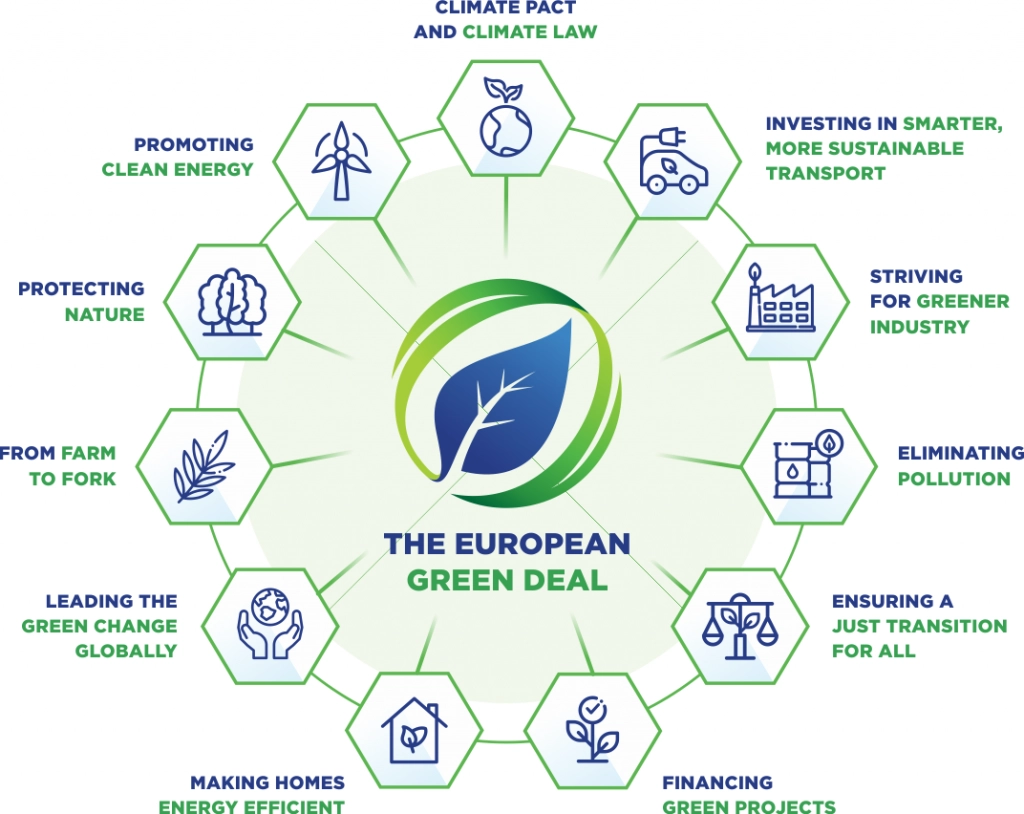
The European Green Deal represents a collective effort by the EU to address the pressing challenges posed by climate change and environmental degradation while fostering economic growth and social well-being within a sustainable framework. It involves legislation, funding mechanisms, and collaborations between member states, industries, and civil society to achieve its ambitious goals. Key objectives of the European Green Deal include: 

  • Climate Neutrality: The primary goal is to make Europe the world’s first climate-neutral continent by 2050. This entails reducing greenhouse gas emissions to net-zero levels, where any remaining emissions are offset by measures such as carbon capture or reforestation. 
  • Clean Energy: The deal emphasizes the adoption of renewable and clean energy sources, reducing reliance on fossil fuels, and promoting energy efficiency to achieve a sustainable energy system. 
  • Circular Economy: The EU aims to transition towards a circular economy that minimizes waste, promotes recycling, and encourages the sustainable use of resources. 
  • Biodiversity and Ecosystems: The Green Deal aims to protect and restore biodiversity, enhance ecosystem resilience, and combat pollution to ensure the long-term health of the environment. 
  • Sustainable Agriculture and Food Systems: The deal seeks to promote sustainable agricultural practices, reduce the environmental impact of food production, and support more sustainable food consumption patterns. 
  • Sustainable Mobility: The EU aims to promote clean and sustainable transport options, including increased use of electric vehicles, improved public transportation, and cycling infrastructure. 
  • Renovation of Buildings: The Green Deal emphasizes improving the energy efficiency of buildings to reduce emissions and enhance the overall sustainability of the construction sector. 
  • Just Transition: The deal emphasizes the importance of a fair and inclusive transition, ensuring that the changes in economic and industrial practices do not disproportionately affect vulnerable communities and workers. 


 Source: EUinASEAN

An Overview: European Sustainability Reporting Regulations 

The European Green Deal entails various reporting regulations aimed at monitoring and assessing progress towards its sustainability goals. These reporting regulations aim to enhance transparency, accountability, and informed decision-making in pursuit of the European Green Deal’s ambitious sustainability goals. By requiring organizations to disclose their environmental and climate-related data, the EU seeks to drive positive change and ensure a collective effort towards building a climate-neutral and environmentally responsible continent. 


Circular Economy and Waste Management:  

The EU has been actively promoting a circular economy model, which aims to minimize waste, extend product lifetimes, and enhance resource efficiency. This section explores EU directives and regulations concerning waste management, recycling, and eco-design, as well as the promotion of sustainable production and consumption patterns. 


Ecodesign for Sustainable Products Regulation (ESPR) 

What is it? 

The ESPR aims to expand the Ecodesign directive’s scope to cover a wide range of goods beyond energy-related products. It sets criteria for most physical items in the EU market, excluding some like food. It enhances eco-friendliness and energy efficiency through tailored ecodesign requirements. Notably, it introduces the Digital Product Passport (DPP) for better product information.  


Who needs to comply? 

All companies introducing products to the EU market, regardless of origin, must comply with the ESPR. This includes a wide range of products, even extending to military, space, and medical items. The ESPR framework covers various entities in the value chain, such as manufacturers, importers, distributors, retailers, and sellers. 


When does it come into action? 

The current Ecodesign Directive is active until the transition to the ESPR. The ESPR will replace the current directive upon implementation. The 2022-2024 work plan includes acts for mobile phones, tablets, computers, and servers. 31 product categories will be assessed, focusing on energy and material efficiency, potentially leading to regulations by 2030. The phase emphasizes criteria like durability, reparability, and recyclability. Deadlines and transitions will be detailed in post-ESPR adoption delegated acts, as implementation is expected from 2024 to 2030. 

Find detailed info about the ESPR here. 


Digital Product Passport (DPP) 

The Digital Product Passport (DPP) is a concept introduced under the Ecodesign for Sustainable Products Regulation (ESPR). It aims to provide comprehensive and standardized information about a product’s environmental and sustainability attributes throughout its entire lifecycle. The DPP is a digital document or database that accompanies a product from its design and manufacturing stages to its use, maintenance, and eventual disposal or recycling. 

Key features of the Digital Product Passport: 

  • Product Information: materials, components, energy efficiency, environmental impact, repairability, etc. 
  • Lifecycle Data 
  • Repair and Maintenance: guidelines for repairing and maintaining the product, extending its lifespan and reducing the need for premature disposal 
  • Recycling and Disposal: how the product can be disassembled, recycled, or disposed of properly  
  • Traceability and Transparency: a traceable record of the product’s origin, manufacturing processes, and environmental impact 

The introduction of the Digital Product Passport is aimed at fostering a more sustainable approach to product design, manufacturing, and consumption. It empowers consumers to make environmentally conscious choices, encourages manufacturers to produce longer-lasting and more eco-friendly products, and contributes to the overall transition towards a circular economy. 


Sustainable Finance and Investment:  

The EU is working on aligning financial systems with sustainability objectives. This section covers the EU Taxonomy for sustainable activities, the Sustainable Finance Disclosure Regulation, and other measures to encourage green investments and responsible financial practices. 


Sustainable Finance Disclosure Regulation (SFDR) 

What is it? 

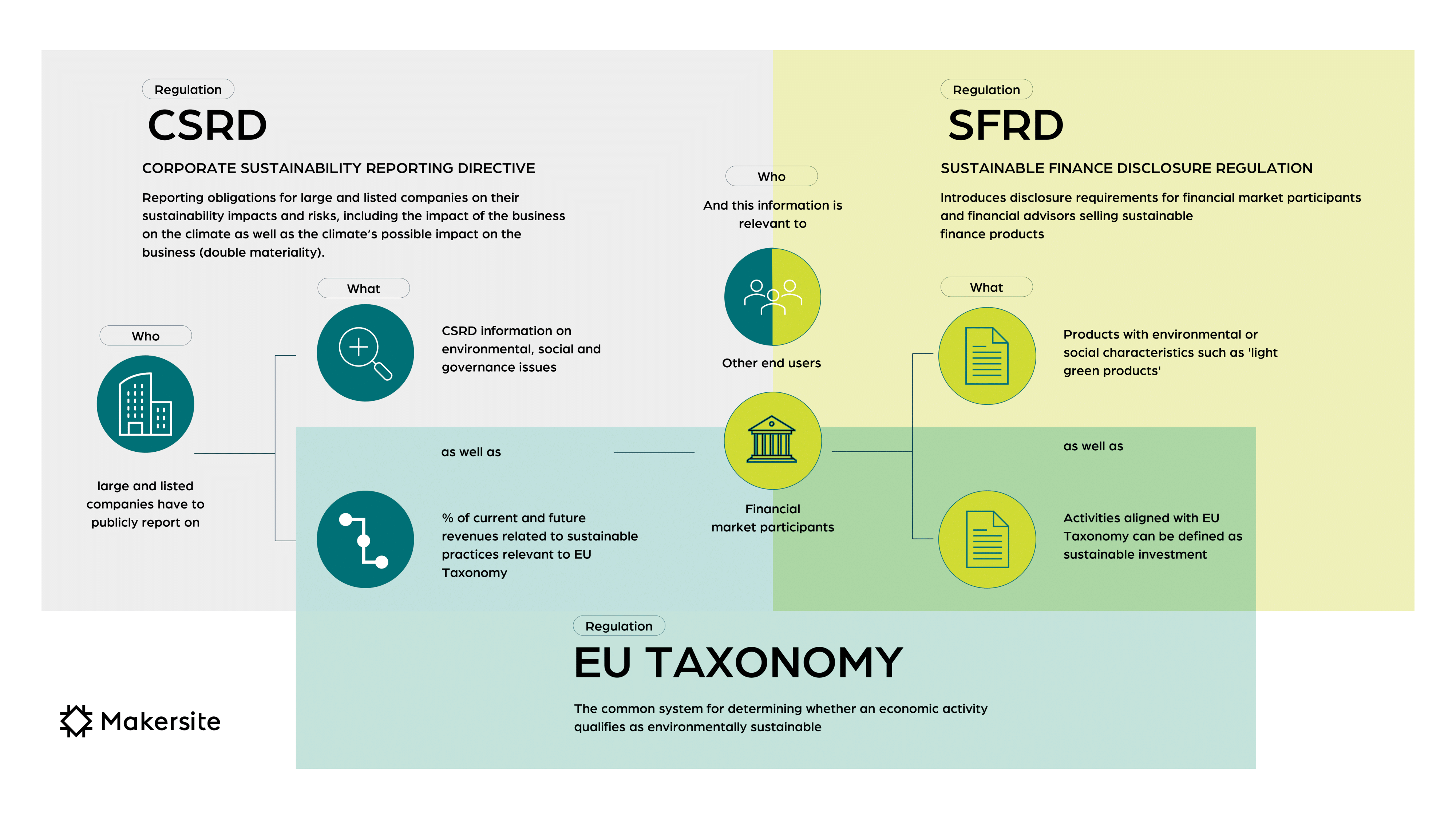
The Sustainable Finance Disclosure Regulation (SFDR) is a financial reporting framework that promotes transparency regarding sustainability. It mandates financial market participants and advisors to reveal how they address sustainability risks and impacts in their products. Suppliers of investment products must disclose how they communicate sustainability considerations to clients. SFDR aims to enhance transparency in the sustainability of financial offerings and prevent misleading claims of sustainability (greenwashing) often associated with investment funds. 


Who needs to comply? 

SFDR compliance is necessary for financial market participants (FMPs) and financial advisors. Any company involved in creating and offering financial products must adhere to SFDR, alongside existing disclosure requirements. 


When does it come into action? 

The SFDR has been in place since 2019 and the concerned parties need to report against it since 2021. 


EU taxonomy 

What is it? 

The EU Taxonomy is a guide that categorizes economic activities as environmentally sustainable or not. Starting in 2023, companies and investors must report how well their actions align with it. This helps measure their level of environmental friendliness. The Taxonomy focuses on six goals, including climate action, water protection, and circular economy. Financial institutions will report on the first two goals from January 1, 2023, with the remaining four added a year later. 


Source: European Commission


Who needs to comply? 

The reporting obligation extends to all financial market participants, large companies, and SMEs listed on the stock exchange. If a company is based in Europe or operates a European legal entity with more than 500 employees, reporting is mandated. 


When does it come into action? 
The EU Taxonomy will be implemented in stages. Starting from January 1, 2023, financial institutions will need to report the portion of their portfolio aligned with the EU Taxonomy. Initially, they will report on two environmental objectives related to climate change. The other four objectives will be added a year later. This reporting requirement applies to EU-registered companies for now. 

Find detailed info about EU taxonomy here. 


Task Force on Climate-related Financial Disclosures (TCFD) 

The Task Force on Climate-related Financial Disclosures (TCFD) is a reporting standard designed to encourage organizations to disclose information about their climate-related financial risks and opportunities. It was established by the Financial Stability Board (FSB) in 2015 and provides a framework for companies to voluntarily disclose information related to their governance, strategy, risk management, and metrics in relation to climate change. The TCFD framework aims to enhance transparency, enable better assessment of climate-related risks, and help investors, lenders, and other stakeholders make more informed decisions regarding the financial implications of climate change on businesses.


Corporate Social Responsibility and Reporting:  

The EU has taken steps to encourage corporate social responsibility and sustainability reporting by businesses. This part discusses the Corporate Sustainability Reporting Directive (CSRD) and other initiatives that promote transparency and accountability in corporate sustainability practices.  


The Corporate Sustainability Reporting Directive (CSRD)  

What is it?  

The CSRD, or Corporate Sustainability Reporting Directive, builds upon the NFRD by expanding reporting requirements for companies on ESG matters like environmental impact, social policies, and human rights. It introduces new aspects such as reporting future-oriented sustainability goals, adverse effects, and intangible resources. The CSRD also introduces “double materiality,” compelling companies to consider both their impact on the environment and potential environmental impacts on their future, while mandating independent verification, integration of sustainability reporting into management reports, and the use of machine-readable formats for transparency. The European Financial Reporting Advisory Group (EFRAG) is developing reporting standards to ensure consistency and transparency. 


Who needs to comply? 

The CSRD requires compliance from NFRD-reporting companies and includes new criteria: firms with 250+ employees, €40M+ net sales, or €20M+ balance sheet, plus most listed companies (except small ones) and non-EU companies with €150M+ EU sales for two years. 


When does it come into action? 

The NFRD rules are effective until CSRD implementation. Starting January 2024, large public interest companies (500+ employees) must follow CSRD. From January 2025, other eligible companies must comply. By January 2026, stock-exchange-listed SMEs (without postponement) also need to adhere to CSRD. 

However, in October 2023 the European Commission announced plans to delay key aspects of CSRD, specifically the adoption of requirements for companies to provide sector-specific sustainability disclosures and for sustainability reporting from companies outside of the EU.

Announced alongside the Commission’s release of its 2024 Commission Work Programme – designed to set out a list of actions it will take over the upcoming year – the statement outlines the EU Commission’s intention to postpone the adoption date for the sector-specific European Sustainability Reporting Standards (ESRS) by two years. Additionally, it recommended delaying the adoption of rules for large non-EU companies that operate in the EU to provide sustainability reporting by 2 years.

As the Commission notes in its proposal, the postponement of these two key rules has arisen in order to allow “companies to focus on the implementation of the first set of ESRS,” “ensure that EFRAG has time to develop sectoral ESRS that are efficient,” and “limit the reporting requirements to the minimum necessary.”


Find detailed info about the CSRD here. 


Corporate Sustainability Due Diligence Directive (CSDDD) 

What is it? 

Note: Further CSDDD developments – where the directive failed to receive final approval – were announced on 28th February 2024. You can read about what happened here.

The CSDDD is an EU directive inspired by French and German laws, aiming to make companies address environmental and human rights risks in supply chains. It mandates risk assessment and mitigation, requiring large firms to align strategies with a sustainable economy and 1.5°C global warming limit. Proposed penalties of up to 5% of global sales are included for violations.
 

Who needs to comply? 

The proposed directive lowers the threshold for companies affected, now including those with 250+ employees and over 40 million euros global turnover (compared to the earlier draft’s 500 employees and 150 million euros). Transition periods of up to five years are proposed to accommodate varying company sizes. 


When does it come into action? 

In 2023, the CSDDD has advanced significantly, with MEPs voting to enhance the original proposal. It’s currently in trilogue stage for negotiation among the European Parliament, Commission, and Council. A decision is expected soon, leading to implementation and mandatory company compliance with the directive’s provisions. 

Find detailed info about the CSDDD here and information about what the implementation of the CSDDD could mean to your role here. 


Green Claims Directive 

What is it? 

The Green Claims Directive enhances consumer protection rules, applying to both B2C and B2B marketing for explicit environmental claims. It mandates substantiation with scientific evidence, comprehensive life-cycle assessment, transparency in offsets, and a holistic approach to evaluating environmental impact. The directive complements existing regulations and emphasizes robust verification of environmental claims. 


Who needs to comply? 

The Green Claims Directive will impact most EU companies, including SMEs and large corporations in diverse sectors, and also non-EU companies targeting EU consumers. However, very small micro-SMEs (under ten employees or less than €2 million annual turnover) will be exempt from the requirements. 


When does it come into action?  

The European Commission introduced the Green Claims Directive on March 22, 2023. After its enactment, Member States will have 18 months to adopt it into their national laws. While implementation is anticipated by 2026, the timeline could shift based on EU negotiations. 

Find detailed info about the Green Claims Directive here. 


European Sustainability Reporting Standards (ESRS) 

In order to guarantee uniformity and openness in reporting, the European Financial Reporting Advisory Group (EFRAG) is in the process of formulating reporting standards for the CSRD, the so called European Sustainability Reporting Standards. The initial segment of these standards was projected to be released by November 2023, with the subsequent segment scheduled for publication in June 2024, but an October 2023 announcement by the EU Commission (see ‘The Corporate Sustainability Reporting Directive’, above) outlined their intention to postpone the adoption date for ESRS by 2 years.


Excerpt: Why Global Companies need to care about European Regulation 

Global companies need to care about European sustainability reporting regulations because it directly impacts their access to European markets and smooth operations within the EU. Many global companies conduct business in the European Union or trade with EU member states. Compliance with European sustainability reporting regulations is essential to access these markets and ensure smooth operations without facing potential trade barriers or legal penalties. Moreover, adhering to these regulations provides a competitive advantage in a market where sustainability is increasingly valued. 

The global trend towards sustainability reporting indicates that similar regulations may emerge in other regions, making compliance with European standards a strategic move for long-term viability and adaptability. For companies with complex supply chains extending to the EU, aligning with these regulations is essential to ensure seamless operations and avoid disruptions. 


Sustainability Reporting: Struggle or Chance? 

Sustainability reporting stands as a crucial tool in our modern world, aiming to bring transparency and accountability to the environmental, social, and governance (ESG) aspects of organizations. Yet, this endeavor does not come without its challenges, as it navigates the ever-shifting landscape of business, regulation, and public perception. 

One of the primary struggles that sustainability reporting faces is the tension between its intent and the potential for “greenwashing.” Greenwashing occurs when companies present themselves as more sustainable than they truly are, often by manipulating data or focusing on a few positive aspects while downplaying their negative impacts. This dilutes the credibility of sustainability reports and erodes the trust of stakeholders who are seeking genuine efforts toward a more sustainable future. 

Furthermore, the lack of standardized frameworks and guidelines for sustainability reporting poses a significant hurdle. With various reporting standards, such as GRI, SASB, and integrated reporting, organizations must choose which approach to follow. This diversity not only makes it challenging to compare different companies’ performance but also creates confusion among stakeholders about the true environmental and social implications of a company’s operations. 

Financial constraints also hinder the comprehensive adoption of sustainability reporting. Small and medium-sized enterprises (SMEs) often struggle to allocate resources for data collection, analysis, and reporting on sustainability efforts. The upfront costs of setting up robust tracking systems and hiring specialized personnel can be daunting, making it difficult for smaller players to participate fully in this movement. 

Legal and regulatory inconsistencies across different jurisdictions further complicate the sustainability reporting landscape. With varying requirements and expectations, multinational companies must navigate a complex maze of rules, sometimes leading to discrepancies in how they report their sustainability progress. This can create skepticism about the accuracy and reliability of the information presented in these reports. 

To overcome these challenges, collaboration is key. Governments, regulatory bodies, businesses, and civil society must work together to establish clear and consistent reporting standards that are applicable globally. Moreover, technological advancements can play a crucial role in streamlining data collection and analysis, reducing the resource burden on organizations, especially SMEs. 

However, despite these challenges, the importance of sustainability reporting cannot be underestimated. As stakeholders, including investors, consumers, employees, and regulators, demand greater transparency and responsible business practices, the pressure on organizations to improve their ESG performance intensifies. Companies that embrace sustainability reporting genuinely and integrate it into their core strategies can gain a competitive advantage by building trust and goodwill with stakeholders. 


Summary 

The EU’s sustainability regulations are comprehensive and wide-ranging, covering numerous sectors and aspects of modern life. By examining and adhering to these guidelines, businesses, governments, and individuals can actively contribute to a greener and more sustainable future for Europe and the planet at large. As the world faces increasing environmental challenges, the EU’s approach to sustainability regulation sets a precedent for other regions to follow and collectively work towards a more sustainable and resilient future.

EU Taxonomy

The EU Taxonomy has emerged as a vital framework in the realm of sustainable finance and environmental accountability. With a focus on driving investments towards environmentally sustainable activities, the EU Taxonomy has implications for companies, investors, and the financial industry as a whole. 


Why was EU Taxonomy put into place?

To fulfill the ambitious climate and energy targets set by the EU for 2030 and to align with the principles of the European Green Deal, a strategic shift towards funding sustainable initiatives is imperative. A crucial step in this journey involves channeling investments that promote environmental responsibility. However, to effectively navigate this transition, it is essential to establish a shared understanding and precise criteria for what qualifies as ‘sustainable’. Recognizing this necessity, the action plan on financing sustainable growth advocated for the establishment of a unified framework termed the “EU taxonomy”. By adopting a standardized approach, the EU aims to harmonize efforts, facilitate informed decision-making, and accelerate progress towards a greener and more resilient future. 
  

What is EU Taxonomy?

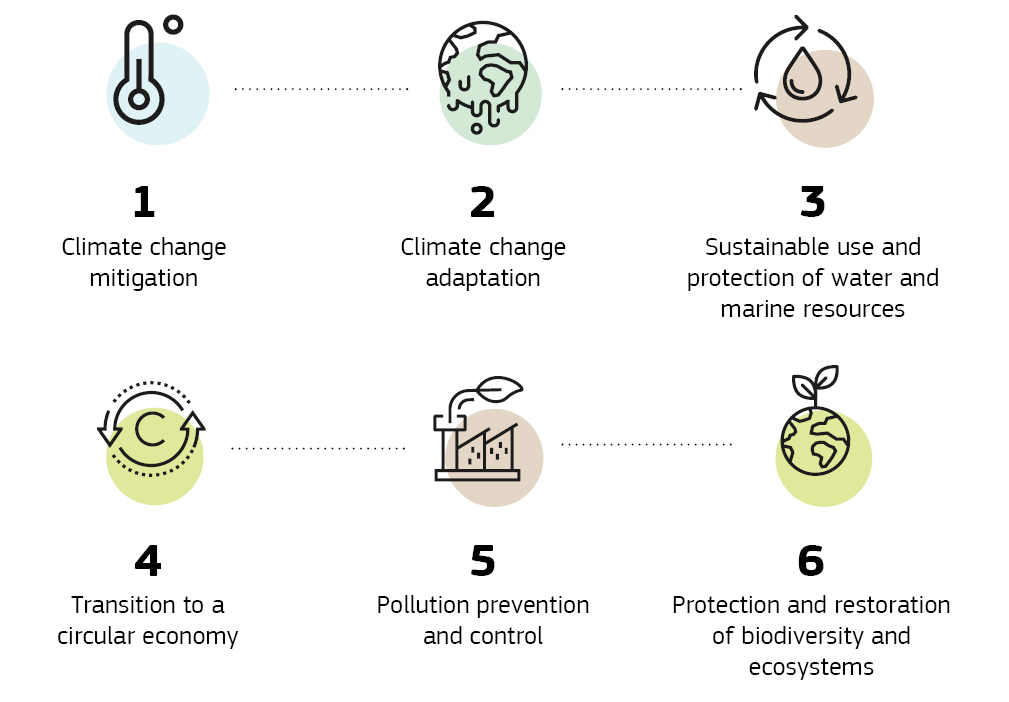
The EU Taxonomy is a common classification system for sustainable economic activities. It sets out criteria for determining which activities contribute to six environmental objectives (see below). The taxonomy framework covers a wide range of sectors, such as energy, agriculture, manufacturing, and more.  

All relevant companies are required to reveal how they integrate sustainability according to the taxonomy regulation. This involves disclosing EU taxonomy-aligned turnover, capital expenditure, and operating expenses. These disclosures should be included in non-financial reports, likely within the annual report or a dedicated sustainability report like the CSRD.
 

Environmental Objectives:

At the heart of the EU Taxonomy are six pivotal environmental objectives that collectively address the most pressing challenges humanity faces in terms of environmental degradation: 

  • Climate Change Mitigation: Activities that contribute to reducing greenhouse gas emissions, such as renewable energy generation, energy-efficient technologies, and sustainable transportation, fall under this category. 
  • Climate Change Adaptation: This objective encompasses activities that enhance society’s resilience to the impacts of climate change, including flood protection infrastructure, drought-resistant agriculture, and resilient urban planning. 
  • Sustainable Use and Protection of Water and Marine Resources: Economic activities that promote the responsible management of water resources, prevention of water pollution, and conservation of marine ecosystems are covered here. 
  • Transition to a Circular Economy: Activities related to recycling, reusing, and minimizing waste, as well as the design and production of products with extended lifecycles, fall within this objective, promoting a more sustainable consumption and production cycle. 
  • Pollution Prevention and Control: This objective emphasizes activities that aim to prevent, reduce, and eliminate pollution, encompassing sectors such as clean technologies, waste management, and sustainable agriculture practices. 
  • Protection and Restoration of Biodiversity and Ecosystems: Activities that contribute to conserving and restoring ecosystems, protecting biodiversity, and ensuring sustainable land use are included in this objective. 

The Taxonomy Regulation establishes four key requirements for an economic activity to be deemed environmentally sustainable: 

  1. Significantly contributing to at least one environmental goal 
  1. Avoiding negative impact on the other five environmental goals 
  1. Adhering to basic safeguards 
  1. Meeting the specified technical screening criteria detailed in the Taxonomy delegated acts 


Which companies must comply with EU Taxonomy? 

EU taxonomy applies to large companies subject to the CSRD (NFRD), financial market participants (even those outside the EU) offering financial products in the EU, and the EU along with its member states when establishing green financial product standards. These entities are obligated to disclose how their investments align with the taxonomy’s criteria, facilitating transparency in sustainable finance practices. 


EU Taxonomy Status and Timeline: 

The EU Taxonomy was officially adopted in June 2020. It entered into force progressively, with its most impactful provisions taking effect from January 1, 2022. This marked the beginning of the disclosure requirements for larger companies and financial market participants. By January 1, 2023, additional disclosure obligations came into play. Over the coming years, more sectors and activities will be included, with the aim of making the EU Taxonomy an all-encompassing standard. 


How to Prepare for EU Taxonomy: 

  1. Understanding the Criteria: Companies and financial market participants must familiarize themselves with the detailed technical screening criteria outlined in the taxonomy. This involves comprehending the metrics and thresholds set for each environmental objective. 
  1. Assessment and Reporting: Businesses need to assess their activities and investments against the taxonomy’s criteria. This process involves evaluating the degree to which their operations contribute to the specified environmental objectives. Clear and accurate reporting is essential to demonstrate alignment. 
  1. Engagement with Advisors: Collaborating with sustainability experts, consultants, and legal advisors can help ensure compliance and facilitate the integration of sustainability considerations into business strategies. 
  1. Investment Decisions: Financial market participants must integrate the taxonomy’s criteria into their investment decisions, ensuring that the investments they offer or manage are in line with it. 


Conclusion 

The EU Taxonomy stands as a landmark effort by the European Union to foster sustainable finance and promote environmentally responsible practices across industries. By providing a standardized framework for categorizing environmentally sustainable activities, the EU Taxonomy empowers investors and stakeholders to channel resources towards activities that contribute to a greener future. As its implementation continues to unfold, companies and financial market participants must remain vigilant in adapting their practices to align with it. Through collective efforts, the EU Taxonomy has the potential to drive lasting positive change and contribute to the global sustainability agenda. 

Interview with Luise Rosemeier, Corporate Responsibility Manager at Wünsche Group

“Instead of resisting change or clinging to outdated models, embracing uncertainty and cultivating a mindset of continuous learning is paramount. This lesson has reinforced the importance of flexibility, not just in strategies or plans but in thought and action.”

What does sustainability mean for you?

Luise Rosemeier: “To me, sustainability is like building a bridge that connects today’s world to the future. It’s not just about constructing a pathway that serves our immediate needs; it’s about ensuring that this bridge is strong, resilient, and inclusive.

The three main pillars of this bridge are the environment, society, and economy. The environmental pillar represents our commitment to the planet, ensuring that we don’t deplete resources or harm ecosystems. The societal pillar stands for fairness, equity, and community well-being, recognizing that every person’s welfare contributes to our collective success. The economic pillar emphasizes growth and progress but in a responsible, ethical manner.

Just as a bridge requires careful design, alignment, and maintenance, sustainability requires us to thoughtfully balance these three pillars. We must build our bridge in a way that not only serves us today but can support the journey of future generations. It’s about a thoughtful, intentional approach that respects our interconnectedness and responsibility to each other and to the world we share.”

What motivates you to work in sustainability?

LR: “Working in sustainability is more than a job for me; it’s a commitment to the future. Having a little son, I often find myself thinking about the world he’ll grow up in. What drives me every day is the desire to contribute to a planet that will not only sustain his generation but those to follow.

It’s not just about recycling or reducing emissions; it’s about a mindset shift that supports responsible growth and development. By being mindful of our choices, whether in business, politics, or daily life, we can create a world that thrives on balance and respect for nature.

In short, my motivation is rooted in love—for my family, for humanity, and for the Earth. I want to play my part in leaving behind a legacy that’s not only prosperous but also kind and responsible.”

What would you rate your most successful measure for more sustainability in the last years, and why?

LR: “Reflecting on our sustainability efforts at Wünsche Group, we’ve pursued a balanced and committed approach.

First, on the social compliance front, we’ve laid emphasis on human rights and fair working conditions in our supply chains. Our extensive Social Compliance Monitoring System reflects our strong commitment to transparency and accountability. Despite our own efforts, we are actively engaged in collaboration with industry initiatives like amfori and the Accord, both in Bangladesh as well as Pakistan, to enable continuous improvement for the well-being of the workers in our supply chains.

In the environmental domain, we have taken meaningful strides. The establishment of a process for the accounting of our Scope 3 emissions, though a complex process, has provided a more detailed insight into our CO2 footprint. This, along with the establishment of an environmental management system and our responsible chemical and wastewater management, lays the foundation upon which we build our environmental efforts. It’s the starting point for developing and implementing a strategy that includes ambitious targets and effective measures.”

How did you become a sustainability manager?

LR: “I began my career as a political scientist, consulting on large-scale projects in the energy and infrastructure sector in Africa. Yet, my passion for sustainability kept calling me. Realizing the pressing issue of climate change, I decided to pursue a master’s degree in International Business and Sustainability at the University of Hamburg. I have since gained hands-on sustainability experience across various industries like retail, food, textiles, hard goods, and electronics.

Currently, I work as a Corporate Responsibility Manager at Wünsche Group, where I actively contribute to driving sustainability initiatives within the company.

Becoming a sustainability professional was not just a career move but a culmination of lifelong learning, activism, and a profound desire to make a difference. It’s a role that allows me to combine my academic knowledge, professional skills, and personal passion to contribute positively to the world.”

What do you do to make your own life more sustainable?

LR: “Sustainability has been a core value for me, shaped by my upbringing in an eco-conscious household. A major turning point for me was learning about the plastic island floating in our oceans, which inspired me to become a Zero Waste activist for many years. Over time, I’ve recognized climate change and global warming as the most pressing issues. This realization has led me to adopt more climate-conscious practices in my daily life. I’ve shifted to a more plant-based lifestyle, focusing on responsible consumption and reducing waste. Traveling is an area where I’ve made a significant change; I have avoided flying for several years, opting for more sustainable modes of transportation. In line with this commitment to sustainability, my family has been living car-free forever, further reducing our environmental impact.

I’m also active politically as a member of the Green Party in Hamburg, working on local initiatives and policies that align with my values. While these actions might seem like small choices in the grand scheme of things, they’re part of my broader effort to live responsibly and encourage others to do the same. For me, sustainability isn’t about grand gestures; it’s about consistent, thoughtful choices that align with a more sustainable future.

What’s something new you learned in the past year?

LR: “In the last year, one profound realization I’ve come to embrace is the transformative power of adaptability. As the world around us rapidly evolves, it has become increasingly evident that the most resilient individuals and organizations are those that can adapt and pivot quickly. Instead of resisting change or clinging to outdated models, embracing uncertainty and cultivating a mindset of continuous learning is paramount. This lesson has reinforced the importance of flexibility, not just in strategies or plans but in thought and action. Whether facing global challenges like the pandemic or the intricate nuances of sustainability, adaptability is the cornerstone of progress and success.”

What do you think companies lack to become better at sustainability?

LR: “Sustainability is more than just a buzzword; it’s a fundamental shift in how businesses operate. What many companies seem to lack is holistic thinking. While many firms are embracing sustainability in some parts of their business, few see it as an integral part of every decision, from supply chain to consumer engagement. This segmented approach limits the potential impact and often leads to isolated initiatives that might be well-intentioned but fall short in creating systemic change.

Furthermore, the business world often gravitates towards quantifiable outcomes, understandably so. However, sustainability metrics can be challenging to define and measure. Instead of getting discouraged or focusing on short-term wins, companies need to prioritize long-term sustainable strategies, even if the benefits aren’t immediately quantifiable.

Lastly, the siloed nature of businesses today hinders collaboration. To genuinely drive sustainability, cross-functional cooperation and industry-wide collaborations are vital. Just as ecosystems thrive through biodiversity and interconnectivity, businesses need to cultivate diverse perspectives and partner beyond their usual scope. Only by doing so can we reimagine and rebuild systems that serve both our planet and its people.”

What do you think the world needs most to fight global warming and pollution?

LR: “The fight against global warming and pollution requires a collective realization that we are part of an interconnected ecosystem. First and foremost, this means shifting away from linear thinking and embracing a more systemic approach, where we recognize that our actions reverberate throughout the world. We need a shift from the ‘me-first’ mentality to a ‘we-first’ philosophy.

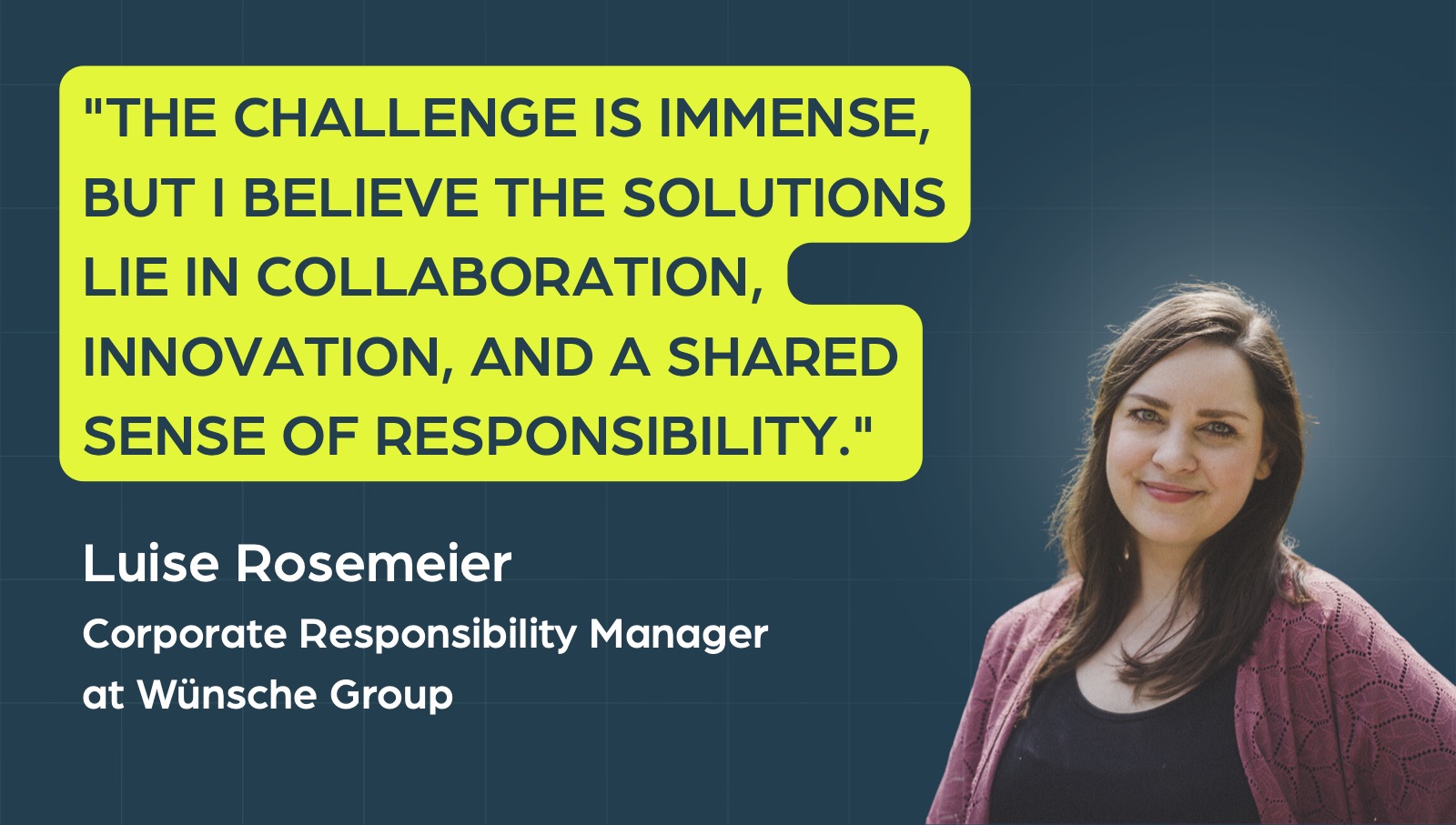
The challenge is immense, but I believe the solutions lie in collaboration, innovation, and a shared sense of responsibility. This includes governments creating incentives for clean energy, businesses prioritizing sustainability, and individuals making conscious choices in their consumption. Every stakeholder has a part to play, and no action is insignificant. What’s crucial is that we all start acting now.

We also need to foster an environment that encourages creative solutions. This includes investment in research and development, supporting startups with sustainable innovations, and creating platforms for dialogue across sectors and industries. If we truly want to make progress, we must be willing to explore new paradigms and be courageous enough to challenge our existing systems.”

What’s the biggest thing hindering you from implementing changes for more sustainability?

LR: “One of the substantial obstacles to implementing sustainable changes is the mindset that prioritizes immediate economic growth over long-term environmental responsibility. Too often, sustainability measures are seen as costly burdens rather than vital investments in our future.

This narrow focus on short-term costs can hinder progress, as it overlooks the broader benefits of sustainability and the potential risks of inaction. However, I believe that we’re gradually recognizing that the real costs lie in ignoring sustainability.”

If you had one wish from a legislative point of view to make your job easier – what would you wish for?

LR: “If I were to pinpoint one wish from a legislative perspective, it would be the establishment of a comprehensive, unambiguous, and universally adopted set of sustainability standards. Currently, companies navigate a labyrinth of fragmented guidelines and regulations, leading to inefficiencies and sometimes even conflicting efforts. A harmonized, globally recognized framework would streamline efforts, eliminate the guesswork, and ensure that everyone is working from the same playbook. Furthermore, this would hold organizations accountable, fostering a transparent and competitive environment that drives genuine sustainability advancements rather than mere box-ticking exercises. While achieving consensus on such a framework is undeniably challenging, the rewards in terms of clarity, efficiency, and collective progress would be immense.”

If you had one wish from your manager and your colleagues – what would you wish for?

LR: “My wish from both my managers and colleagues would be a continuous commitment to breaking down barriers and fostering collaboration across various functions and departments. Sustainability, innovation, and progress are not confined to single divisions but require a holistic approach where every individual contributes their expertise and perspective. I hope for an environment where we openly discuss challenges and fears, and where creativity and interdisciplinary exchange are encouraged. By embracing this collective approach, we can create solutions that are more robust, balanced, and capable of driving real transformation. Change doesn’t happen in isolation; it thrives when everyone participates, learns, and grows together.”

The Ecodesign for Sustainable Products Regulation (ESPR)  

In response to the pressing need for sustainable and environmentally conscious practices, the Ecodesign for Sustainable Products Regulation (ESPR) has emerged as a significant milestone. Originating from the groundwork laid by the initial Ecodesign Directive of 2009, this regulation represents a vital step forward in shaping a greener future. The Ecodesign Directive set the stage by introducing energy-related standards and labels for a range of products, fostering energy efficiency and substantial savings for consumers. With the advent of the ESPR, the focus broadens, encompassing a wider array of goods and charting a path towards enhanced environmental sustainability through improving circularity, energy performance and other environmental sustainability aspects. As we navigate through the facets of the ESPR – from its overarching objectives to the innovative Digital Product Passport – we gain insight into its implications for industries, businesses, and consumers alike. This article embarks on a journey to explore the significance, implications, and timeline of the ESPR, shedding light on its role within the larger landscape of sustainable practices. 


Why was the ESPR put into place?

The initial Ecodesign directive, established in 2009, set the foundation for today’s Ecodesign for Sustainable Products Regulation (ESPR). The Ecodesign Directive established energy-related criteria for specific products, conveyed through energy labels, and covered 31 product categories, predominantly energy-related items such as kitchen appliances. By 2021, these measures resulted in substantial benefits, saving EU consumers 120 billion in energy expenses and reducing annual energy consumption by 10% within the specified product range. The ESPR will not only expand the scope but also replace the former Ecodesign Directive. It stands as a key component of the Commission’s strategy for promoting environmentally sustainable and circular products, aligning closely with the Circular Economy Action Plan of March 2020, which in turn derives from the European Green Deal of 2019. 


What is the ESPR?

The ESPR aims to expand the Ecodesign directive’s focus from energy-related products to encompass a broader range of goods. It outlines performance and information criteria for almost all types of physical items available in the EU market, though certain exceptions like food and feed apply. The proposal will add new requirements to the EU Ecodesign directive while also providing clarity on existing ones. 

Central to this initiative is the establishment of a comprehensive framework to define ecodesign requirements tailored to specific product categories. The goal is to enhance the circularity, energy efficiency, and overall environmental sustainability of these products. A notable aspect of the ESPR is its emphasis on product information, with the introduction of concepts like the Digital Product Passport (DPP). 

The initial focus for delegated acts under the ESPR is directed towards textiles and footwear in the realm of end-user products. Additionally, for intermediary products, the priority lies in iron and steel.  


The Digital Product Passport

The Digital Product Passport, alongside Ecodesign criteria, will be introduced by the ESPR for all regulated products. This new passport will offer comprehensive information on the environmental sustainability of products to supply chain participants, regulators, and consumers. Accessible through data carrier scanning, it will encompass attributes like durability, reparability, recycled content, and spare part availability, aiming to empower consumers and businesses with informed purchasing decisions, streamline repairs and recycling, and enhance transparency regarding the environmental impact across a product’s lifecycle. 


Which companies must comply with the ESPR?

The scope of ESPR compliance extends to all products introduced to the EU market, irrespective of their origin within or outside the EU. This proposal encompasses a wide range of products, extending beyond consumer goods, and even includes systems like military technology, space innovations, and medical apparatus. The addressed parties under the ESPR framework comprise economic entities throughout the value chain, encompassing product manufacturers, EU importers, distributors, retailers, sellers, and fulfillment service providers. 


ESPR status and timeline

The current Ecodesign Directive continues to be operational until the transition to the ESPR. Currently, the European Union is in the process of drafting new regulations and conducting studies as part of the ESPR Work Plan, preceding the enforcement of the ESPR. Within the ESPR, each regulated product group has a distinct “implementing act.” The EU is actively developing and revising these acts for both new and existing product groups, with the new acts taking effect under the existing Ecodesign directive. Upon the ESPR’s implementation, it will supplant the current directive and take over these acts. The upcoming work plan for 2022-2024 entails implementing acts for mobile phones, tablets, computers, and computer servers. A total of 31 product categories are set for assessment, prioritizing those with the highest energy or material efficiency potential, potentially resulting in regulations by 2030. This phase emphasizes non-energy-related Ecodesign criteria such as durability, reparability, recyclability, end-of-life disassembly, reuse, and recycled content. The specifics of deadlines and transition periods are anticipated to be outlined in delegated acts post ESPR adoption, as its implementation is projected to span from 2024 to 2030. 


How to prepare for the ESPR

Eco-design is only feasible when designers have data about the sustainability of their product, but also about its compliance, should costing, environmental, health, and safety criteria. A successful workaround in-between all teams can only be provided by integrating all the data needed. An LCA analysis of the product portfolio can ideally prepare companies for the ESPR and the DPP.  


Conduct a Life Cycle Analysis of your portfolio 

Implementing Life Cycle Assessment (LCA) within a product portfolio is an invaluable strategy for proactively aligning with the Ecodesign for Sustainable Products Regulation (ESPR). LCA, a comprehensive method that evaluates the environmental impacts of a product throughout its entire lifecycle, equips businesses with crucial insights into the environmental hotspots and opportunities for improvement within their product offerings. By conducting LCAs across the portfolio, companies can identify areas where resource consumption, emissions, and waste generation are most significant, allowing them to prioritize and optimize design, production, and end-of-life processes. This strategic approach not only ensures compliance with ESPR’s stringent sustainability requirements but also fosters innovation by promoting the development of more eco-friendly, energy-efficient, and resource-conscious products. Moreover, by quantifying and disclosing the environmental performance of their products, businesses can be prepared for the Digital Product Passport and enhance consumer trust.  


Conclusion 

In response to the imperative for sustainable practices, the emergence of the Ecodesign for Sustainable Products Regulation (ESPR) marks a significant milestone. Building upon the foundation set by the Ecodesign Directive of 2009, this regulation represents a noteworthy progression towards ecological awareness. The initial directive introduced energy-related standards and labels, fostering efficiency and savings. With the ESPR, the scope broadens to encompass a wider range of goods, expanding the focus on environmental sustainability. As businesses and industries adapt to comply with the ESPR, they engage in a journey towards a future where responsible product design harmonizes with ecological stewardship. 

The Corporate Sustainability Reporting Directive (CSRD) 

Sustainability reporting has gained significant importance over the years as companies and investors recognize the value of understanding a business’s impact on the environment and society. In 2014, the European Union (EU) introduced the Non-Financial Reporting Directive (NFRD) to encourage companies to disclose non-financial information related to environmental, social, and governance (ESG) matters. However, with the aim of strengthening sustainability reporting and ensuring it carries the same weight as financial reporting, the EU has decided to replace the NFRD with the Corporate Sustainability Reporting Directive (CSRD). In this article, we will explore the key aspects of the CSRD and how companies can prepare for compliance with this new directive. 


Why was the CSRD put into place?

The NFRD was a significant step forward in encouraging companies to report on ESG matters. However, the EU recognized the need for further improvements and enhancements to close gaps in sustainability reporting. The CSRD was introduced as an expansion of the NFRD, designed to elevate the importance of sustainability reporting within the EU. By mandating the disclosure of crucial sustainability information, the CSRD ensures that investors and stakeholders can access the data they need to assess investment risks arising from climate change and other sustainability issues. 


What is the CSRD?

Under the NFRD, companies were required to report on various ESG matters, including environmental impact, social policies, human rights, anti-corruption efforts, and board diversity. The CSRD expands on these reporting obligations and introduces new aspects to strengthen sustainability disclosure. Companies now must report on future-oriented sustainability goals, the role of the board of directors and the supervisory board, the main adverse effects of the company, and intangible resources not yet accounted for. Moreover, the CSRD introduces the concept of “double materiality,” requiring companies to consider both their impact on the environment and the potential environmental impacts on the company’s future. 

External verification is another crucial element of the CSRD. The sustainability report must be independently verified according to standards set by the EU. Unlike the NFRD, which allowed separate reporting, the CSRD requires companies to include sustainability reporting as an integral part of their management report alongside financial reporting. Furthermore, companies must use the European Single Electronic Format (ESEF) Regulation and report their sustainability information in XHTML format for machine readability in the European Single Access Point (ESAP). 

To ensure consistency and transparency in reporting, the European Financial Reporting Advisory Group (EFRAG) is developing reporting standards for the CSRD. The first part of these standards is expected to be published by November 2023, with the second part following in June 2024.  


Which companies must comply with the CSRD?

While approximately 11,900 companies had to report under the NFRD, the CSRD significantly expands the scope, with approximately 49,000 companies falling under its requirements. Companies that previously reported under the NFRD will naturally have to comply with the CSRD. 

Additionally, the CSRD brings more enterprises within its ambit based on certain criteria. Companies with a workforce of at least 250 employees, net sales of at least €40 million, or a balance sheet total of at least €20 million must comply. All companies listed on stock exchanges, except micro-enterprises meeting specific size criteria (e.g., fewer than 10 employees, net sales below €700,000, and a balance sheet total below €350,000), will also be subject to the CSRD. Moreover, non-EU companies with total group sales of over €150 million in the EU for two consecutive years will need to comply with the CSRD. 


CSRD status and timeline

The NFRD’s rules remain in force until the implementation of the CSRD. Starting from January 2024, companies of public interest with more than 500 employees will have to comply with the CSRD. From January 2025, all other companies meeting the size and criteria requirements mentioned earlier will also have to adhere to the CSRD. By January 2026, all SMEs listed on the stock exchange, not using their right to postpone the reporting obligation, will also have to comply. 

However, in October 2023 the European Commission announced plans to delay key aspects of CSRD, specifically the adoption of requirements for companies to provide sector-specific sustainability disclosures and for sustainability reporting from companies outside of the EU.

Announced alongside the Commission’s release of its 2024 Commission Work Programme – designed to set out a list of actions it will take over the upcoming year – the statement outlines the EU Commission’s intention to postpone the adoption date for the sector-specific European Sustainability Reporting Standards (ESRS) by two years. Additionally, it recommended delaying the adoption of rules for large non-EU companies that operate in the EU to provide sustainability reporting by 2 years.

As the Commission notes in its proposal, the postponement of these two key rules has arisen in order to allow “companies to focus on the implementation of the first set of ESRS,” “ensure that EFRAG has time to develop sectoral ESRS that are efficient,” and “limit the reporting requirements to the minimum necessary.”

More detail on the 2024 Commission Work Programme can be found here.

Difference between an EU regulation and an EU directive

It is essential to understand the difference between an EU regulation and an EU directive. An EU regulation is directly applicable and binding in its entirety across all member states, leaving no room for variations in implementation. On the other hand, an EU directive sets the result to be achieved but allows member states to determine the best means of transposing it into their national laws. The CSRD falls under the category of an EU directive. 


How to prepare for the CSRD

As the CSRD will bring significant changes to sustainability reporting, companies must prepare adequately to meet the new requirements. Here are essential steps to take: 

  1. Get familiar with the reporting standards by EFRAG: Stay updated on the reporting standards developed by EFRAG to align your sustainability reporting with the CSRD requirements. (August 2023)
  2. Determine your reporting timeline: Identify when your company needs to start collecting data and prepare for reporting. Be proactive in ensuring data accuracy and transparency. 
  3. Collect data from various sources: Gather data from your operations, suppliers, and business partners to have trustworthy evidence for your sustainability reports. 
  4. Ensure data trustworthiness: Since the CSRD mandates external verification, make sure your data is reliable and exact to pass the verification process. 
  5. Find an external verifier: Engage with an external verifier to ensure your reporting method is verified and can be used for future reports as well. 


Conclusion

The CSRD marks a significant step in enhancing sustainability reporting within the EU, bringing it on par with financial reporting in terms of importance. By expanding reporting obligations, introducing double materiality, and mandating external verification, the CSRD aims to provide investors and stakeholders with comprehensive and reliable sustainability information. Companies must prepare for compliance with the CSRD by understanding its requirements, collecting trustworthy data, and engaging with external verifiers to ensure seamless reporting and adherence to the new directive. With effective preparation, companies can embrace the CSRD as an opportunity to demonstrate their commitment to sustainability and responsible business practices. 

The Emergence of CSDDD and its Significance to Your Role

Note: Further CSDDD developments – where the directive failed to receive final approval – were announced on 28th February 2024. You can read about what happened here.

The Corporate Sustainability Due Diligence Directive (CSDDD) is the European Union’s most recent response to the urgent call for more responsible and sustainable business practices. As an upcoming directive, it is designed to ensure businesses comply with established human rights, social, and environmental standards. Building on the foundation of the French “loi de vigilance” and the German Supply Chain Sourcing Obligations Act (LkSG), CSDDD addresses environmental impacts and human rights obligations along supply chains.

For businesses, the CSDDD represents a significant shift in operational requirements and business strategy. It demands transparency and accountability at unprecedented levels, requiring companies to critically examine their business models, strategies, and supply chains.

In response to the proposed directive, companies of varying sizes – specifically those with more than 250 employees and a global turnover of over 40 million euros – will be subject to its requirements. Penalties for non-compliance can reach up to 5 percent of global sales, a sizable financial risk for businesses.

As of 2023, the CSDDD is making significant progress through the EU’s legislative process. It is currently in the trilogue stage, where representatives from the European Parliament, the European Commission, and the European Council are striving to reach a consensus on the final version of the directive. Although the exact timeline for the CSDDD’s implementation is yet to be defined, it is clear that businesses need to prepare and adapt to its impending arrival.

This shift brings with it a range of new responsibilities for various roles within companies. From Compliance Managers to CEOs, Procurement Managers to HR and Marketing teams, and even Legal departments, everyone will be touched by the CSDDD’s influence in some way. The rest of this guide will provide you with a comprehensive understanding of the changes CSDDD brings to your role and how to best prepare for them.


Navigating Through CSDDD: What Changes for Your Role

The CSDDD, as a transformative directive, will impact the way companies function. Each role within an organization will find themselves having new responsibilities and changes in their usual tasks. It will also change the way on how different departments will have to work together to enable transparency throughout your business.

Understanding these changes is critical for employees at all levels. Here, we delve into the specific adjustments and adaptations required in various roles.


CSDDD: A New Era for CEOs

As a CEO, the CSDDD will necessitate a top-down review and potential restructuring of your company’s operational strategies. Meeting the directive’s requirements will be a multifaceted process that not only ensures regulatory compliance but also promises potential benefits like access to government funds and investor interest.

A CEO’s role will evolve to place greater emphasis on sustainable business strategies, demonstrating commitment to CSDDD principles in all aspects of the company’s operations. This means aligning the company’s mission, vision, and operational plans with CSDDD requirements, demonstrating compliance and showing a clear roadmap for sustainability transition.

The CSDDD is not just about avoiding penalties; it offers an opportunity to showcase your company as a responsible, future-forward organization. Embracing the CSDDD can attract positive attention from investors who prioritize ESG (Environmental, Social, Governance) factors, government entities providing support for sustainable businesses, and customers increasingly favouring businesses with robust sustainability practices.

To successfully navigate these changes, CEOs must stay updated about the CSDDD’s progression, engage with their teams about the directive’s implications, and incorporate sustainability as a core element of their strategic planning.


R&D Managers: R&D taken to a new level under CSDDD

The Corporate Sustainability Due Diligence Directive (CSDDD) could change the tasks of R&D managers in several ways. Most importantly, they need to look at their own operations and value chains to identify, prevent, end or mitigate the negative impacts of their research and development activities on human rights and the environment.

They will also need to conduct due diligence on their products and processes as well as those of their suppliers and subcontractors. To do so they need to develop and implement prevention action plans, monitor and report on their due diligence processes and outcomes, and consult with relevant stakeholders such as workers, trade unions, civil society organizations, and affected communities.

R&D managers may also need to align their research and development strategies with the Paris Agreement and the EU Green Deal while setting emissions reduction objectives for their operations and products and they will need to ensure that their directors are aware of and oversee the due diligence processes while integrating them into the corporate strategy.


Sustainability Manager: Broadened Responsibilities under CSDDD

As Sustainability Managers, the CSDDD presents an opportunity to further promote responsible practices within your organization. The directive significantly broadens the scope of sustainability management. Previously, the role mainly involved optimizing operations for minimal environmental impact and ensuring the company’s alignment with sustainability goals. With the CSDDD, the role expands to incorporate a more holistic approach to sustainability, encompassing human rights, social impacts, and more comprehensive environmental considerations.

Your primary task will be ensuring that your company’s value chain is transparent. Transparency in this context means that all stages of the value chain, from raw material sourcing to end-product delivery, must be traceable and accountable in terms of their environmental and social impacts. A crucial aspect will be ensuring the accuracy of reporting on decarbonization efforts. This might entail working closely with suppliers and other third-party associates to gather and validate data.

The broadened scope of the role may necessitate bringing in additional colleagues to manage the increased workload and complexity. Working together, you will need to keep each other, as well as other stakeholders, informed about CSDDD requirements and the company’s progress towards compliance.


The Role of Compliance Manager in the Age of CSDDD

For Compliance Managers, the CSDDD will add an additional layer of complexity to their role. Previously, their tasks revolved around ensuring compliance with a set of predefined guidelines and regulations. However, the introduction of CSDDD will require them to also ensure that materials, processes, and suppliers comply with the specific standards set out by the directive.

These standards pertain to aspects like environmental preservation, human rights protection, and ethical business practices throughout the entire supply chain. Compliance Managers will need to establish systems and processes to monitor these factors actively. For instance, they must ensure that all materials used in the company’s production process are sourced ethically and sustainably, and that all suppliers adhere to the human rights, social, and environmental standards set out by the CSDDD.

The role will extend beyond the company’s internal operations. Compliance Managers will also have to validate the compliance of suppliers and other third-party associates, requiring an understanding of these entities’ processes and the ability to assess their compliance.

Adapting to these changes will require Compliance Managers to acquire additional knowledge about the new regulations and to develop the ability to assess compliance in a more diverse range of areas. With these expanded responsibilities, the Compliance Manager’s role will be pivotal in ensuring the company’s successful transition to the new operational reality under the CSDDD.


Procurement Managers: Ensuring Supply Chain Compliance with CSDDD

In the realm of procurement, the CSDDD brings a whole new set of challenges and opportunities. As a Procurement Manager, you will be entrusted with the critical task of ensuring that all suppliers along your supply chain, including deep tier suppliers, are compliant with the legal requirements set forth by the CSDDD.

This responsibility involves not just identifying potential suppliers but also vetting them thoroughly to ensure their practices align with the directive’s stipulations. This may require setting up new processes or tools to facilitate supplier evaluation and risk assessment, particularly when considering potential substitutes and the impacts changes may have on procurement.

Collaboration will also be key in your role, necessitating open lines of communication and feedback mechanisms with suppliers but also internally with the compliance team. Regular monitoring and auditing may be required to ensure suppliers maintain their compliance, and that your procurement activities continue to adhere to the directive.


Supply Chain Managers: Tracing and Monitoring Under CSDDD

For Supply Chain Managers, the CSDDD will bring an increased emphasis on traceability and risk management. The directive mandates the identification of the origins of supplied goods, understanding how they were produced, and discerning the potential impacts these processes have on the environment, climate, and human rights.

This task involves mapping the entire supply chain, including deep tiers, and making this information accessible to all stakeholders. Challenges may be especially pronounced in the case of imports from developing countries, where checking the entire supply chain might pose a greater challenge.

Moreover, the role will involve the ongoing monitoring and control of an expanded set of risk factors in the supply chain. This will require the development of new systems for finding reliable data, incorporating it into your company’s risk management systems, and updating it regularly. While the task is demanding, with appropriate planning and tools, Supply Chain Managers can help their organizations transition smoothly into this new era of heightened sustainability and transparency.


Human Resources: Aligning Workforce with CSDDD

The CSDDD also significantly impacts the Human Resources department. The directive’s emphasis on ethical and sustainable business practices is an asset to attract and retain talent in the workforce. As an HR professional, your role in promoting and upholding these values becomes central to the company’s adherence to the directive.

This could involve incorporating CSDDD principles into company policies, staff training, and development programs. An understanding of the directive would also need to be integrated into the recruitment process, ensuring that new hires are aligned with the company’s sustainability goals. Regular communication with employees about the company’s CSDDD compliance efforts can help foster a company culture that values and supports sustainable practices.


Marketing: Enhancing Brand Perception through CSDDD

For Marketing professionals, the CSDDD offers an opportunity to improve brand perception and gain consumer trust. The commitment to sustainability, ethical sourcing, and responsible business practices stipulated by the directive aligns with the growing consumer demand for companies that prioritize these values.

To leverage this opportunity, Marketing professionals need to communicate effectively about the company’s efforts to comply with the CSDDD. Transparency about the company’s supply chains, environmental impact, and human rights policies can be used to engage consumers and differentiate the brand in the market.

Additionally, the Marketing department can collaborate with other teams to gather relevant data and stories, bringing the company’s CSDDD compliance journey to life in a way that resonates with consumers and strengthens the brand image.


Legal: Navigating CSDDD Compliance

The introduction of the CSDDD will significantly impact the role of Legal professionals within the company. Ensuring compliance with the new directive will require a comprehensive understanding of its stipulations and the ability to interpret them in the context of the company’s operations.

This may involve updating company policies, reviewing contracts with suppliers and partners, and advising other departments on legal requirements related to the CSDDD. Legal professionals will also need to stay abreast of updates to the directive and relevant legislation to ensure continuous compliance.

The increased complexity brought by the CSDDD requires collaboration across departments. Legal teams will likely work closely with Compliance, Procurement, and Supply Chain Managers, among others, to ensure that all facets of the company’s operations are in line with the directive’s requirements.


In conclusion, the CSDDD represents a significant shift in the business landscape, affecting various roles within a company. By understanding these changes and preparing accordingly, businesses can navigate this transition effectively, meeting their compliance obligations while seizing the opportunities that come with being a sustainable, responsible business.


Making Sense of the CSDDD: The Power of Collaboration and Robust Supply Chain Data

The CSDDD requires companies to operate in a way that is not only profitable but also minimizes their environmental impact and safeguards human rights. This paradigm shift brings to light the necessity for robust data and collaboration.

In this new landscape, companies are expected to demonstrate transparency and traceability across their entire supply chain. The ability to do so relies heavily on the availability of accurate and comprehensive data. Every link in the supply chain, from raw material extraction to the finished product, needs to be thoroughly examined for environmental impact, labour practices, and more. Therefore, investing in systems that can provide this level of granular detail becomes an integral part of CSDDD compliance.

Moreover, the scope of the CSDDD also highlights the importance of cross-functional collaboration. Ensuring compliance is not the responsibility of a single department but requires the collective effort of multiple roles within the company, including Procurement Managers, Supply Chain Managers, Compliance Officers, and more. Successful compliance with the CSDDD, therefore, requires breaking down silos and fostering a culture of collaboration within the company.

The CSDDD isn’t just about following rules—it’s about engaging in a meaningful journey towards a sustainable and equitable future. Through effective collaboration and leveraging robust supply chain data, companies can position themselves to navigate the upcoming changes successfully.


Conclusion: The 4 main takeaways

  • Reflect on the changes that the CSDDD will bring to your specific role and your company. Consider what processes may need to be updated, who needs to be involved, and how your day-to-day tasks might change.
  • Embrace the opportunities that come with the CSDDD. While the directive introduces new challenges, it also enables companies to demonstrate their commitment to sustainability and responsible business practices, enhancing their reputation among stakeholders. Understand the broader societal and environmental benefits of complying with the CSDDD, and take pride in contributing to these positive changes.
  • Take proactive steps to prepare for the implementation of the CSDDD. Whether it’s educating yourself on the specific requirements, initiating discussions with your team, or beginning to assess your supply chain’s sustainability, there is much that can be done to ensure a smooth transition. Remember, the CSDDD journey is a collective one that involves every role within a company.
  • The CSDDD is more than a directive; it’s a roadmap for businesses to contribute to a more sustainable and equitable future. By understanding the changes it brings and taking action now, you can ensure that your role and your company are ready to rise to the occasion

The Importance of Accurate Recycled Content Calculation in Manufacturing

In the ever-evolving manufacturing sector, sustainability is a key concern and priority. As specialists in product lifecycle intelligence, we at Makersite are keen to share some crucial insights into the obstacles that come with recycled content calculations and how to overcome them.

In recent years, the manufacturing industry has seen a substantial shift in global sustainability regulations. Manufacturers are now expected to provide verified data on the recycled content of their products to meet stringent guidelines such as those defined by the EU Green Deal initiative and the Packaged Product Waste Regulations (PPWR).

Guesswork and unfounded claims no longer suffice; transparency and trust are now paramount, as highlighted in our cost of Greenwashing whitepaper. The cost of inaction is too great a risk to business operations.

Global Regulatory Shifts Pay More Attention To Recycled Content Requirements

As governments across the globe step up their commitment to sustainable practices, the introduction of mandatory recycled content requirements is becoming a game-changer.

This emerging regulatory landscape compels manufacturers and their supply chains worldwide to ready themselves for these changes as recycled content regulations start rolling out from North America to Europe. The regulatory momentum aims to catalyze the circular economy through the promotion of waste collection, processing, and recycling; incentivization of investments in innovative infrastructures; and the enhancement of environmental product and packaging design.

Consider, for instance, California’s approach, where penalties are imposed for non-compliance with specific standards based on post-consumer resin percentages. Plastic bottles, for example, are required to have a 15% recycled content as of January 2022, escalating to 25% in 2025 and reaching 50% in 2030.

In the United Kingdom, the Plastic Packaging Tax (PPT) came into effect in April 2022, targeting all packaging containing less than 30% recycled content. Similarly, under the EU Single-Use Plastic Directive, PET bottles must contain at least 25% recycled plastic by 2025, with the threshold increasing to 30% by 2030.

Such emerging trends underscore the increasing regulatory focus on recycled content and present a compelling case for all stakeholders to step up their sustainability efforts.

The Approach to Streamlining Recycled Content Calculation

Those involved in sustainability and circularity roles within large manufacturing organizations face an urgent need to adopt tools and methodologies that ensure precise calculation and reporting. An effective solution not only aggregates data from the entire supply chain for calculation but also identifies recyclable aspects within products, thereby creating a pathway to optimized design for circularity.

Data in Design: The Gateway to Circular Economy Success

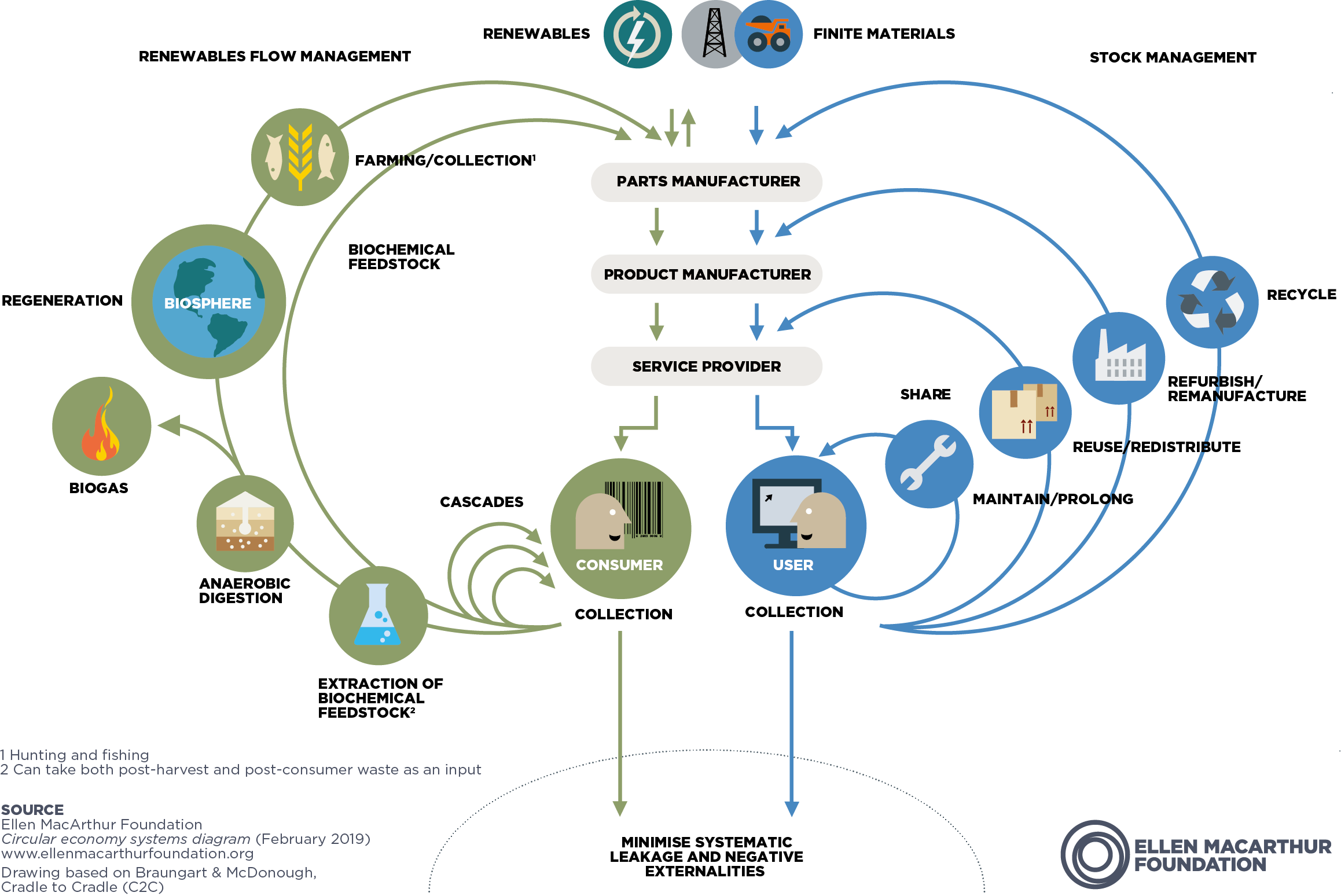
To fully comprehend the vital role of design in achieving a successful circular economy, you only need to look at the Ellen MacArthur Foundation’s butterfly diagram.


Circular Economy Systems Diagram


This illustrates the two key cycles of circularity: the biological and the technical. Unfortunately, our current take, make, and waste economy is full with products that, due to their design, cannot be successfully integrated into either of these cycles and consequently end up as waste. A common example includes products that merge biological and technical materials, such as textiles combining natural and synthetic fibers, in a way that prevents their efficient separation and circulation.

Now, imagine if designers considered the product’s end-life right from the design phase, with a view towards fitting it into either the technical or biological cycles. This forethought could influence the entire life cycle of the product.

Technical cycle-bound products, for instance, would gain significantly from being designed for easy repair and maintenance and simple disassembly. Modular components that are replaceable, such as the Fairphone would extend their lifespan, and the choice of easily recyclable materials would simplify their circulation. Durability would also be a key factor, ensuring that the product can withstand the use of multiple users over time.

Meanwhile, if products like wooden furniture were conceptualized with the biological cycle in mind, the incorporation of biodegradable materials would be prioritized. A clear distinction between technical elements (like screws) and biological ones (like wood) would facilitate easy separation. Even auxiliary materials like glues and paints would be selected based on their biodegradability. Similarly, single-use items like takeaway food containers can be designed to be compostable, thus enriching the soil with the food remnants they often carry.

Linking Life Cycle Assessments and Circularity for Smarter Decisions

The challenge designers face when considering end-life of a product is the need for more understanding about their material and supply chain choices. Traditional product Life Cycle Assessments software (LCAs) have long been a cornerstone of environmental impact evaluation in manufacturing. These assessments measure the environmental impact of a product from its creation—extracting and processing raw materials—to its end of life—disposal or recycling. While LCAs provide an overview of a product’s environmental footprint, they come with their own set of challenges.

Product and Supply Chain Data Management

One of the most prominent issues is data management. Achieving accurate LCAs requires a wealth of detailed data, both about the product itself and its entire supply chain. Unfortunately, manufacturers often face a dearth of high-quality data. The data that does exist is frequently dispersed across multiple systems within ERP, PLMs and CAD, creating silos that prevent intelligent analysis.

Moreover, data from suppliers—a critical component of LCAs—is often incomplete or of poor quality. This scarcity and fragmentation of data severely limit the effectiveness of traditional LCAs, resulting in approximations rather than accurate assessments.

In contrast, advanced approaches to recycled content calculation, like we do at Makersite, aggregates data from the entire supply chain, offering detailed insights into each material and component of a product. This approach not only supports complex and granular LCAs but also supports decision-makers in identifying the most profitable trade-offs between recycled content, recyclability and circularity. Consequently, manufacturers can make smarter, data-driven decisions that boost sustainability and growth.

WATCH: See how Makersite can calculate recycled content in minutes

You are currently viewing a placeholder content from Wistia. To access the actual content, click the button below. Please note that doing so will share data with third-party providers.

More Information

Staying Ahead: Aligning with Compliance and Sustainability Standards

In an industry landscape where regulatory compliance and sustainability form the cornerstones of success, manufacturers need to stay updated and responsive. Embracing solutions that allow precise calculation and reporting of recycled content positions them to confidently align with best practices, navigate regulatory frameworks, and fulfil their sustainability objectives. This is not just about surviving in the new age of green regulations; it’s about differentiation and seizing the opportunities that this shift presents.

If you’re keen on refining your sustainability initiatives and staying ahead in the complex world of environment, cost and compliance, we’re here to help. Book a demo with our team today and find out how we’re bridging LCAs with Circularity principles to support smarter, greener, faster decision-making.

Green Claims Directive 

The European Union (EU) is taking a significant step towards ensuring transparent and accurate environmental marketing practices with the introduction of the Green Claims Directive. This directive aims to regulate and substantiate environmental claims made by companies, prohibiting vague terms such as ‘net zero,’ ‘carbon neutral,’ and ‘eco-friendly’ unless they are adequately verified. In this article, we will explore the key aspects of the Green Claims Directive, the companies it applies to, its status, and how businesses can prepare to comply with the new requirements. 


Why was the Green Claims Directive put into place?

The Green Claims Directive was introduced to address the growing concern over misleading and unfounded environmental claims in the market; read more on greenwashing here. A study by the European Commission has shown that a significant portion of green claims, approximately 53%, provide vague or misleading information to consumers. Moreover, a staggering 40% of these claims lack any supporting evidence. The lack of verification is also a major issue, as half of all green labels offer weak or non-existent verification processes. This situation is further complicated by the existence of numerous sustainability and green energy labels in the EU, with over 230 sustainability labels and 100 green energy labels, each varying significantly in terms of transparency and reliability. The Green Claims Directive aims to tackle these challenges and promote more transparent and substantiated environmental claims to ensure consumers can make informed choices. 


What is the Green Claims Directive?

The Green Claims Directive builds upon the existing consumer protection framework and covers both business-to-consumer (B2C) and business-to-business (B2B) marketing. It specifically applies to voluntary explicit environmental claims and does not overlap with other Union rules governing environmental claims. Under this directive, companies will be required to substantiate their claims with scientific evidence, address significant environmental issues from a life-cycle perspective, and ensure transparency regarding offsets. While the directive does not prescribe a single method, it emphasizes the importance of using a comprehensive approach to evaluate environmental impact. 


What companies must comply with the Green Claims Directive?

The proposed requirements of the Green Claims Directive will apply to the vast majority of EU operating companies, including small and medium-sized enterprises (SMEs) and large public corporations across various industries. Even companies based outside the EU but targeting EU consumers will need to comply. However, micro-SMEs with fewer than ten employees or generating less than €2 million in annual turnover will be exempt from the rules. 


Green Claims Directive Status and Timeline

On March 22, 2023, the European Commission unveiled its proposal for the Green Claims Directive. Once the directive enters into force, Member States will have 18 months to incorporate it into their national legislation. While the expected timeline for the directive’s implementation is 2026, the duration may change due to the pace of EU negotiations on the final text.  


How to Prepare for the Green Claims Directive

To comply with the forthcoming requirements of the Green Claims Directive, companies need to establish a robust environmental claims management framework that prioritizes integrity, transparency, and data verification. 

  • Review environmental claims: Conduct a comprehensive review of all existing environmental claims made across products, services, and marketing materials. Scrutinize the language used and assess the substantiation behind these claims. Identify and rectify any claims that may be considered vague, misleading, or lacking proper evidence. This thorough review will provide a clear understanding of areas that need adjustment to align with the anti-greenwashing regulations. 
  • Establish rigorous substantiation processes: Implement robust processes to substantiate environmental claims. This may involve conducting comprehensive life cycle assessments (LCAs) to evaluate the complete environmental impact of products or services. Gather and analyze relevant data to ensure claims are supported by scientific evidence and transparent from a life-cycle perspective.  
  • Prioritize transparency and accurate communication: Emphasize transparency and accurate communication when conveying environmental claims. Develop clear guidelines and internal policies for environmental marketing, ensuring all claims are supported by reliable data and verified by reputable third-party organizations. Provide detailed information about environmental initiatives, highlighting efforts to address significant environmental issues. Transparently disclose information about offsets and any limitations or trade-offs associated with the claims to build consumer trust. 


Conclusion

Adhering to the Green Claims Directive not only ensures compliance but also offers additional benefits for companies. Transparent and accurate communication of environmental impacts and performance reduces the risks associated with reputational damage and legal consequences arising from misleading claims. Non-compliance with the directive could result in legal investigations and fines of up to 4% of annual turnover. By adopting responsible environmental practices, businesses can enhance their brand value and cultivate consumer loyalty.

Whitepaper: The cost of greenwashing

A little-known fact, greenwashing was first coined almost 40 years ago and was used in reference to a hotel policy in Fiji about reusing towels to save the environment.[1] The policy was aimed at using the environmental sensibilities of guests to reduce laundry costs. Greenwashing, however, has become far more sophisticated than that. In this whitepaper, we’ll take a different look at greenwashing – why it’s a much-discussed topic today and what businesses can do to leverage this heightened attention to be more successful in the market. We’ll define greenwashing broadly as “advertising and public messaging to appear more sustainable than a company really is” and understand sustainability in its broader context of ESG. 


Why is being seen as green important?

A study commissioned by the European Union found that 53%[3] of green claims on products and services make vague, misleading, or unfounded claims, and 40% have absolutely no supporting evidence. In the US, that number went up even higher, where 68% of executives themselves admitted to being guilty of greenwashing[4]. But why do companies decide to greenwash? There are three main drivers that we see today:


More high-paying customers:

About one-third of consumers worldwide today are prepared to pay up to 25% more for more sustainable products. More than two-thirds of GenZ’ers are prepared to pay 10% more.[5] By 2030, they will surpass millennials as the biggest spenders accounting for 27% of buying power.[6] These two segments combined will dictate buying criteria of the future, and it’s already clear – they want products that are greener. 

This is not only limited to B2C companies – organizations embedded deep within supply chains are being challenged to support their customer’s initiatives in the consumer electronics, automotive, building, and construction industries. Suppliers that are not aligned with their customer’s ambitions are already being excluded as viable business partners for new product development. 


License to operate:

Regulations and standards are tightening around the world. For example, in 2023, the Corporate Sustainability Reporting Directive (CSRD) takes effect for 50,000 companies operating across Europe as well as foreign companies with significant business in Europe. Under the Green Deal of the European Union, regulations and directives about decarbonization, greenwashing, transition planning, circularity, sustainable finance, and several others will be rolled out. Examples next to the CSRD are the Corporate Sustainability Due Diligence Directive (CSDDD), the Ecodesign for Sustainable Products Regulation (ESPR), EU taxonomy, the Sustainable Finance Disclosure Regulation (SFDR), and more. Besides this becoming an issue about the license to operate, these developments are creating unprecedented attention in the media and on social platforms. 


Unbekannt.png

Figure 1: Global Sustainability Reporting Rates. Source: KPMG

Cheaper capital to invest and grow: 

Another key driver for positioning a company as green is access to more and cheaper capital. With all the global commitments to decarbonization, immense sums of capital are being deployed to power this transition. According to a report by PwC, asset managers globally are expected to increase their ESG-related assets under management to US$33.9tn by 2026 from US$18.4tn in 2021.[7] Companies that invest in sustainability can tap into various sustainable investment options, including green bonds, sustainable equity funds, and impact investments.


Greenwashing is neither good for consumers nor businesses. It leads to confusion amongst consumers which ultimately results in a loss of trust in such claims. A 2021 McKinsey[8] survey found that 88% of GenZ’ers in the US don’t trust green claims from brands. It also creates an unfair playing field for businesses where companies that are genuine about their sustainability efforts are disadvantaged compared to companies that greenwash. Moreover, greenwashing directly impedes efforts toward sustainability by allowing companies to evade accountability for their environmental impact. By promoting themselves as environmentally friendly without taking substantial action, they avoid making necessary changes to their practices, which can harm ecosystems, contribute to climate change, or exploit natural resources.


Why does greenwashing happen?

There is a small proportion of companies that greenwash knowingly, one of the most famous ones being the Diesel scandal by German car producer VW – exploiting the green trend without doing anything to improve the sustainability performance of their operations or products. Marketing business-as-usual projects as sustainability initiatives, they employ sustainability specialists to ensure that they do this in the most innocuous way possible. However, most companies greenwash inadvertently, and there are three main reasons we have observed. 


The complexity of what it means to be sustainable

Sustainability is a broad topic, and while the Sustainable Development Goals[9] provide a good framework for defining it, it is sometimes difficult to adapt these to a company. The 17 goals also manifest in multiple criteria, including things like water scarcity, climate change, social equity, etc. It is not only difficult to measure these in the context of a company and its products, but some of these criteria are also anti-correlated, i.e., improving one typically is at the cost of another. 

Ikea had that experience in 2020 when it launched a sustainability initiative. A non-profit organization accused them of greenwashing, as one of their wood suppliers illegally sourced wood from Russia. The problem: Ikea, like many other organizations, relied on the Forest Stewardship Council (FSC) certification, a voluntary forest certification system that aims to help organizations find wood sourced by strict environmental and social sustainability criteria. After the scandal, Ikea parted ways with the supplier. This case is a good example of the challenges of supply chain sustainability, even for companies that have good intentions.

Another aspect is – should environmental evaluations look at operations, including suppliers or the entire lifecycle of a product? Optimizing production and raw materials to reduce their impacts on climate change may negatively impact the product’s performance and vice versa, which is commonly the case for lightweighting applications in the automotive and aerospace industries. In the electronics sector, greening electricity supply for one’s own operations though commendable has a negligible impact on assembly operations compared to their use and impacts from the raw material supply.

Different jurisdictions have different requirements, and different products have different impact drivers. E.g., water scarcity is an acute problem for hot/arid regions while not so much for the Nordics. Excluding such a category from considerations in Norway draws attention from critics in Spain. Another example: certain recycled plastics have a lower impact in terms of carbon but can have toxic side-effects during use or disposal, which make them unsuitable for use in the food and beverage industry but perfectly fine for fashion or construction. Error by omission is one of the common occurrences of greenwashing.

Without the right tools, data, and expertise embedded within procurement and product development teams, understanding the tradeoffs is incredibly hard and paralyzes action. 


Lack of standards

There are insufficient standards that define what sustainability should mean for a company or a product. The reason for this is that different sectors have different challenges – e.g., paper and plastic sectors compete for the same markets, e.g., in packaging. Looking at fossil carbon results in a different winning product than when you look at water or resource consumption or land use change. So which criteria should be included, and how do you compare them? If you claim better performance on one criterion without mentioning drawbacks in some other dimension, you could be charged with greenlighting, even if this was done inadvertently. Performing a materiality analysis on your company and its products can avoid such situations. 

Creating a common standard is difficult, as the European Union found through multiple initiatives at the Corporate and Product levels. Lobbying by trade associations for their own interests leads to the process of standardization becoming more complex, taking longer, and the resulting rules becoming too complex to adopt for anyone. 


Change is hard

From our work with customers, we estimate that up to 90% of the data needed to understand the sustainability performance of products isn’t available in a company – it sits in the value chain, proprietary 3rd party databases, and other external data repositories. Impacting this massive component is even harder – it means influencing product design, suppliers, and sometimes changing supply chains entirely. It requires the right data for action, incentive, and governance structures to make change happen and, most of all, long-term investments. It’s one of the main reasons we see lofty climate goals with much less to show for it.

For Scope 1 and 2 impacts, so all emissions that are company-owned, the information needed to make necessary evaluations are often siloed and hidden away. We’ve spoken to sustainability teams sitting in product development that do not have access to product definitions (or Bills of Materials) for security reasons. It takes time and expertise to pull all the needed information together and get the results verified externally, which is not possible to do within the tight timeframes of a product launch without the right systems and processes in place. 

Another problem is that sustainability information is not trivial. There are nuances that require expertise to understand, and sometimes, in the process of simplifying the messaging for customers, the message itself changes. According to a TerraChoice[10] report, the three most common forms of greenwashing are hidden trade-offs, no proof, and vagueness. Outright lying only accounts for less than 1% of greenwashing cases. Ensuring that messaging is developed in collaboration with sustainability experts can help minimize the chance of costly mistakes here.  


What if you get caught greenwashing? 

Until recently, there were mostly no consequences for greenwashing. However, in the past few years, companies have encountered mounting legal repercussions over false or exaggerated sustainability claims. Consumer protection laws, which mandate companies to validate their marketing claims, have been established for three decades. Nonetheless, the issue of greenwashing had largely been disregarded. Now this has changed.


It now costs money

Companies are facing tightening consumer protection regulations across the world as well as an increasing level of enforcement and penalties. Although these regulations were initially designed to ensure customer safety, they are now being used to hold companies accountable for their environmental and social impact claims. Several companies have or are currently facing lawsuits for greenwashing. E.g., at the beginning of 2022, Italian oil major Eni made history by being the first in the country to be prosecuted for greenwashing. The company was fined €5 million (US$5.94 million) for claiming that its palm oil-based diesel was ‘green’ in an advertising campaign. Keurig was sued for falsely claiming their coffee pods were recyclable and biodegradable. The fine for Keurig’s misleading advertisement came out to be $3 million. Additionally, Keurig must make an $800,000 donation to an environmental charity and pay $85,000 in Competition Bureau expenses for the case. They were also ordered to update the packaging and notify consumers of the changes to its recyclability claims on the website, social channels, and through media outlets. Tina.org provides an extensive list of lawsuits against companies for greenwashing and associated penalties.

These lawsuits and the overall rise of climate-change-related lawsuits demonstrate the importance of companies being transparent and honest about their environmental claims. While the fines for greenwashing can already take up a significant amount of a company’s turnover, specific greenwashing laws are preparing to fine companies even more. 

Unbekannt_1.png

Figure 2: Climate change lawsuits. Source: LSE

The French climate and resilience law, for example, requires companies to prove their carbon neutrality claims through annual GHG emissions reports, including the entire life cycle of a product from production to disposal. Environmental labeling is also mandatory for several product categories, and companies must include information on environmental impact in their advertisements[11]. The European Union is also already working on a law forbidding greenwashing. The so-called green claims proposal aims to ensure that green claims are trustworthy, commensurable, and confirmable throughout the EU. It seeks to safeguard consumers against greenwashing and empower them to make informed purchasing decisions, thereby contributing to the creation of a circular and environmentally friendly economy in the EU[12]. The Australian Competition and Consumer Commission (ACCC) has recently unveiled its latest initiative—an updated draft guidance on environmental and sustainability claims. The guideline aims to enhance the credibility of companies’ green assertions while safeguarding consumers against deceptive marketing practices known as greenwashing.


Damage to brand and business

Social media has changed the way we access information, express our views, and drive mass action. This means that instances of greenwashing are easier to identify and publicize, and there is a very low threshold for infringement on public trust. Multiple studies[13][14] show that greenwashing negatively impacts the brand image and can seriously damage brands, with the possibility of ending in ”brand hate.” 

This scrutiny also extends to the supply chain – there are now numerous software service providers that track reputational risk to a brand from its supply chain. In the B2B world, we’ve seen companies that are caught greenwashing being blacklisted from procurement lists and losing business. 


How to avoid greenwashing?

As countries commit to emission targets, sustainability regulations are becoming more stringent worldwide. As discussed above, companies need to make green claims to remain relevant to consumers and back them up with data to stay in business. So, what steps can companies take to avoid greenwashing? 


Focus on product data

A company is its product, and a product is its supply chain. Most green claims are based on product properties, not brands, and therefore it’s crucial to have a product-level focus on data.

Detailed product definitions: Standards, regulations, and enforcement are evolving differently and at different rates around the world. If we are to learn from the past with substance regulations like REACH/RoHS/Prop65 etc., focusing on better master data about your products and their supply chains is the best way to stay agile to changing requirements. It provides the flexibility to apply the knowledge about the product to new situations and evaluate the product for conformance. 

Life cycle perspective: It’s also crucial to maintain this information for the entire value chain – cradle-to-grave, as it’s called. This is a principle that ensures that you understand the implications of sustainability impacts across the entire lifecycle of the product. Nearly all anti-greenwashing regulations require a life-cycle-based approach to evaluating the performance of products. 

Multi-criteria views: Looking at just carbon or water is insufficient. Understanding the performance across all key environmental and risk categories is crucial to avoiding overlooking critical side-effects of your products. 


Decentralization with proper internal governance

The two engines for change in a company are product development and procurement – what you make and where you buy. It’s crucial to enable reliable decision-making within these teams to drive sustainable innovation and ensure these are prioritized through the right incentives. However, this process needs support from sustainability experts – whether in-house or external to ensure the right guardrails. These need to extend all the way to marketing teams. There are two main approaches we’ve found to work well – (1) stage gate-based approach – where sustainability or compliance is one of the quality gates that a product needs to go through, and (2) embedded approach – where these experts are part of the development, procurement, and marketing teams providing support when required. Having the right tools for data sharing and analysis is crucial to ensuring the preservation of context across the product development lifecycle.


External verification

If you think experts are expensive, wait until you find out how much amateurs cost. This adage holds truer than ever in this context. It can get expensive to involve external verifiers for claims for each product and claim you make, but overheads can be reduced if the proper systems are in place (and verified) that document the analysis and provide an audit trail of the process. It is often hard to have experts certify bold comparative claims but having them provides a level of scrutiny and credibility that protects you from costly mistakes. 


To prepare for the future, companies should consider using external tools to access necessary data, save time, enhance credibility with auditors, and effectively utilize the collected data. Exploring suitable tools early on will facilitate reporting on current and future products on a larger scale.


Conclusion

The issue of greenwashing is a complex one, and it requires companies to carefully examine their claims and assess where their risk exposure and opportunities lie. For companies that have already made claims, it is essential to figure out where they may be exposed and take corrective action. Companies that have not yet made claims, but have the opportunity to do so, must ensure they do it right by accurately quantifying their environmental impact and making transparent and verifiable claims. In some cases, both risk and opportunity may lie in the same place, and it is up to companies to strike the right balance between promoting their sustainability efforts while avoiding misleading claims. By taking these steps, companies can avoid the pitfalls of greenwashing and build a credible reputation in the market as responsible and sustainable businesses.


Interview with Janek Kose, Lead Climate and Environment at Telefónica

“In a nutshell, sustainability isn’t a buzzword; it’s a mindset. It’s a commitment to ensuring our technological advancements leave the world better, not worse, for future generations. It’s about making sure our legacy isn’t just one of innovation but also one of preservation.”

What does sustainability mean for you?

Janek Kose: “Sustainability, to me, means more than just adhering to “green” practices or corporate social responsibility initiatives. It’s about reimagining our approach to technology, fundamentally rethinking how we design, develop, and deploy tech solutions for sustainable transformation.

In the tech world, we fancy ourselves as innovators, relentlessly pursuing the next breakthrough, the next “big thing”. But in our relentless pursuit, we often overlook the profound impacts our creations have on the world. From electronic waste to energy consumption, our innovations come at a high environmental cost.

When I consider the role of sustainability in technology, I envision a shift in perspective. It’s about exploring critical questions like “How can we extend the lifecycle of our products? How can we reduce our tech carbon footprint? How can we create tech products that add value not only to our customers but also to our planet?”

It’s about moving from a mindset of exploitation to regeneration, from short-term profitability to long-term responsibility. It’s about realizing that the true measure of innovation isn’t just the number of products we ship out but the positive impact they have on the world.

In a nutshell, sustainability isn’t a buzzword; it’s a mindset. It’s a commitment to ensuring our technological advancements leave the world better, not worse, for future generations. It’s about making sure our legacy isn’t just one of innovation but also one of preservation.”


What motivates you to work in sustainability?

JK: “What motivates me to work in sustainability is a profound belief in our collective responsibility toward the future of our planet and the generations to come. It’s driven by the understanding that the choices we make today, especially in the realm of business and technology, have far-reaching consequences.

Having spent my career in this field, I have witnessed the tangible impact that innovations with sustainability at heart can have. In my roles, I had the opportunity to help businesses in leveraging that influence to not only succeed in the market but also to make a significant contribution to doing their bit to mitigate the worst impacts of the climate crisis.

Ultimately, I am fueled by the challenge. Sustainability is complex, it’s multifaceted, and it requires us to rethink traditional business models, question the status quo, and innovate with both urgency and care. This complexity is not a deterrent but a call to action that motivates me daily.”


What would you rate your most successful measure for more sustainability in the last years, and why?

JK: “When I reflect on my roles and my work in driving more sustainability, several key measures emerge. However, the ones I am particularly proud of share a common theme: they intimately link positive climate impact with the core operations of the tech business.

Firstly, we designed a feature at the checkout process that allowed customers to contribute directly to a vetted, high-quality carbon credit portfolio. This measure was successful not only in its tangible climate action but also in the way it empowered our customers. It made sustainability not just a corporate endeavor but a collective one, giving our customers an active role in climate action. It turned an everyday transaction into an opportunity for change.

Secondly, we introduced an internal carbon price. This was more than just a financial mechanism; it was a cultural shift. By attaching a tangible cost to our Scope 1-3 emissions, we created a powerful incentive for reducing emissions and the externalities of our business throughout the company. Every year the funds from this internal pricing were used to support external climate projects, effectively turning our carbon footprint into a stepping stone for building capacity for climate action.

In my mind, both of these measures present a powerful approach to voluntary climate action funding, a particularly relevant strategy for tech companies, where direct emission reduction opportunities might be limited. In essence, tech can turn their technological prowess into a catalyst for climate action.”


How did you become a sustainability manager?

JK: “My journey to becoming a Sustainability Manager began as an environmental engineer specializing in renewable energies. In my early career within environmental consultancies, I quickly realized the engineering toolbox was insufficient to drive the large-scale sustainability transformation we aspire to achieve.

The decisions that required making were strategic in nature, demanding an expanded skill set to engage stakeholders and navigate organizational complexities effectively. Consequently, I pursued an MBA in sustainability management to broaden my understanding and approach.

Simultaneously, the rise of tech-driven companies presented an intriguing opportunity. I saw the vast potential these emerging sectors had for driving good, and I wanted to be at the forefront, influencing their path toward sustainable operations.

This led me to pivot my career towards sustainability management within the tech industry, blending my technical knowledge, newfound strategic skills, and passion for positive impact.”


What do you do to make your own life more sustainable?

JK: “I try to make sustainable choices every day, but there are two that I’d recommend to anybody:

Switch to a Sustainable Bank: Your choice of bank can have a significant environmental impact. Consider moving to a sustainable bank that invests in projects promoting ecological and social progress.

Adopt 100% Renewable Electricity: Every kilowatt-hour counts! By switching to a renewable energy provider that creates new renewable energy plants, you can directly support clean energy projects and reduce your carbon footprint.

And then, talk about your actions and experiences with as many people as possible. Your conversation may inspire others to make similar changes.”


What’s something new you learned in the past year?

JK: “In the past year, my learning journey has taken me to the heart of circularity and its potential to drive decarbonization in digital infrastructure. By engaging closely with suppliers and exploring data-driven solutions, I’ve gained valuable insights into what is achievable today. I’ve learned that circularity isn’t just a theoretical concept but a practical, implementable strategy that can significantly reduce the carbon footprint of digital activities.”


What do you think companies lack to become better at sustainability?

JK: “To me, one concept comes to mind: embracing complexity. Too frequently, companies hold on tightly to existing processes and try to oversimplify problems in sustainability. This approach can often lead to stagnation and a loss of momentum in projects.

Sustainability challenges us to tackle complex issues, ones that cannot be neatly simplified or confined within traditional business processes. Therefore, I believe companies need to become better at welcoming this complexity rather than shying away from it.

Further, leveraging technology can be a significant part of the solution because it helps to navigate this complexity, offering innovative solutions and providing the tools necessary to approach sustainability in a holistic, comprehensive manner.”


What do you think the world needs most to fight global warming and pollution?

JK: “As someone deeply immersed in the world of sustainability, I find myself genuinely encouraged by the advancements we’ve witnessed in many areas in the last 12 months. The innovation happening in the realm of carbon removal and storage solutions and the escalating investments in clean energy and green infrastructure are just some examples that bring hope.

However, there’s one element that we must underscore: the necessity for more urgent corporate climate action. It’s not just about acknowledging the climate crisis; it’s about actively and urgently allocating resources toward decarbonization efforts and the funding of external climate projects.

The approach is quite straightforward. If your company has a significant Scope 1 and 2 footprint, your resources should be focused on accelerating decarbonization initiatives. If, on the other hand, you’re a tech company with limited direct impact, the way forward should be finding effective ways to fund external climate projects.”


If you had one wish from a legislative point of view to make your job easier – what would you wish for?

JK: “Given the urgency of the climate crisis, the pace of legislation is frustratingly inadequate. But one of the most straightforward yet impactful actions we can take in our fight against climate change is eliminating all existing fossil fuel subsidies. These subsidies not only perpetuate our reliance on non-renewable resources but also artificially lower the cost of fossil fuels, hindering the competitiveness of renewable alternatives. By removing these subsidies, we can create a level playing field, allowing clean energy solutions to flourish and thereby accelerating our transition to a sustainable energy future.”