Makersite Acquires Siemens' SiGREEN

Read more
Close

Quantifying Circularity: A Data-Driven Approach to Chip Lifecycle Emissions

Turning Vision into Action: Advancing Circular Manufacturing

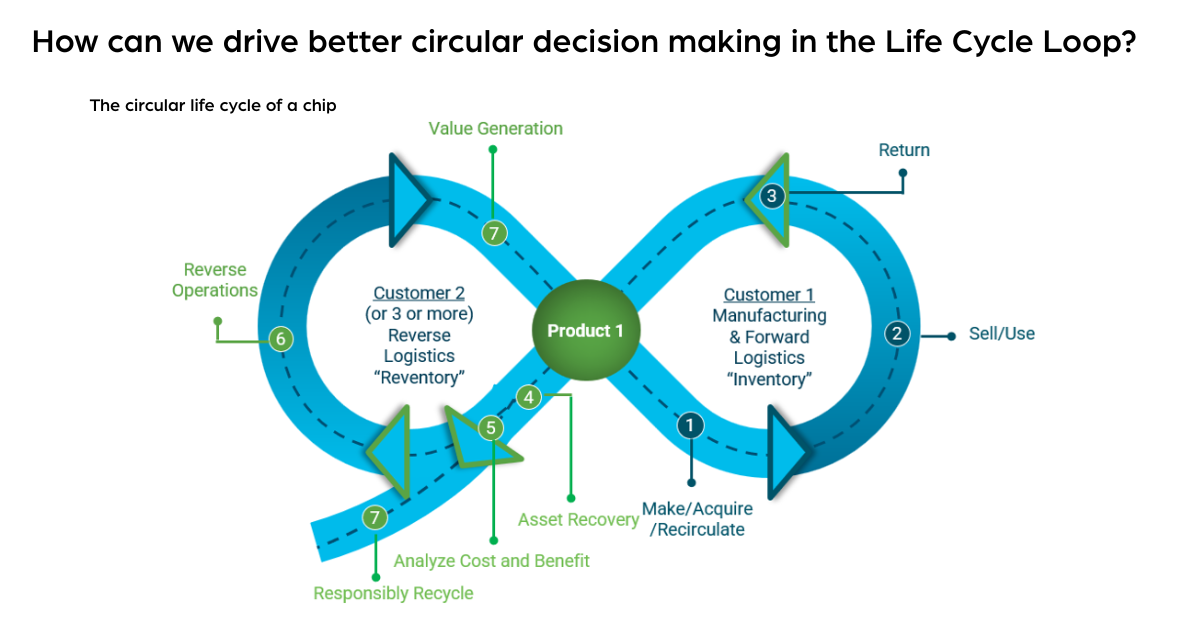
To open this masterclass, Gruber and Dillman presented a bold perspective on circular economy strategies, using a case study that compared the environmental and economic impacts of reusable and linear semiconductor chip designs. With sustainability leaders from companies like Amazon, IKEA, and Cisco in attendance, the discussion emphasized integrated, data-driven decision-making as a critical enabler for meeting today’s sustainability standards.

Contrasting scenarios included:

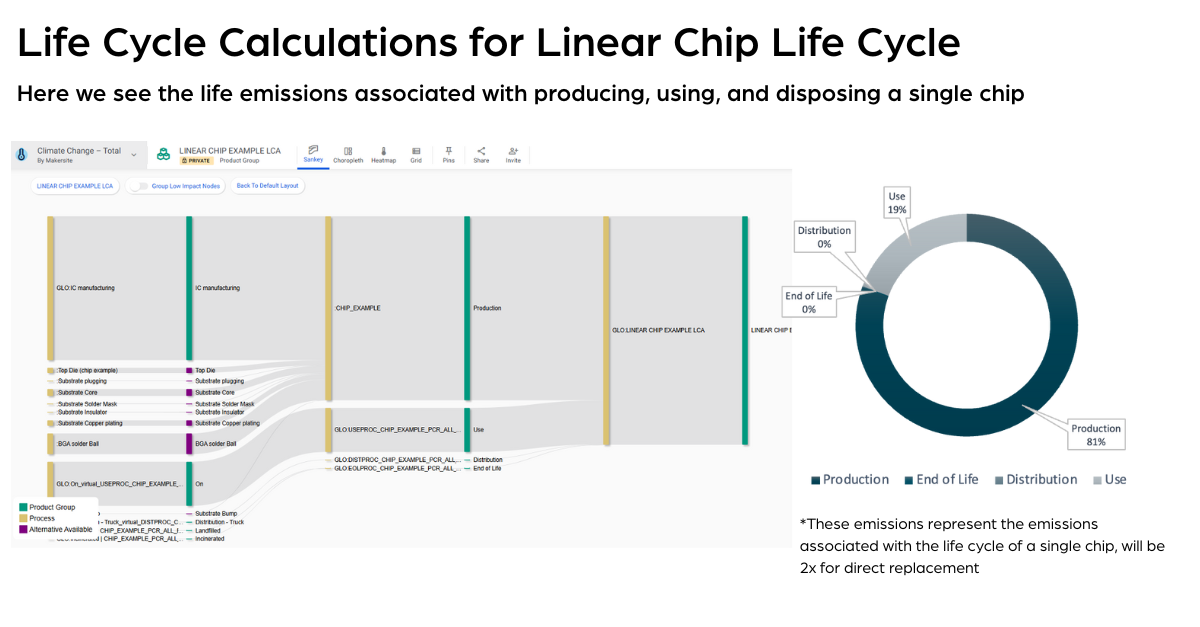
  • A linear model, where the chip is manufactured, used, and discarded.
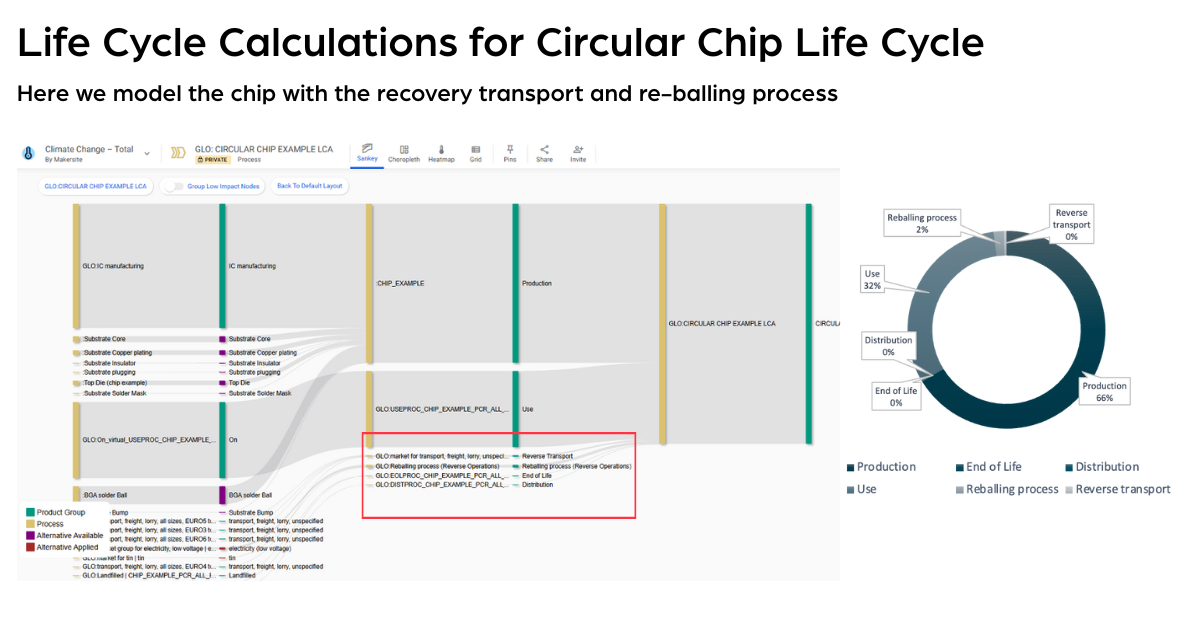
  • A circular model, where the chip is recovered, re-balled, and reused.

The circular model demonstrated slightly higher emissions for the reprocessing step (2.36 kg CO₂e vs. 1.94 kg CO₂e for linear disposal), but by extending the lifetime of the initial chip in the circular model, where the linear would now be replaced by a new chip (1.94 x 2 = 3.88 kg CO₂e) the benefits of the circular approach is shown. By eliminating the need to manufacture new chips for future production cycles, the circular process reduces total, system-wide emissions while also drastically minimizing raw material extraction, water usage, and land use. 

Circular manufacturing offers a transformative solution for reducing environmental impact and building long-term economic resilience. Forward-thinking companies like Jabil are already operationalizing these principles, turning what was once considered waste into valuable resources through systematic recovery and reuse programs that can also deliver significant cost savings.

Gruber and Dillman’s data-driven example underscores how this model can cut resource consumption, support compliance with evolving sustainability regulations, and drive progress toward a fully circular economy. Businesses adopting these strategies position themselves as sustainability leaders, strengthening their operations against resource scarcity and climate challenges. By embracing circular innovation, companies unlock a powerful pathway to sustainable growth and competitive advantage.

“Circularity isn’t just about recycling—it’s about smarter design, sourcing, and evaluating trade-offs,” said Dillman. “To close the loop, we must assess impacts beyond carbon.”

Designing for Circularity: Key Insights from the Session

Key takeaways included:
  • Sustainability Requires System Thinking: Achieving a circular economy demands cross-functional collaboration across design, procurement, logistics, and recovery. A unified data foundation is critical to driving these efforts effectively.
  • Data-Driven Decisions Over Assumptions: The circular chip example scenario underscores the importance of high-fidelity modeling in evaluating circular strategies. Circular initiatives often lack granular emissions and cost data, making it difficult to assess trade-offs or justify actions internally. Digital tools that enable engineers and sustainability teams to quantify carbon impacts and material costs at the component level provide the analytical rigor needed to support data-backed circularity decisions.
  • Leadership Focuses on Actionable Insights: The strong participation of executives and senior managers in the session underscores growing C-level commitment to sustainable innovation and responsible driven business models.
  • Scalable Platforms Are the New Standard: Fragmented tools fall short in today’s complex landscape, creating new data silos and preventing transparency. Forward-thinking sustainability leaders are turning to scalable platforms and digital tools to seamlessly integrate sustainability, cost efficiency, and product compliance into their operations.

Driving Circularity with Actionable Product Intelligence

As manufacturers push toward circular economy goals, decision-makers are increasingly turning to digital tools that provide high-resolution insights across the product lifecycle. These platforms are enabling sustainability, procurement, and design teams to move beyond assumptions by modeling the environmental and economic implications of circular strategies in real time.

By bringing together lifecycle data, cost metrics, and supply chain considerations, these tools support:

  • Comparative analysis of linear vs. circular models
  • Identification of trade-offs across environmental categories
  • Alignment across teams through shared, data-driven insight.

In a rapidly shifting regulatory and market landscape, the ability to simulate design choices at scale — grounded in real-world data — is essential. Organizations that invest in this type of intelligence aren’t just improving products; they’re reshaping how sustainability is operationalized across the enterprise.

Turning Circular Strategies into Scalable Impact

For manufacturers, achieving sustainability success requires integrating data-driven insights and lifecycle thinking into design and procurement processes. This approach empowers teams to scale effective strategies such as reducing product carbon footprints, ensuring regulatory compliance, and driving operational efficiencies. With data and cross-functional alignment at the core, circularity evolves from a lofty goal to a measurable competitive advantage, positioning businesses as leaders in innovation and sustainability.

How EPDs at scale help you win tenders and drive sustainable product innovation

Ebook: Your EPDs Are Holding You Back

DOWNLOAD EBOOK

The EPD landscape has shifted. It’s no longer optional – it’s a competitive battleground where speed and verifiable proof now dictate market access and credibility. Are your EPDs truly enabling sustainable choices, or just checking a box?

Months-long verification bottlenecks, crippling costs per EPD, and—let’s be frank—a reliance on generic ‘family’ averages often chosen less for true efficiency and more to conveniently obscure performance variability across sites or products.

This ebook cuts through the noise. Your EPDs Are Holding You Back exposes the limitations of outdated EPD practices and shows how leveraging EPDs at scale with automation transforms this liability into your competitive advantage.

Download the ebook to uncover how to:

✅ Win more tenders: Instantly verified, product-specific EPDs ready on demand.

✅  Stop hiding behind product families: Differentiate with credible, granular LCA data and expose the limitations of blended data.

✅ Unlock the real power of EPDs: Go beyond marketing to use specific EPD data as an engine for genuine internal innovation, R&D, procurement optimization, and robust decarbonization planning.

✅ Slash crippling cost, time, and verification bottlenecks: Leave manual LCA modeling and never-ending verification loops behind.

On-Demand Masterclass: Riding The EPD Wave

You are currently viewing a placeholder content from Articulate 360. To access the actual content, click the button below. Please note that doing so will share data with third-party providers.

More Information

Masterclass Key Takeaways

As Environmental Product Declarations (EPDs) become critical for regulatory compliance and market access, organizations are grappling with the complexity and scale of implementation. Once optional differentiators, EPDs are now quickly becoming table stakes and serve as essential prerequisites for tenders, market entry, and stakeholder trust. In our recent masterclass, Makersite experts Robert Spang and Sophie Kieselbach explored how companies can move from manual, one-off EPD creation to a fully automated, scalable and transparent process.

EPDs Are Becoming Business-Critical – and the Clock Is Ticking

New regulations like the Ecodesign for Sustainable Products Regulation (ESPR) and the Construction Product Regulation (CPR) are mandating Life Cycle Assessment (LCA) data and transparency. With a typical implementation timeline of 2–3 years, organizations that haven’t started preparing their data foundation are already behind. Beyond legislation, demand is also rising from private procurement and customers seeking Scope 3 data – making EPDs vital for both compliance and business continuity.

The Data Problem Is Real – and Solvable

Creating an EPD today is often slowed by incomplete, inconsistent, or inaccessible data. Many companies operate with fragmented systems, proprietary silos, or Excel-based workflows. Makersite emphasized that successful EPD scaling starts with better data governance – identifying data owners, aligning on standards, and centralizing access. You don’t need perfect data to start, but you do need a plan to mature it.

Automation and AI Are Essential to Scale EPDs

Manual modeling and verification are too slow and resource-intensive to meet the volume and frequency of EPD needs. Makersite’s automated system ingests data from source systems, applies verified rule sets, and creates reproducible models and documentation. This enables companies to generate EPDs across entire portfolios – often with just a few clicks – freeing up experts to focus on design improvements rather than data wrangling.

Verification Is the Bottleneck – but It Doesn’t Have to Be

Traditional EPD verification processes are linear, manual, and not scalable. Makersite introduced a tool-verified approach that allows for reproducibility and transparency at scale. Their solution includes background documentation, automated QA/mapping reports, and lifecycle results – all designed to support a dynamic, auditable, and continuously improving EPD process, rather than static 5-year snapshots.

EPDs Can Drive More Than Compliance – They Enable Sustainable Innovation

When EPD generation is fast, reliable, and integrated into design and procurement workflows, it becomes more than a checkbox. It becomes a tool for internal feedback, better supplier collaboration, and sustainable product innovation. Makersite’s vision is clear: EPDs should inform decisions, not just report them. 

What You Can Do Now 

If you’re just starting your EPD journey or struggling to scale, now is the time to act. Begin by assessing your current data landscape – where it lives, how accessible it is, and whether it’s fit for LCA use. Engage internal stakeholders to define responsibilities and invest in building a scalable, governed data infrastructure. From there, explore automation solutions that can streamline EPD creation and verification. The good news? You don’t need perfect data to begin. With the right approach and tools, you can accelerate progress, meet regulatory demands, and turn compliance into a strategic advantage. Makersite is here to help you do exactly that. 

Key learnings: Navigating Material & Substance Compliance

You are currently viewing a placeholder content from Wistia. To access the actual content, click the button below. Please note that doing so will share data with third-party providers.

More Information

Masterclass Key Takeaways

Manufacturers today are navigating an increasingly challenging compliance landscape. Global regulations are evolving faster than ever, supply chains are more complex, and regulatory expectations demand far more than just ticking boxes. Modern product compliance now requires robust data management, seamless supplier collaboration, and continuous process optimization to keep pace.

Recognizing these challenges, Makersite’s material & substance compliance experts take a deep dive in our most recent online masterclass to walk through proven strategies to help North American manufacturers not only stay compliant, but scale their compliance operations efficiently, strengthen supplier engagement, and protect product availability.

Here’s what you need to know to build a scalable, resilient product compliance approach, and turn regulatory complexity into a competitive advantage.

The Evolving Compliance Landscape

Regulatory requirements are accelerating at an unprecedented pace, creating new challenges and complexities for manufacturers across every industry. Staying compliant is no longer just about keeping up, it’s about staying ahead.

Here’s a look at the biggest hurdles North American companies are facing right now.

Key Challenges for Manufacturers

  • Complex and Expanding Regulations: Regulations like REACH, TSCA’s PFAS reporting rules, and RoHS exemptions are adding thousands of new substances to watch, often at an accelerating pace.
  • Disjointed and Isolated Data Systems: Traditional tools like spreadsheets, ERP, and PLM platforms often operate in silos, making it challenging for organizations to establish seamless communication between systems. This lack of cohesion leads to disjointed, unstructured data that is difficult to integrate, analyze, and leverage effectively for decision-making. As a result, teams may experience inefficiencies, errors, and missed opportunities for growth and innovation.
  • Fragmented Supplier Communication: Relying on emails and forms, without a centralized platform for managing supplier responses, approvals, and escalations, leads to confusion, delays, and errors. On top of that, suppliers are overwhelmed with requests from hundreds of different customer portals, making engagement and data collection even harder to scale.
  • Compliance Addressed Too Late: Reactive compliance approaches don’t just risk shipment delays, costly redesigns, and regulatory fines. They also limit strategic options. Staying ahead of evolving legislation, like monitoring the SVHC Candidate List, enables companies to substitute risky materials early. New regulations like PFAS reporting in the US require companies to trace product data backwards, in some cases as far as January 2011.

The consequences of non-compliance are becoming more severe, and increasingly business critical. Without robust processes in place, manufacturers risk facing shipment holds, financial penalties, loss of customer trust, and even market bans. In some cases, a single missing declaration or outdated material can block product access to entire regions, leading to lost revenue, disrupted supply chains, and strained customer relationships.

The Exploding Regulatory Horizon

The challenge isn’t static; it’s expanding. Manufacturers must keep pace with key regulatory deadlines such as:

  • California & New York PFAS Bans: Taking effect in 2025. These bans have significant implications for industries like Automotive, where PFAS are commonly used in coatings, upholstery, and other vehicle parts. Additionally, New Mexico’s HB 212, signed into law on April 8, 2025, makes it the third U.S. state, following Maine and Minnesota, to enact a broad PFAS ban.
  • REACH Updates: Universal PFAS restrictions are currently under review, but what makes this regulation unique is that it doesn’t target specific substances, but an entire group of chemicals. This presents a particular challenge for industries like medical devices, where certain products can’t currently be manufactured without PFAS.
  • Current discussions at ECHA indicate two possible directions: Industry may continue to use fluoropolymers only where no alternatives exist. Meaning if a competitor can produce a similar product without PFAS, you may be required to do the same. Secondly, consumer uses of fluoropolymers are still being considered for a complete ban.
  • RoHS Lead Exemption Phaseouts: Changes expected in the next 12–18 months. The EU’s Restriction of Hazardous Substances (RoHS) directive has historically allowed certain exemptions for the use of lead in specific applications, particularly in complex electronics and medical devices where no viable alternatives existed. However, many of these exemptions are now under review and expected to be phased out in the coming 12–18 months. This presents a significant challenge for manufacturers, especially in sectors like electronics, automotive, and industrial equipment, where lead has been critical for soldering and high-reliability components. Companies relying on these exemptions need to act now to identify alternative materials, redesign components, or prepare for requalification processes, all of which can be costly and time-consuming if left too late.

The overlaps in these regulations—such as varying thresholds and contradictory rules between federal and state mandates (e.g., TSCA vs. California PFAS disclosures)—add further complexity.

Pro Tip

To remain competitive and compliant, manufacturers need scalable systems that enable centralized compliance tracking, cross-functional regulatory reviews, and ongoing horizon scans.

Supplier Engagement & Data Collection

Effective compliance starts with obtaining the right input data from suppliers. Without this, meeting regulatory requirements becomes an uphill battle. Leading organizations are overcoming this challenge by leveraging a centralized supplier portal, a single source of truth that not only streamlines data collection but also provides built-in escalation paths and approval workflows.

By equipping suppliers with a central portal that offers escalation and approval functionalities, companies can ensure faster response times, better data accuracy, and improved collaboration. This approach reduces confusion, minimizes back-and-forth emails, and provides full traceability across supplier communications, a critical advantage when managing complex global supply chains.

Minimum Data Requirements

Ensure seamless and comprehensive compliance by securing access to:

  • Bills of Materials (BOMs): A detailed breakdown of all materials and components used in your products, essential for accurate regulatory reporting.
  • Supplier-Provided Files: Full Material Declarations (FMDs) and Certificates of Compliance (CoCs) to ensure traceability and adherence to standards.
  • SCIP and Regulatory IDs: Streamline automated submissions and maintain efficiency in meeting regulatory demands.

FMDs vs. CoCs: Understanding the Difference

  • FMDs provide complete transparency, offering a robust framework for long-term compliance that evolves with regulatory advancements.
  • CoCs, while suitable for immediate needs, require frequent updates to align with changing regulations—making them less sustainable for future-proof compliance strategies.

Pro Tip

Revolutionize your compliance approach with a focus on innovation, efficiency, and sustainability. By leveraging advanced data strategies, your business can stay ahead of regulatory demands while building a foundation for long-term success.

Simplify Supplier Collaboration

Simplifying supplier collaboration isn’t just about sending standardized forms. It requires the right technology to scale effectively. Equip your suppliers with intuitive, standardized formats like IPC 1752 to prevent fatigue and reduce friction. But to truly streamline the process, companies need a software solution that enables automated workflows for collecting, validating, and managing supplier data at scale.

Automation not only saves time for everyone involved but also reduces error rates and ensures data consistency, something manual processes simply can’t deliver when dealing with complex supply chains and evolving regulatory demands.

Automating Internal & External Compliance Reporting

Compliance demands transparency at every level. Here’s how automation transforms reporting processes.

  • Drill into the details: Analyze BOMs at a granular level to pinpoint components and assess compliance risks with precision.
  • Big-picture monitoring: Gain complete visibility across your portfolio with real-time dashboards tracking product status, supplier responsiveness, and key compliance metrics.

External Stakeholder Reporting

Streamline compliance management with automation that eliminates manual processes, delivering:

  • Ready-to-submit regulatory documents (e.g., SCIP or ECHA submissions).
  • Customizable dossiers tailored to meet customer and market-specific requirements.

Manufacturing enterprises need a centralized platform seamlessly integrates with ERP and PLM systems, ensuring stakeholders always have access to accurate, up-to-date compliance data.

Scaling Compliance Efforts-Why it Matters

With growing product lines and expanding global markets, manual compliance efforts no longer cut it. They fail to keep up with evolving regulations, hamper market readiness, and increase operational costs.

Next-Generation Solutions for Scalable Compliance

  • Leverage Automation: Automate workflows and data flows to reduce manual errors and accelerate compliance efforts.
  • Adopt Standardization: Use globally accepted data formats (e.g., IPC), enabling smoother communication across teams.
  • Adapt to Change: Implement systems that not only flex with new regulatory requirements but also enable companies to proactively identify and substitute substances or materials, even before new regulations come into force. This future-proofing approach helps avoid costly redesigns, reduce risk, and accelerate market entry.

By investing in digital tools, companies can significantly reduce time-to-market while managing the growing complexity of product compliance. You can accelerate data processing, automate regulatory checks, and helps identify potential product compliance risks early, even across large, fragmented supply chains. This not only speeds up supplier data validation but also enables smarter decision-making when it comes to material substitutions, regulatory reporting, and risk mitigation.

Looking Beyond Compliance

Compliance isn’t just a legal mandate; it’s a strategic advantage and an untapped opportunity to drive sustainability and innovation.

Product Compliance Managers sit on a gold mine of product and material data, often without realizing its full potential. The detailed supplier, material, and substance information collected for compliance purposes forms the perfect foundation for conducting Product Carbon Footprints (PCFs) and Life Cycle Assessments (LCAs) at scale.

This creates a unique opportunity to break down organizational silos between product compliance and product sustainability teams. By leveraging compliance data more strategically, companies can accelerate sustainability initiatives, reduce Scope 3 emissions, and design greener products — all without starting data collection from scratch.

Driving Sustainability Through Innovation

Enhancing BOM data with material insights empowers manufacturers to:

  • Conduct precise Life Cycle Assessments (LCA) and calculate accurate Product Carbon Footprints (PCF).
  • Monitor and report Scope 3 emissions for comprehensive corporate sustainability strategies.
  • Implement Eco-design Scenarios to replace non-compliant materials with greener, cost-efficient alternatives.

Strategic Recommendations

Adopt a proactive, scalable compliance strategy designed to drive efficiency and ensure sustainability.

  1. Leverage Supplier Data: Analyze existing data to map compliance gaps and address deficiencies with targeted outreach.
  2. Minimize Supplier Fatigue: Implement long-term data solutions like FMDs to reduce repetitive requests and build stronger, collaborative supplier relationships.
  3. Bring Compliance In-House: Enhance transparency, reduce reliance on external consultants, and stay agile in adapting to regulatory changes.
  4. Automate Reporting Processes: Deliver precise, real-time reports that integrate seamlessly with external systems, ensuring compliance with ease.
  5. Future-Proof Your Strategy: Build scalable systems that adapt to evolving regulations, emerging markets, and sustainability requirements, keeping your business ahead of the curve.

With these steps, you can transform compliance from a challenge into a strategic advantage, driving innovation and fostering sustainable growth.

What to Do Tomorrow — Whether You Have a System in Place or Not

Have:

  • Grade your existing BOMs for compliance gaps and missing data points. This helps prioritize where action is needed most.
  • Set up dashboards to provide live updates to stakeholders on product compliance status, supplier responsiveness, and upcoming regulatory risks.
  • Evaluate supplier alternatives early to avoid costly, last-minute substitutions, especially for materials flagged by upcoming regulations like PFAS or RoHS.

Have Not:

  • Start by mapping what data you have today, often in spreadsheets, ERP, or PLM tools, and identify gaps.
  • Engage with suppliers to begin collecting material declarations in standardized formats like IPC 1752.
  • Explore solutions like Makersite to centralize your compliance data and automate reporting, laying the foundation for scalable, future-ready compliance processes.

Compliance doesn’t have to be a burden. With the right tools and approach, it becomes a competitive advantage, helping you enter new markets faster, reduce operational risk, and design more sustainable, innovative products.

On-Demand Masterclass: Trusting LCAs at Scale

You are currently viewing a placeholder content from Articulate 360. To access the actual content, click the button below. Please note that doing so will share data with third-party providers.

More Information

Top 10 Key Takeaways

Understanding the Importance of LCAs at Scale 

Scaling up Life Cycle Assessments (LCAs) involves expanding their scope while ensuring they remain reliable, transparent, and verifiable. This requires a disciplined approach to maintain the integrity of LCAs as they grow in complexity. Emphasizing the importance of scaling LCAs is essential for companies aiming to achieve meaningful sustainability outcomes and enhance stakeholder trust. 

Three Foundational Pillars for Successful LCA Scale-Up 

The three pillars essential for scaling LCAs are: 

  • Robust Data and Data Landscapes: Ensuring high-quality, comprehensive data is crucial for accurate assessments. 
  • Consistent Methodologies: Standardizing methodologies across assessments to maintain consistency and comparability. 
  • Comprehensive Documentation: Detailed documentation is necessary to provide transparency and facilitate verification processes. 

Challenges and Misconceptions 

There is a common misconception that LCAs at scale are of lower quality compared to traditional LCAs. It was clarified that while LCAs at scale may be perceived as less transparent, they can actually provide higher accuracy and representativeness. The key is to address documentation and transparency challenges effectively. 

Data Collection and Integration 

Traditional LCAs often involve manual data collection and adjustments, which can introduce errors and inconsistencies. LCAs at scale, however, use automated data collection directly from ERP and PLM systems, ensuring higher accuracy and reducing human error. This approach allows for more precise and reliable data integration. 

Modeling and Mapping 

In traditional LCAs, modeling and mapping are manual processes prone to errors and variability. LCAs at scale automate these processes, enhancing reproducibility and consistency. Automated modeling and mapping eliminate the variability and errors associated with manual data handling, leading to more accurate and reliable assessments. 

Documentation and Verification 

Documentation and verification are critical bottlenecks in scaling LCAs. Innovative approaches are needed to streamline these processes. This includes developing new standards and practices to ensure that LCAs at scale meet the required documentation and verification standards without excessive manual effort. 

Quality Assurance and Transparency 

Achieving high-quality results in LCAs at scale requires ensuring that the data and models are well-documented and transparent. This involves creating detailed quality assurance reports and maintaining consistent documentation practices. Transparency is key to building trust and credibility in the results. 

Leveraging Technology for Efficiency 

The use of technology, such as automated data integration and modeling, significantly reduces the time required for LCAs. This efficiency allows for more frequent updates and continuous improvement, which are essential for maintaining accurate and up-to-date assessments. Technology enables companies to scale their LCAs without compromising quality. 

Addressing Data Gaps 

Handling data gaps is a critical challenge in LCAs at scale. Strategies for filling these gaps include using standard components and merging data from different sources. Ensuring comprehensive and accurate assessments involves identifying and addressing data gaps effectively. 

Future Directions and Best Practices 

The future of LCAs at scale involves ongoing innovation and improvement to meet evolving sustainability goals. Emphasizing the need for best practices in documentation and verification, continuous collaboration with partners and stakeholders is essential for developing and refining these practices. 

On-Demand Masterclass: How to Evolve Beyond Spend-Based Scope 3 Reporting

You are currently viewing a placeholder content from Wistia. To access the actual content, click the button below. Please note that doing so will share data with third-party providers.

More Information

Sustainability reporting has moved from being a niche requirement to a central element of modern corporate strategy. For many organizations, the focus on Scope 3 emissions — which account for most of their product’s carbon footprint — presents an opportunity to lead in environmental responsibility and drive innovation. Yet, most companies still rely on spend-based methodologies that provide limited accuracy and fail to capture the full picture of their impact. As stakeholders demand greater transparency and regulators implement stricter compliance measures, businesses must evolve their approach to ensure they remain relevant and resilient in a competitive landscape.
 

In a recent Makersite Masterclass, our data experts Fabian Hassel, VP of Services and Pablo Downer Päster, Principal Sustainability Engineer, provide a roadmap for organizations looking to transition away from spend-based approaches.

The session emphasized the need for robust, data-driven strategies that go beyond surface-level reporting, providing organizations with the tools and strategies needed to begin the transition.

Below are 10 key takeaways you can use to optimize your sustainability practices. By implementing these strategies, businesses can not only meet compliance requirements but also unlock long-term value in their operations.
 

Top 10 Key Takeaways

Understand the Limitations of Spend-Based Reporting

Spend-based reporting has been a common practice due to its simplicity and scalability, but it is heavy with drawbacks that limit its effectiveness in meeting modern sustainability goals. We highlighted three major weaknesses of this approach:

  • Lack of Accuracy: Relying on industry averages often fails to capture the complexity and uniqueness of individual supply chains.
  • Overlooked Factors: Key variables, such as material choices, product design, supplier energy sources and production efficiencies, are ignored.
  • Regulatory Risks: Increasingly stringent regulations demand more product level granularity and transparency, making spend-based methodologies insufficient. 

To keep up with global standards, businesses must transition to data-driven methods that go beyond high-level estimates.


The Power of Granular Data in Scope 3 Reporting

Accurate, granular data is a necessity for sustainability reporting. Transitioning from general estimates to detailed, material-specific information allows businesses to make better decarbonization decisions and take targeted actions.

Granular data provides:

  • Material-Level Insights: A clear understanding of the impact of each material in the supply chain.
  • Product-Specific Assessments: Precise measurements of emissions tied to specific products.
  • Supplier Data Integration: A more accurate and strategic approach to managing supplier emissions.   

This actionable level of detail equips businesses to develop proactive sustainability strategies rather than merely meeting reporting requirements.


Digital Twins as a Game-Changer

Digital twins are virtual data models that replicate real-world products, processes, and supply chains. We emphasized their transformative potential for Scope 3 reporting.

Digital twins enable companies to: 

  • Simulate scenarios to evaluate sustainability interventions.  
  • Identify “hotspots” of emissions in supply chains to focus on reduction strategies.  
  • Foster greater collaboration among procurement, research, and engineering teams to align sustainability goals.  

For example, a manufacturer of complex systems like wind turbines could use digital twins to visualize emissions across thousands of components and adapt processes accordingly.


Navigate Transition Challenges 

Moving beyond spend-based reporting is rewarding, but it isn’t without challenges. As we identified the most common roadblocks and how to address them: 

  • Data Gaps: Ensuring suppliers provide accurate and comprehensive data.
  • Integration Barriers: Streamlining fragmented data systems into a unified platform.
  • Cost and Complexity: Investing in advanced tools and frameworks for long-term gains. 

Despite these obstacles, high-impact organizations have successfully overcome these barriers with meticulous planning and the right tools.


Industry-Specific Insights for Scope 3 Reporting

Different industries face unique challenges and opportunities in Scope 3 reporting.

Here are some examples discussed in the masterclass: 

  • Automotive: High supply chain complexity coupled with strict emissions regulations.
  • Electronics: Significant impacts from raw materials requiring circular practices.
  • Heavy Machinery: Long product life cycles and complex components necessitate precise data collection.  

Tailoring reporting strategies to industry-specific needs is essential for achieving both accuracy and actionable insights.


Preparing for a Shifting Regulatory Landscape

Regulations like the EU Corporate Sustainability Reporting Directive (CSRD) and SEC climate disclosure requirements demand unprecedented levels of transparency. We emphasize that companies need to: 

  • Build traceable and robust supply chain mechanisms.  
  • Adopt methodologies that exceed regulatory expectations to ensure long-term compliance and readiness for future standards. 

Organizations that begin adapting now will gain a head start over competitors once these regulations are fully enforced.


Advanced Master Material’s Approach to Scope 3 Reporting

To achieve your Scope 3 reporting goals, the importance of integrating an AI or tech tool to simplify and assist in the transition to more accurate Scope 3 reporting.

What you should look for in a tech tool to help you achieve your goals in Scope 3 Reporting:

  • Automated Data Integration: Seamless integration with ERP and PLM systems consolidates disparate data sources.  
  • Material and Supplier-Specific Modeling: Detailed emissions data to guide informed decision-making.
  • Collaboration Tools: Enables real-time engagement between cross-functional teams, such as procurement and sustainability managers.

By addressing key challenges of data granularity and system integration, you should look for a tool that supports businesses in meeting their sustainability goals effectively.


Turning Scope 3 Reporting into a Competitive Advantage

Far from being a regulatory burden, Scope 3 reporting can be a strategic opportunity.

We highlight its potential to drive business growth by: 

  • Market Differentiation: Establishing leadership as a sustainable brand.  
  • Data-Driven Innovation: Creating better products informed by actionable insights.
  • Supply Chain Resilience: Building transparency to adapt to disruptions and mitigate risks.  

Forward-thinking companies are leveraging Scope 3 as a catalyst for innovation and lasting competitive advantage.


Real-World Scenarios

We discussed  two different global manufacturing companies we worked with faced the common challenge of inconsistent and missing Scope 3 data, which led to inefficiencies in their product design and cost analysis.

The solution involved:

  • Enhanced Precision: Transitioned from generalized spend-based estimates to precise, material-level reporting, empowering data-driven decisions.
  • Cost Efficiency: Identified inefficiencies and optimized procurement strategies, driving measurable savings and sustainable growth.
  • Compliance Assurance: Secured full regulatory readiness, ensuring confidence and adherence to the highest industry standards.

For a deeper dive into our success stories click here.


Actionable Steps to Get Started   

If your organization is ready to evolve beyond spend-based Scope 3 reporting, here are four practical steps to take today:  

  • Assess Your Current Process: Identify gaps and areas for improvement in your current reporting practices.
  • Engage Stakeholders: Collaborate across departments—procurement, sustainability, engineering—to align goals and define data needs.  
  • Adopt Advanced Tools: Leverage advanced data management and integration tools, specifically, sustainability or environmental focused reporting platforms for accurate data integration and emissions modeling.
  • Pilot and Scale: Launch pilot projects to refine methodologies before scaling them across the organization.

Unlock the Full Potential of Scope 3 Reporting  

Accurate Scope 3 reporting is more than just a regulatory requirement—it’s a pathway to innovation, efficiency, and sustainable growth. Companies willing to embrace advanced methodologies and tools will not only meet compliance standards but also position themselves as leaders in a rapidly evolving market. 

By taking incremental steps, businesses can gradually transition to more advanced reporting practices without overwhelming existing systems. 

Curious to learn more about overcoming the Scope 3 Reporting challenges?

Click here to meet with a Makersite team member.


Guide to Construction Products Regulation (CPR)

The construction industry is at the heart of sustainability efforts in Europe, with regulatory frameworks playing a critical role in driving innovation and compliance. The Construction Products Regulation (CPR) is a cornerstone of these efforts, ensuring the quality, safety, and sustainability of construction products across the European Union.

Here’s a quick guide to understanding CPR, its updates, and its significance for businesses. 

What is Construction Products Regulation (CPR)? 

CPR is a European Union regulation that establishes harmonized rules for marketing construction products. Adopted in 2011, it replaced the Construction Products Directive to simplify and strengthen the framework for assessing the performance of construction materials. Its main aim is to ensure that reliable information is available on the performance of construction products, enabling better decision-making for stakeholders across the value chain. 

For example, under the CPR, a manufacturer of thermal insulation materials must ensure their products meet energy efficiency standards and provide clear documentation of performance. This guarantees that builders and architects can confidently choose materials that comply with energy codes and enhance building performance. 

Key Objectives of CPR 

Harmonisation of Standards

The CPR ensures that construction products across the EU are assessed and declared using a unified set of rules. This harmonization simplifies trade within the EU market and reduces barriers for manufacturers. For example, a window manufacturer in Germany can market its products in France without additional testing, provided they comply with harmonized EU standards. 

This consistency not only facilitates cross-border trade but also reduces costs and administrative burdens for manufacturers. 

Product Safety and Performance

By enforcing essential safety and performance requirements, the CPR ensures that products meet high standards in areas such as mechanical resistance, fire safety, energy efficiency, and environmental sustainability. For example, a fire-resistant door must meet stringent criteria to ensure its effectiveness in emergencies, safeguarding both lives and property. 

These standards also promote innovation, encouraging manufacturers to develop products that exceed baseline requirements. 

Market Transparency

The CPR mandates clear and reliable performance data for construction products, empowering stakeholders to make informed decisions. For instance, contractors choosing concrete products can compare compressive strength, durability, and environmental impact using standardized performance declarations. 

This transparency fosters trust in the construction supply chain and helps professionals select products that align with project specifications and sustainability goals. 

Environmental Accountability

The CPR integrates sustainability into its framework, particularly with the inclusion of Environmental Product Declarations (EPDs). These declarations provide critical information about a product’s lifecycle impacts, such as carbon emissions and resource efficiency, enabling the construction industry to advance toward climate neutrality. 

What CPR Means for EU and Non-EU Manufacturers 

CPR has implications not only for manufacturers within the EU but also for those outside the bloc who wish to access the European market. Here’s what it means for both: 

For EU Manufacturers:

Streamlined Market Access: Harmonized standards make it easier to market products across all member states, reducing the need for multiple certifications.

Focus on Sustainability: EU manufacturers must align their production processes with new environmental requirements, such as providing EPDs and adhering to circular economy principles.

Digitalisation: The adoption of Digital Product Passports (DPPs) means manufacturers must invest in digital tools to manage compliance data efficiently.

For Non-EU Manufacturers:

Regulatory Alignment: Non-EU manufacturers exporting to the EU must ensure their products comply with CPR requirements, including harmonised standards and sustainability criteria.

Additional Documentation: Exporters must provide DoPs and EPDs, along with any other documentation required under the CPR, to prove compliance.

Increased Scrutiny: Enhanced market surveillance under the updated CPR means non-EU manufacturers must maintain high standards of transparency and accuracy to avoid penalties or market exclusion.

For example, an American manufacturer of steel beams looking to sell in the EU must align with harmonized standards for mechanical resistance and provide lifecycle environmental data through EPDs. This ensures their products are competitive and meet EU sustainability expectations. 

Overview of the New CPR Timeframe 

The European Commission proposed updates to the CPR in March 2022 to modernize the framework, address gaps in current practices, and integrate sustainability requirements. Here’s a breakdown of the timeline: 

  • 2023: Discussions and consultations with stakeholders, including manufacturers, policymakers, and environmental groups. 
  • January 7, 2025: The revised CPR is expected to come into force, 20 days after its publication in the Official Journal. 
  • January 8, 2026: Key applications begin, with manufacturers required to comply with updated provisions for specific product categories. 
  • 2028: Full compliance expected for priority categories, including mandatory integration of Digital Product Passports (DPPs) and environmental data. 
  • 2030: Comprehensive lifecycle environmental reporting becomes mandatory across all categories. 

This phased timeline provides businesses with ample time to adapt while ensuring steady progress toward sustainability goals. 

How to Navigate the Transition to the Updated CPR 

The revised CPR is a significant shift, particularly for manufacturers, as it introduces new sustainability and compliance requirements. To successfully navigate this transition: 

Familiarise Yourself with Priority Deadlines

While the regulation formally applies from 2025, compliance timelines will vary by product category. Manufacturers of concrete, steel, and insulation should prioritise preparations as their standards are likely to be updated first. 

Invest in Digital Tools

With the introduction of Digital Product Passports (DPP), adopting digital solutions early can streamline compliance processes and give manufacturers a competitive edge. For instance, using platforms like Makersite can simplify the integration of environmental data into product documentation. 

Collaborate Across Supply Chains

Meeting the new requirements will require greater transparency and collaboration with suppliers, especially for gathering and validating lifecycle environmental data. 

Prepare for Market Surveillance

Stricter enforcement means businesses must ensure all documentation, from DoPs to EPDs, is accurate and up to date to avoid penalties. 

The Construction Products Regulation is more than a compliance framework; it’s a catalyst for sustainability and transparency in the construction industry. With the anticipated updates emphasizing environmental performance, now is the time for businesses to prepare and align with these transformative changes. 

To learn about how Makersite can support your CPR compliance and sustainability goals, contact us today


On-Demand Masterclass: Solving Sustainability Data Challenges

You are currently viewing a placeholder content from Wistia. To access the actual content, click the button below. Please note that doing so will share data with third-party providers.

More Information

In a rapidly evolving business landscape, managing sustainability data has become a critical challenge for industries worldwide. During our recent masterclass, Solving Sustainability Data Challenges, Makersite’s data experts Sophie Kieselbach and Niclas Rabel explored the hurdles organizations face in aligning their sustainability efforts with robust data practices.

From understanding different maturity levels across industries to tackling common data management obstacles, this session provided actionable insights to help businesses enhance their sustainability journeys. Below are 10 key takeaways from the masterclass that can guide companies in improving their sustainability data practices and integrating them into long-term strategies. 

10 Key Takeaways 

Sustainability Maturity Levels Across Industries 

By using data gathered through our Maturity Index submissions the data experts analysed and presented how various industries are at different stages in their sustainability journeys. They were categorized into three maturity levels:  

  • Novice (76.06%): This group comprised industries like automotive (19.72%) and consumer durable goods (23.94%) that are just beginning to integrate sustainability efforts. They are largely unaware of their entire value chain and tend to have limited visibility into sustainability data beyond Tier 1 suppliers.  
  • Intermediate (19.72%): These industries have started to address sustainability but are still in transition. Automotive and building materials make up a portion of this group, where data integration is underway, but decision-making is hindered by inconsistent and siloed data.  
  • Advanced (4.23%): These are the most mature companies in terms of sustainability data, often found in consumer packaged goods. They have harmonized data and an end-to-end view of their supply chain, allowing them to make informed decisions and leverage sustainability as a profit driver.  

These maturity levels indicate that most companies are still in the early phases, struggling with integrating sustainability into core business processes.

To find out where you sit on the maturity ladder and how you compare to companies similar to yours fill out our Maturity Index.


Data Challenges  

These are some of the most common challenges businesses face when managing sustainability data:  

  • Internal Awareness Gaps: Many companies are partially aware of their internal data but lack insight into the entire value chain. This creates blind spots beyond Tier 1 suppliers and disrupts accurate decision-making.  
  • Supply Chain Visibility: Limited data visibility can lead to delayed decisions, supply chain disruptions, and missed regulatory requirements.  
  • Data Silos: Inconsistent and siloed data across departments (product development, procurement, etc.) makes it harder to drive sustainability initiatives. The inability to share and integrate data from different sources prevents a holistic view of sustainability impacts.  

The goal here is to shift from fragmented, inconsistent data management to a fully integrated, transparent data landscape that supports sustainability efforts across the entire supply chain.  


Sourcing Challenges  

Sourcing data for sustainability presents several key issues:  

  • Data Accessibility: Difficulty in accessing data due to proprietary restrictions and varying data quality standards from suppliers.  
  • Missing Descriptions: Purchased parts often lack proper descriptions, leading to inefficiencies in understanding their sustainability impacts.  
  • Integration Complexity: The complexity of integrating internal databases with third-party providers and IoT devices can lead to fragmented data management systems.  
  • Inaccuracy and Inconsistency: Manual data entry errors, outdated information, and inconsistent data formats further exacerbate the problem. Companies often find that the same data point varies across different systems, making it difficult to trust the data.  

Addressing these sourcing challenges requires robust data integration tools and governance frameworks that standardize the collection and storage of data.  


Real-World Scenario

We discussed a real-world scenario where a company we worked with faced the common challenge of inconsistent and missing data, which led to inefficiencies in their product design and cost analysis. The solution involved:  

  • Data Governance Framework: Implementing a data governance framework to harmonize data from various ERP (Enterprise Resource Planning) and PLM (Product Lifecycle Management) systems.  
  • Enhanced Data Quality: Improving data quality through integration tools helped the company make better decisions, reduce costs, and design more sustainable products.  

The use case emphasizes the importance of unified data governance to overcome fragmented data systems, highlighting the role of tools like Makersite in ensuring smooth integration and accuracy of data. 

For a deeper dive into our success stories click here.


Data Management  

Systematic data management is a vital ingredient for a successful business, it includes organizing, storing, and maintaining data. Three core benefits are:  

  • Driving Business Decisions: High-quality data enables businesses to make informed and timely decisions, especially regarding sustainability.  
  • Enhancing Operational Efficiency: Proper data management reduces errors and inconsistencies, leading to streamlined operations.
  • Fostering Innovation: Accurate data supports research, product development, and innovation, particularly in creating sustainable products.  

There is often a high cost of poor data quality. For instance, Gartner estimated that poor data quality costs businesses $12.8 million annually, and 95% of organizations acknowledge its negative impact on business performance.  


Competitive Advantage  

Prioritizing data quality and management gives companies a competitive edge. We looked at how with accurate and comprehensive data, businesses can:  

  • Stay Ahead: Beat the competition by enabling better decision-making, efficient resource allocation, and long-term planning.  
  • Consolidate Data: Understanding their data landscape empowers businesses to consolidate information across departments, leading to more integrated and effective sustainability strategies.  
  • Enable Planning: Accurate data allows for stable long-term planning, which is crucial for efficient resource allocation and maintaining a competitive advantage.  

By focusing on data quality, companies not only comply with regulations but also turn sustainability into a key driver of profit and innovation.  


Best Practices for Data Management  

These are some of the best practices to ensure high-quality data governance:  

  • Clear Policies: Developing and enforcing data management policies to maintain data integrity across systems.  
  • Training and Awareness: Conducting training sessions and raising awareness about the importance of data governance within the organization. This helps foster a culture of responsibility for data quality.  
  • Continuous Improvement: Monitoring data maturity and striving for continuous improvement, such as through regular data audits, validation, and cleansing processes.  
  • Integration Tools: Using advanced data management and integration tools to standardize and simplify data handling.  

These practices ensure that businesses can maintain high-quality, accurate data, which is essential for driving sustainability efforts and making informed decisions.  


Before You Begin

It is necessary to initiate engagement with both internal experts and external stakeholders to address data challenges from the very beginning. Key actions would include:  

  • Data Workshops: Conducting workshops to align on data requirements, sources, and quality expectations early in the project lifecycle.  
  • Collaborative Approach: Ensuring close collaboration with stakeholders to resolve data issues promptly.  
  • Proactive Data Quality Maintenance: Identifying and addressing data quality issues before they escalate, and involving the right stakeholders, such as sustainability experts, from the start.  

Early engagement and alignment on data management practices ensure a smoother, more efficient sustainability data integration process.  


Preparation is Key

To prepare for successful sustainability data management you should first focus on:  

  • Data Discovery: Starting with a thorough review of the company’s existing data, its sources, and stakeholders involved.  
  • Pilot Projects: Running a pilot or Proof of Concept (POC) project to test the integration of the source data into the system, which helps prepare for a full rollout.  
  • Workshops and Feedback: Conducting detailed workshops with IT teams to identify all data points, receive feedback, and suggest improvements. Data enrichment processes ensure the data is ready for system integration.  
  • ETL Process: The Extract, Transform, Load (ETL) process connects raw data from various sources to the system. After user training and acceptance testing, the project can go live.  

By focusing on data quality and system readiness early on, companies can achieve smooth integration and reliable sustainability outcomes.  


Actions You Can Take Now

Throughout the Masterclass our data experts emphasized the need for a robust data strategy. These are some of the key action points to kick of a successful data strategy:  

  • Data Awareness: Understand the organization’s system landscape and ensure data completeness and accuracy.  
  • Leadership Involvement: Prioritize data governance and quality, with leadership setting the tone for an organization-wide focus on data integrity.  
  • Regular Audits: Perform regular data audits and implement validation processes to maintain data quality.  
  • Employee Education: Train employees on the importance of data quality and management, which is crucial for long-term success.  
  • Advanced Tools: Leverage advanced data management and integration tools to stay ahead of data governance challenges.

Sustainability data challenges can hinder a company’s ability to make informed decisions, drive innovation, and stay competitive. By addressing these challenges with structured data management strategies, clear governance frameworks, and continuous improvement efforts, businesses can unlock new opportunities.   

Prioritizing data quality not only supports sustainability goals but also positions companies for long-term success and profitability.

Want more information on how to overcome the sustainability data problem? Read our playbook on that and more now.

How to write an RFP for sustainability solutions

The RFP template

DOWNLOAD MAKERSITE’S RFP TEMPLATE

Writing an effective RFP can be a challenge. Your company will have specific goals and objectives, and you’ll need to be able to put together a logical yet thorough question set that enables you to identify the best vendor for the project. With that in mind, we’ve worked to build out what we consider to be the ideal RFP template – and, given that we’ve seen a fair few, we like to think we know what we’re talking about. 

Our rationale was as follows:

  • The RFP template should be simple in format and execution, but adequately thorough
  • It should help your company to ask qualified questions that unlock the right answers, rather than relying on generic question sets that more often than not produce inadequate answers
  • The question set should always consider the fact that the customer has a specific goal in mind
  • Wherever possible, questions should be open rather than closed, allowing for more detail. If closed questions are deemed necessary, they should be at the bottom of the list
  • We’ll use our expertise as a company to accurately reflect what top tier manufacturers are asking. The RFP template is designed to replicate the RFP processes of leaders in their respective fields
  • To create a template that negates the need for external consultants, who don’t necessarily know what the company needs or how to articulate those needs

There are 123 questions across 13 separate sections that represent an ideal baseline. The template does not have to be set in stone. Certain manufacturers or users will have other questions they may wish to add, or will find questions in this template that they don’t consider necessary. However, its purpose is to help anyone struggling with putting together an RFP to ask the necessary questions rather than relying on a generic question set that any supplier can fulfil. 

This is what the best in their fields seek to create when it comes to building an RFP. In creating this template, our aim was straightforward: make it simple, and help users to design their solution based on what leaders are doing. 

You can view the template for reference in the embed at the bottom of this page, or you can download the Excel version to use and edit for yourself at the link at the top.

What makes a ‘best in class’ RFP?

What does the ideal RFP (Request for Prospoal) look like? It’s a common question, but one without a definitive answer.  No two are the same and many manufacturers remain unsure of what they need, relying on basic templates to communicate often complex needs and requirements. Often, unfortunately, those templates are not up to scratch. But that’s not to say that the perfect example doesn’t exist.

RFPs, without doubt, remain an important part of the manufacturing process – an essential tool when it comes to completing a project that you need outside help with. An RFP done correctly not only enables your organization to find the best solution to the task (given that different companies might have different ideas or ways to tackle it), but also helps you to compare the costs of different providers and find the right option for your budget.   

RFPs also help to negate an element of risk early on in the manufacturing process, allowing you to be sure that the company you choose to do the work knows what they’re doing and can deliver what you need. 

For many, the process of putting together an RFP can be a challenge – a drain on both time and resources. From a lack of initial clarity (meaning that proposals may come back incomplete or unaligned with company needs) to scope creep (where the scope of the project changes during the RFP process due to a lack of forward thinking and due diligence), initial hurdles can make the desired outcome significantly harder to achieve for all concerned. 

Companies also struggle to find the right balance of information. Too much detail can overwhelm potential bidders, while too little may leave vendors guessing. From writing the requirements to reviewing proposals, building out an RFP is a time-consuming process, one often further hindered by vendor management issues (where keeping track of questions, updates, and proposal submissions requires careful organization), budgetary concerns (where companies may have a hard time estimating the right budget for the project, and sometimes don’t include budget information in the RFP) and a lack of defined evaluation criteria (where companies may not have a structured approach for comparing different aspects like price, experience, and quality.) 

When these challenges are made clear and are proactively addressed, companies can begin to streamline the RFP process and increase the chances of selecting the best partner for their project. 

“An RFP done correctly not only enables your organization to find the best solution to the task (given that different companies might have different ideas or ways to tackle it), but also helps you to compare the costs of different providers and find the right option for your budget.”

Why getting it right matters

A good RFP template helps to tick a number of boxes. It saves time, facilitating a faster turnaround in creating and distributing RFPs, reducing delays in project timelines. It ensures consistency, making it easier for vendors to understand what’s required, regardless of the project. Done correctly, it reduces the risk of missing critical information, ensuring vendors have all the details needed to create a thorough proposal. It helps to avoid miscommunication or confusion, leading to proposals that better align with the company’s needs, whilst also simplifying the evaluation process, as the company can quickly compare key factors like costs, timelines, and experience side by side.  

Furthermore, it helps to prevent scope changes and misunderstandings that could arise during the project and has the added benefit of making sure that vendors know exactly what to address in their proposals, reducing back-and-forth and ensuring more complete responses. 

Ultimately, the organization issuing the RFP is seeking help because they need expertise or resources they don’t have internally. The RFP process allows them to gather multiple solutions, ensure fairness, manage costs, and reduce risks, thereby helping them choose the best provider to achieve their project goals. 

The End of the Entrepreneur: The Steps We Must Take to Build a Better Future

What does the ‘Age of the Engineer’ – the term I use to describe our need to empower better product design and manufacturing – look like in reality, and how do we make it possible? I see three first steps:

Getting engineers back into the boardroom

I’ve talked before about entrepreneurs as the ‘villain’ of this narrative because it simplifies the framing. However, it might be better in this instance to specify that I’m talking about a non-founding CEO. As a company grows the need for a generalist – a safe pair of hands – arises. There are many benefits to that approach, of course, but too often the spark is lost – the company stops building great things, and the focus shifts to managing what it does well. We’re in need of something else now – we need to rebuild our products and the infrastructure we use to make and utilize them. We need builders. The founders and early engineers of some of our greatest companies were – and still are – engineers by trade and I think it’s time we put them back in the boardroom. For those starting out, my recommendation is to give their technology leader a seat at the board.

Why? My contention is that businesses who want to succeed in a future likely to be defined by seismic change need to spend more time on innovation-led growth than most large enterprises do now. This requires a different mindset towards risk and reward and one can only achieve that through a voice being present at the highest levels of decision making. A overarching vision of what is possible and the technical understanding of how to achieve it results in speed of execution and that combination is often found with engineering leaders. In business, speed is everything and businesses that do this will innovate out of their current situation faster and more successfully.

Adding sustainability as a core metric to product design

A company is its products. If we want to build more successful companies of the future, we’ll need them to have great products that are sustainable. That is not possible unless we embed sustainability into design, just as we do performance, risk and cost.

Every company is different and even within a company, different product lines may cater to different market segments with different preferences. There are no perfect products because there are no perfect customers or infrastructure to build or use these products, so there will always be trade-offs. I do believe, however, that unless these trade-offs are made consciously, products will continue to diverge from sustainability. This will create a widening gap to market requirements.

I’m already seeing advanced organizations who are most of the way there. They’re what we might call ‘mature’ in their approach, set apart from the ‘novices’ because they have made sustainability a design parameter. For them it is another metric, defined by a series of non-negotiable targets that must be hit in order to unlock the rewards – from growth in new markets to better productivity and efficiency to how people are compensated.

Integrating data and enriching operational systems with it

When it comes to engineering, we don’t need to be doing the same things faster. We need to be doing them better. And to do things better, we don’t need more data – we need smarter data.

Our observations show that up to 90% of the data required to understand how to make and sell products doesn’t sit within a company’s systems. The reason for that is that most products are increasingly becoming “assemblies” with large portions being built in complex upstream supply chains. An average car for example has 70% of its components built in this way. Use and End-of-Life data also typically do not sit in company systems. How could one understand the cost, risk or sustainability impacts from these stages? The solution is to collect and combine this “value chain” information from external sources with company data about the product and operations to allow for full-life-cycle view of the implications of design across all the key design criteria. I call this product lifecycle intelligence.

But it doesn’t stop there. This enriched information needs to be available not in data lakes, expert systems and BI tools, but in operational systems like CAD, PLM and ERP so that engineers can use this information in trade-off analysis, within their existing workflows. This “shifting left” of data and insight, to have it available early on and at every stage of the development process, has long been known to reduce development time and avoid costly mistakes. Technology now allows for this.

Conclusion

The ‘Age of the Engineer’ signifies a pivotal transformation in how we approach innovation and sustainability in business. By reinstating engineers into the boardroom, we leverage their unique expertise to drive not just technological advancements but strategic decisions that prioritize long-term value over short-term gains. By integrating comprehensive data into operational systems to enhance decision-making and efficiency, we will empower businesses to build smarter, more sustainable products that meet the demands of a rapidly changing world.

The ‘Age of the Engineer’ is not just an ideal; it is an imperative, charting a course towards a future where technological prowess and sustainability go hand in hand. By giving engineers the spotlight, and by doubling down on sustainable practices, we’re no longer dreaming about a better tomorrow – we’re actively creating it.

This article first appeared on Forbes.com.